Nissan Trade-In Value: Mileage & Condition in Everett, WA
A mechanics-level look at how dealers score mileage bands, condition grades, and reconditioning costs when appraising your Nissan trade-in.

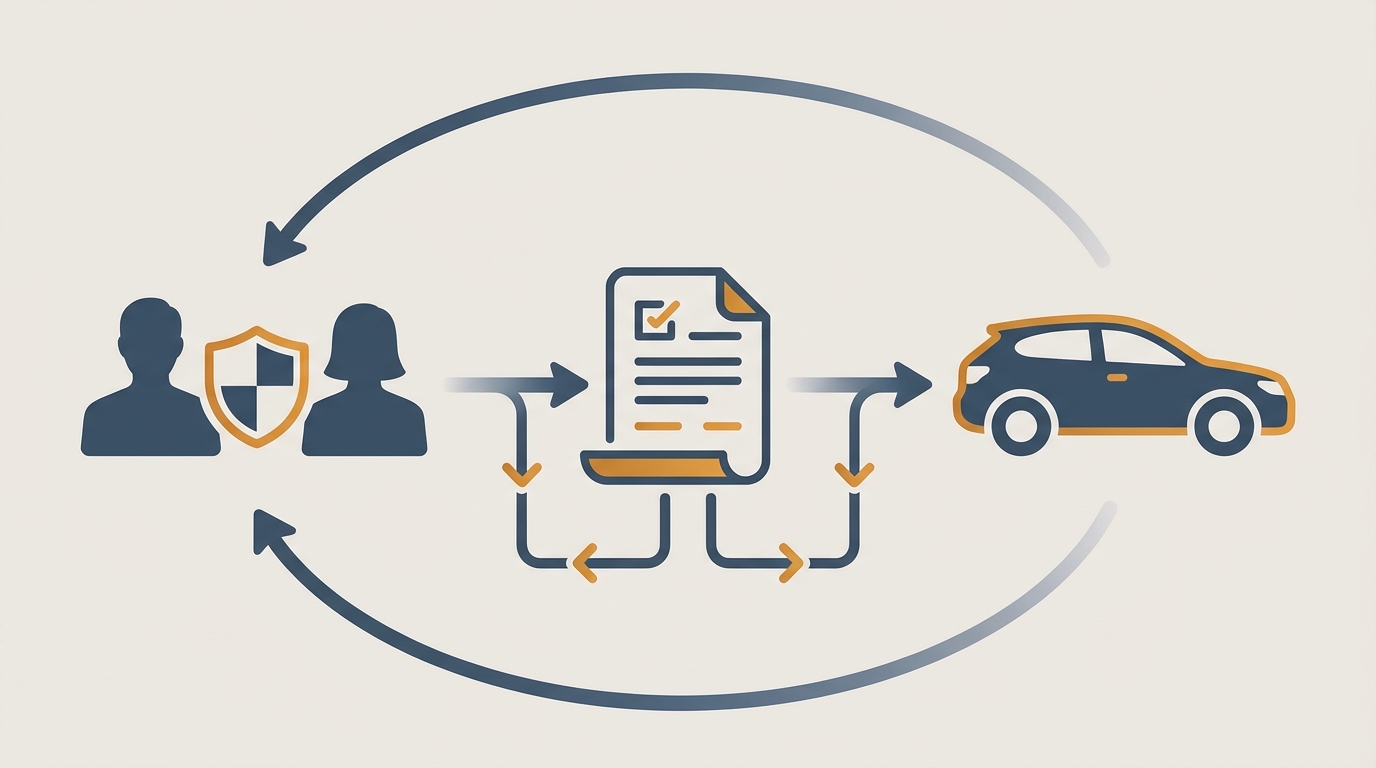
Mileage and condition affect a Nissan's trade-in value by moving the vehicle through discrete pricing tiers in the appraisal system, then subtracting estimated reconditioning costs line by line. A low-mileage Nissan in clean condition is benchmarked near wholesale auction averages for its trim; a high-mileage or rough-condition unit is marked down by a mileage adjustment (typically a few cents per mile over the band average) plus itemized deductions for tires, brakes, paint, glass, and interior work.
That is the straight answer. The rest of this guide walks through how the appraisal algorithm actually applies those adjustments — the bands, the grades, the reconditioning math — and what Everett, WA sellers can do before handing over the keys.
How does a Nissan dealer actually calculate trade-in value?
A dealer appraisal starts with a wholesale benchmark — usually a Manheim Market Report or Black Book average for the exact year, trim, drivetrain, and region — then applies two layers of adjustments: a mileage adjustment against the band average for that model year, and a condition-grade adjustment based on a physical inspection. Reconditioning cost estimates are subtracted last.
At Nissan of Everett, that benchmark is pulled for the Pacific Northwest region, which matters because auction values for AWD Rogues and Pathfinders run higher here than in the Sun Belt, while convertibles and rear-drive sports cars often appraise lower. The final number offered is the regional wholesale benchmark, plus or minus mileage, minus condition deductions, minus a margin for retail risk.
What mileage bands do appraisers use for Nissans?
Appraisers group vehicles into mileage bands tied to expected annual use for that model year. A vehicle inside its band is valued at the benchmark; one above or below is adjusted at a per-mile rate that varies by segment and model.
The practical effect: a lower-mileage Nissan Rogue will appraise meaningfully higher than the same trim with significantly more miles, even if both look identical on the lot. The curve is not linear, either — crossing certain mileage thresholds can trigger a bigger drop because the vehicle moves out of most certified pre-owned eligibility.
| Mileage Band (3-yr-old Nissan) | Typical Appraisal Position | Why |
|---|---|---|
| Under 24,000 | Premium to benchmark | Below-average use; CPO candidate |
| 24,000–45,000 | At benchmark | Normal use band |
| 45,000–60,000 | Modest deduction | Above band; still CPO-eligible on most trims |
| 60,000–85,000 | Larger deduction | Falls out of most CPO programs |
| Over 85,000 | Wholesale-only pricing | Likely headed to auction, not front line |
What condition grades do appraisers assign?
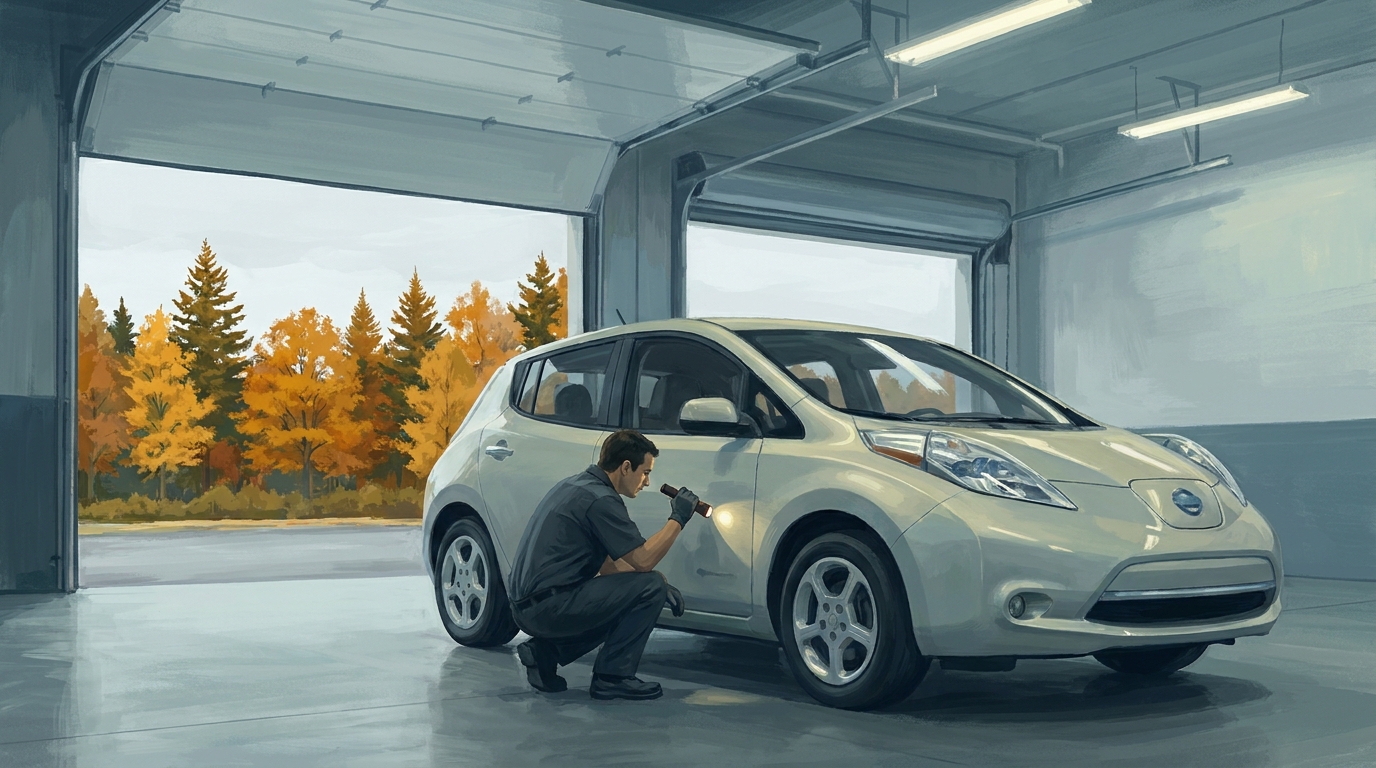
Most dealers use a tiered condition grading system borrowed from auction grading standards. Clean means no significant cosmetic or mechanical issues, service records present, and all keys and accessories accounted for. Average means normal wear for the mileage. Rough means visible damage or deferred maintenance. Damaged means structural or major mechanical issues.
The jump between condition grades alone can represent a meaningful dollar difference on a mainstream Nissan Sentra or Altima, and a larger one on a Pathfinder or Armada. The grade is not subjective — it is driven by the walkaround inspection, where the appraiser logs specific defects against a checklist and converts each one into a dollar estimate.
How are reconditioning costs calculated?
Reconditioning deductions are itemized, not estimated as a lump sum. The appraiser inspects tires (insufficient tread depth triggers replacement cost), brakes (worn pads), windshield (any chip in the driver's sightline), paint (panels needing blend or respray), interior (stains, tears, odors), and mechanical items flagged by a scan tool.
Each line gets a shop-rate estimate — a windshield replacement, a four-tire replacement, and a bumper respray each carry their own shop-rate estimate. The total is subtracted from the mileage-adjusted benchmark. This is why two identical Nissan models with the same mileage can appraise significantly apart: one needs tires and a windshield, the other does not.
How does Everett's climate affect Nissan trade-in condition?
The regional climate helps and hurts Nissan trade-ins in specific ways. The mild, salt-free winters are kinder to undercarriages than conditions in harsher climates, so appraisers in Everett rarely dock vehicles for frame corrosion — a meaningful advantage over trade-ins moving in from out of state.
Persistent rain and overcast conditions cut the other way. Moss and lichen on roof seams, waterlogged floor mats from leaky door seals, mildew in the HVAC system, and oxidized headlight lenses are common Everett-area deductions. Cars parked outdoors in the area often show clearcoat failure on horizontal surfaces after several years — a paint-correction deduction the appraiser will log.
What can Everett sellers do to protect their appraisal?
The highest-return pre-appraisal moves are the ones that eliminate specific line-item deductions. Replace wiper blades, top off fluids, address any check-engine light (a stored code almost always triggers a diagnostic deduction), clean the interior thoroughly, and gather service records — particularly documentation of timing-chain-era maintenance on CVT-equipped Rogues, Altimas, and Muranos, which appraisers specifically look for.
Nissan of Everett's service department performs multi-point inspections with oil and filter changes, which can be used ahead of a trade-in appointment to document the vehicle's mechanical condition in writing. Sellers weighing a trade against a new 2026 Nissan Rogue, starting at $29,690 (as of October 2026) or the 2026 Nissan Pathfinder, starting at $39,990 (as of October 2026) often benefit from timing the appraisal immediately after service, when records are fresh and small issues have been addressed.
"Great service and very kind staff. Didn't try and upsell on anything, best deal for a new car around" — 4★ · Max, Jul 2026
Frequently Asked Questions
Does a single accident on Carfax destroy my Nissan's trade-in value?
Not entirely, but it does trigger a title-history deduction regardless of repair quality. A minor accident with no structural damage will reduce the clean benchmark value; a major accident with frame repair can cost significantly more. The deduction is applied because the vehicle will carry the same Carfax disclosure when the dealer resells it, limiting the retail buyer pool.
Is it worth fixing dents and scratches before trading in?
Usually no for body shop work, often yes for paintless dent repair. Dealers deduct body work at wholesale shop rates, which are lower than what a retail body shop charges a consumer — so paying more to fix damage than the dealer would have deducted loses money. Paintless dent repair, however, often eliminates a deduction that exceeds its cost.
How much does mileage really matter on a newer Nissan?
On a Nissan under three years old, mileage matters a great deal because the vehicle is still within certified pre-owned eligibility windows and warranty coverage. A 2024 Nissan with significantly lower mileage versus higher mileage can see a meaningful difference at appraisal. After year five, mileage still matters but condition and maintenance history begin to carry more weight.
Do aftermarket modifications hurt trade-in value?
Most aftermarket modifications are treated as neutral or negative at trade-in appraisal. Dealers value vehicles based on how they will resell to the broadest possible buyer pool, which means stock configuration. Lift kits, aftermarket exhausts, tint beyond legal limits, and custom wheels generally reduce value because they must either be reversed or disclosed. Original equipment, retained in good condition, protects value.
How does Washington's sales tax treatment of trade-ins work?
Washington state allows a trade-in tax credit — buyers only pay sales tax on the difference between the new vehicle's purchase price and the trade-in allowance, not on the full new vehicle price. Depending on the trade-in value and local rate, that credit can represent meaningful tax savings, which effectively raises the net value of trading in versus selling privately.
Should I detail my Nissan before the appraisal?
Yes — a thorough cleaning is one of the highest-return pre-appraisal moves. Appraisers grade condition partially on first impression, and a clean vehicle is more likely to receive a Clean grade rather than Average on borderline calls. A professional detail can return several times its cost in appraisal value by eliminating interior-reconditioning deductions and improving the condition grade.
The bottom line
Mileage and condition do not affect Nissan trade-in value through vague judgment calls — they move the vehicle through defined bands and grades, each tied to specific dollar adjustments and itemized reconditioning deductions. Sellers who understand the mechanism can take targeted steps (service documentation, detailing, paintless dent repair, timing) to protect several hundred to several thousand dollars in appraisal value.
Readers in Everett, WA who want a transparent walkthrough of how their specific Nissan appraises can reach Nissan of Everett at (425) 347-5763 or https://www.nissanofeverett.com to schedule a trade-in evaluation at 10500 Highway 99.