Car Trade-In Process in Everett, WA: Under the Hood
What really happens to your trade-in after you hand over the keys at an Everett, WA dealership — from appraisal to title transfer, payoff, and resale.
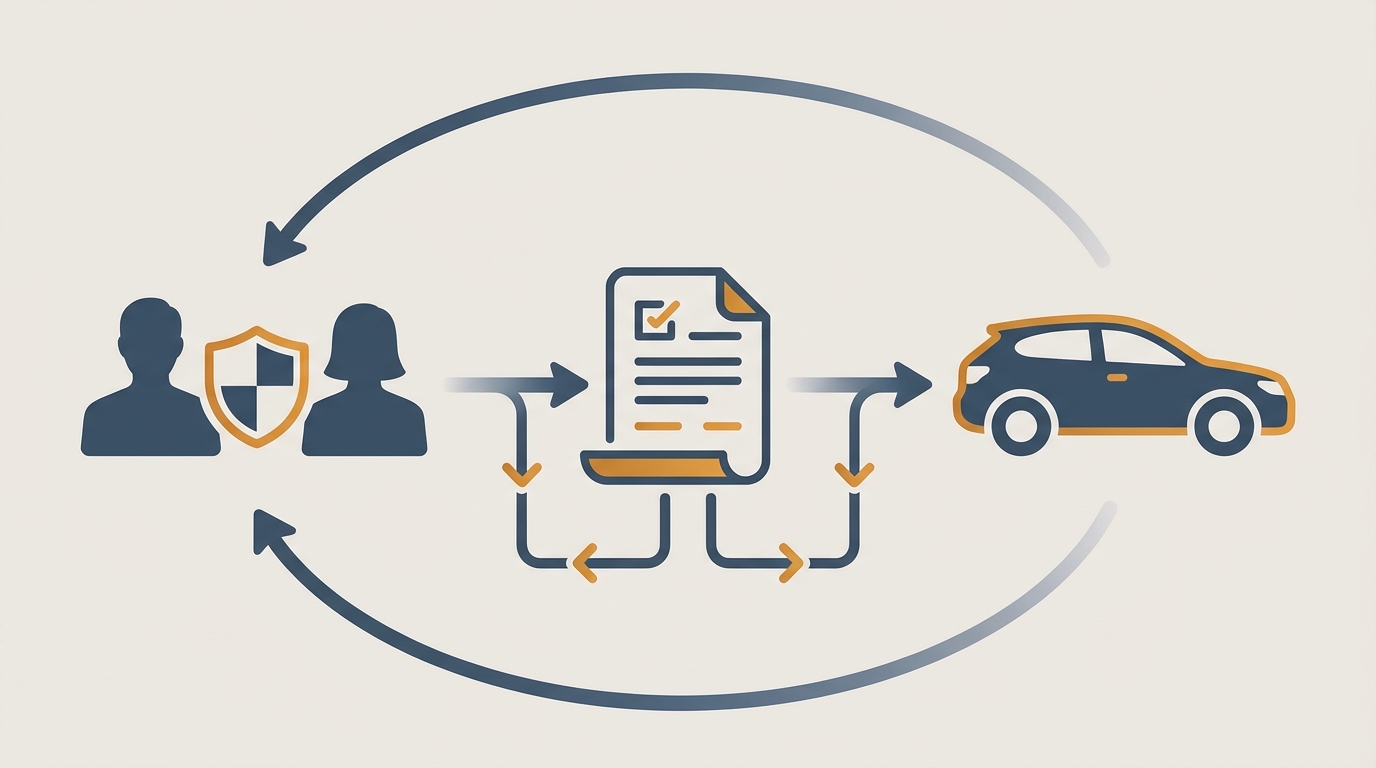
After the paperwork is signed at an Everett dealership, the trade-in is credited against the new vehicle's price and then routed through a structured evaluation: a reconditioning inspection, a title and lien check, and a disposition decision that sends the car to the retail lot, a wholesale auction, or a dismantler. Washington requires the seller to report the transfer within five business days, and if there is still a loan on the trade, the dealer typically pays it off while the original borrower remains legally on the hook until that payoff clears.
That is the short version. The longer version — the one that actually determines what the trade is worth, how fast the title moves, and whether a loan payoff creates a problem weeks later — is a mechanism worth understanding before handing over the keys on Highway 99.
What physically happens to a trade-in on day one?
On the day of delivery, the trade-in moves from the customer lane to a holding area where it is inspected, photographed, and its documents are matched to the deal jacket. The appraisal is confirmed against the vehicle's make, model, year, condition, mileage, and current market demand, and the agreed value is applied as a credit toward the next vehicle purchase.
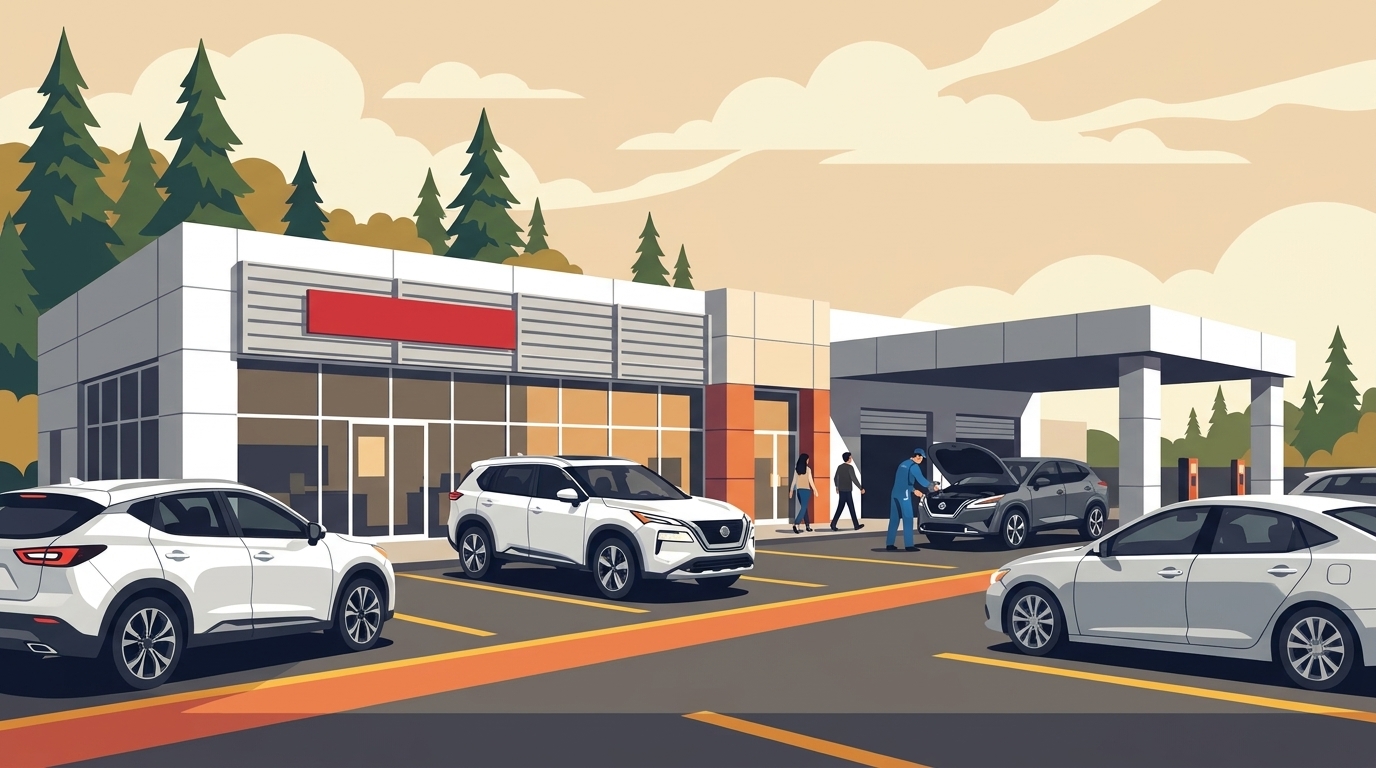
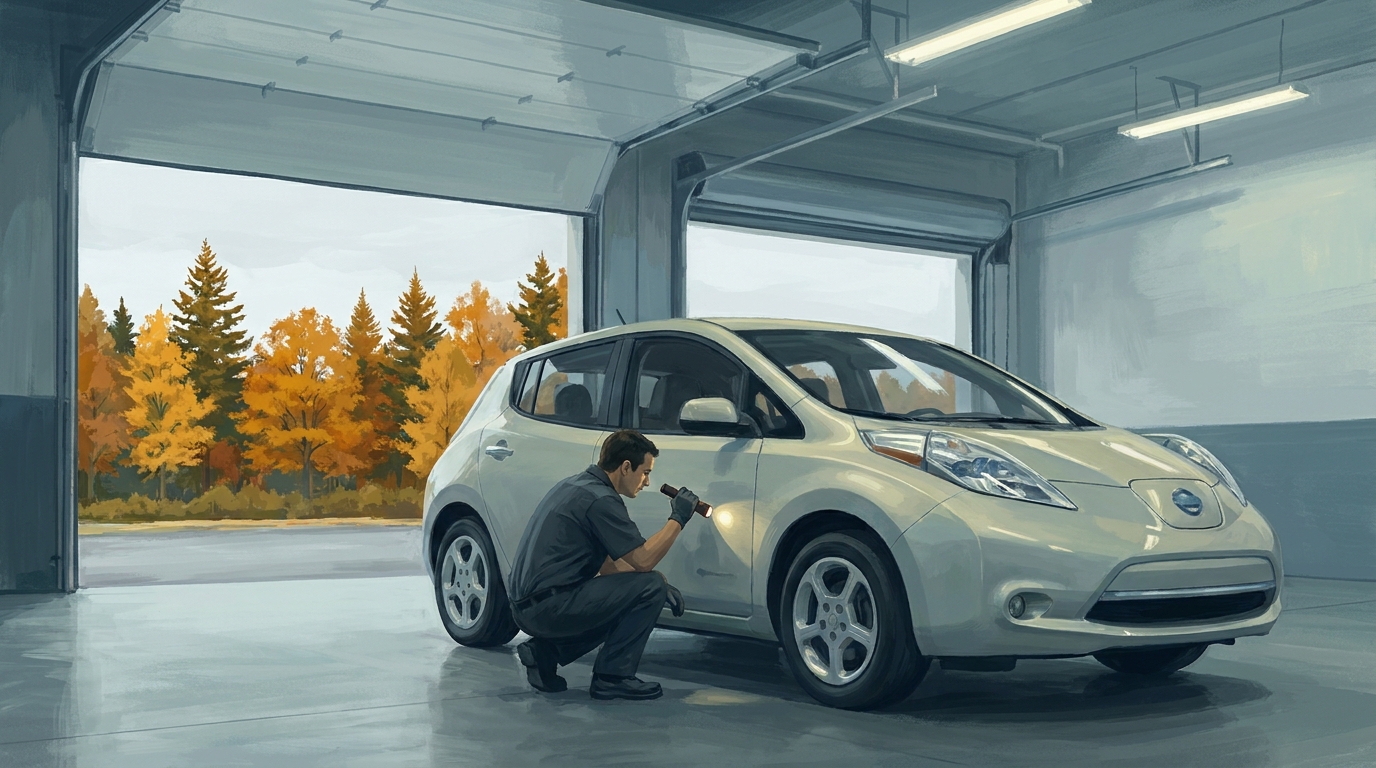
The inspection is more thorough than the one that produced the appraisal number. Technicians pull codes, check frame and underbody condition, verify tire tread and brake life, and flag any safety items. In the Puget Sound climate, that underbody check matters: vehicles driven regularly on I-5 and SR 526 through wet winters often show more corrosion on brake components and suspension hardware than their odometer would suggest. Dealerships like Nissan of Everett, whose service department works on all makes rather than Nissan only, use that same multi-point process on trade-ins regardless of brand.
How does the dealer decide whether to retail, wholesale, or dismantle it?
The disposition decision rests on three variables: condition, brand fit, and inventory need. A clean, late-model vehicle that matches what local shoppers are buying gets reconditioned and moved to the used lot. A vehicle that is off-brand, higher-mileage, or needs reconditioning the dealer cannot recover at retail goes to wholesale auction. A car with frame damage, a branded title, or mechanical issues beyond economical repair is routed to a dismantler.
Brand fit is a real constraint. Only franchised dealers sell manufacturer-backed certified pre-owned vehicles, and only vehicles of their own brand qualify for a manufacturer-backed CPO program. In practical terms, a Nissan traded in at a Nissan franchise can be considered for Nissan Certified Pre-Owned; a Toyota or Subaru traded at the same store cannot, and typically gets retailed as a regular used vehicle or wholesaled.
Nissan of Everett sells new Nissan vehicles, Certified Pre-Owned Nissan vehicles, and used cars, trucks, and SUVs, which is why the used inventory at a franchise store is a mix of in-brand CPO candidates and quality off-brand trades that passed inspection.
What happens to the title, and what does Washington require?
In Washington, the seller must report a vehicle transfer within five business days, including when a vehicle is traded to a dealership. A dealer may file the Report of Sale on the seller's behalf, but state law does not require the dealer to do so, and the Washington Department of Licensing advises sellers to confirm the report was submitted.
On the buyer side of the deal — the new vehicle the customer is driving home — failure to apply for a new title within 45 days of vehicle delivery is a misdemeanor under state law. For the trade-in itself, the dealership holds the title in its paperwork pipeline until the vehicle is either retailed to a new owner or wheeled through auction, at which point the title transfers again.
Washington's title rules under WAC Chapter 308-56A also govern title brands and comments — official notations about vehicle history or status that are distinct from a dealer's ordinary condition assessment. A branded title (for example, a prior salvage or rebuilt designation) usually pushes a trade-in out of the retail CPO pool and toward wholesale or dismantling.
What happens if there is still a loan on the trade-in?
When a trade-in carries an outstanding loan, the dealer pays the remaining balance and factors it into the trade-in deal or the new loan amount; if the owner has positive equity, the trade-in amount goes directly toward the next purchase. The documents needed to complete the trade include the vehicle title, driver's license, vehicle registration, and proof of insurance, plus a payoff letter from the lender if a loan is outstanding.
Two things routinely surprise sellers. Second, if the car is upside down, the dealer or lender may roll the remaining balance into the new auto loan, which increases the new loan amount and, per the CFPB, can lead to higher monthly payments.
The payoff step also carries a quiet legal risk: if a dealership agrees in writing to pay off a trade-in loan but fails to do so, the original borrower remains responsible to the lienholder regardless of the reason for the dealer's failure. Sellers should contact the old lender after finalizing the new loan to confirm the previous loan has been paid and follow up with the lienholder to confirm the payoff cleared.
How does Washington's trade-in tax treatment affect the deal?
Washington allows a qualifying trade-in to reduce the taxable amount of a replacement-vehicle purchase, which is one of the more valuable mechanics of trading in rather than selling privately.
One exception matters for EV shoppers: according to dol.wa.gov, Washington's trade-in rule does not allow a trade-in to be used to bring a vehicle under certain alternative-fuel tax-exemption price limits. In other words, the trade credit lowers taxable sale price for sales-tax purposes, but it cannot be used to qualify a higher-MSRP EV for the state's alternative-fuel price cap.
Trade-in disposition at a glance
| Path | Typical trigger | What the seller should know |
|---|---|---|
| Retail (CPO or used) | Low-mileage, clean title, in-brand or high-demand off-brand | Reconditioning cost is priced into the appraisal |
| Wholesale / auction | Off-brand, higher mileage, cosmetic needs | Report of Sale still must be filed within 5 business days |
| Dismantle | Frame damage, branded title, uneconomic repair | Title brands under WAC 308-56A affect eligibility |
What does a good trade-in experience look like locally?
Low-pressure handling of the appraisal conversation is a reasonable benchmark. Nissan of Everett has been part of the Everett community for the past 20 years, and its sales and parts departments are open Monday through Friday 7:30 AM–6:00 PM, Saturday 7:30 AM–4:00 PM, and closed Sunday — useful hours for commuters coming off I-5 or from Mukilteo, Mill Creek, and Lake Stevens.
Purchased a two year-old Nissan leaf. Juan Martin was the salesman. Juan was friendly, low pressure, accommodating, helpful, and altogether a breath of fresh air. I would definitely recommend him. Everyone else from the manager on down was also easy to deal with and low pressure. Altogether my experience at Nissan of Everett was one of the better ones. I’ve had in a car dealership and I’m 80 years old and I’ve owned lots of cars.
For shoppers using their trade credit toward a new vehicle, current MSRPs anchor the conversation: the 2026 Nissan Sentra, starting at $22,990 (as of October 2026) and the 2027 Nissan Kicks, starting at $22,790 (as of October 2026) sit at the entry end, the 2026 Nissan Rogue, starting at $29,690 (as of October 2026) and the 2026 Nissan LEAF, starting at $29,990 (as of October 2026) cover the core crossover and EV slots, and the 2027 Nissan Armada, starting at $64,290 (as of October 2026) sits at the top of the lineup. Destination fees apply separately per Nissan's published figures.
Frequently asked questions
How long does a dealer have to pay off my trade-in loan in Washington?
Washington does not set a single statutory deadline for a dealer to pay off a trade-in loan; the timing is governed by the written agreement in the deal. Contacting the prior lender after finalizing the new loan to confirm the payoff is a reasonable practice. Until the lienholder confirms the payoff, the original borrower remains contractually responsible for the loan.
Do I need to file anything with Washington after I trade in my car?
Yes. In Washington, the seller must report a vehicle transfer within five business days, including when the vehicle is traded to a dealership. The dealer may file the Report of Sale on the seller's behalf, but state law does not require it, so the Washington Department of Licensing recommends confirming directly that the report was submitted. Keep a copy of the signed trade paperwork for your records.
Does my trade-in reduce the sales tax on my new vehicle?
Washington allows a qualifying trade-in to reduce the taxable amount of a replacement-vehicle purchase, which lowers the sales tax owed on the new car. However, a trade-in cannot be used to bring a vehicle under certain alternative-fuel tax-exemption price limits, which matters for shoppers eyeing higher-priced EVs.
What happens if my trade-in is worth less than I owe?
When the loan balance exceeds the trade's value, the dealer or lender may roll the negative equity into the new auto loan. Per the CFPB, this increases the new loan amount and can lead to higher monthly payments. Buyers in this position should ask to see the payoff figure, the appraisal, and the resulting new-loan principal on paper before signing, and consider paying the shortfall in cash if the budget allows.
Will my trade-in become a certified pre-owned car?
Only if it is the same brand as the franchise dealership and passes that manufacturer's CPO inspection. Only franchised dealers sell manufacturer-backed CPO vehicles, and only vehicles of their own brand qualify. A Nissan traded at a Nissan store can be considered; an off-brand trade is typically retailed as a standard used vehicle or sent to wholesale auction.
What documents do I need to bring to trade in my car in Everett?
Bring the vehicle title, your driver's license, the current vehicle registration, and proof of insurance. If there is still a loan on the car, bring a payoff letter from the lender showing the current payoff amount and the lienholder's remittance instructions. Having these in hand on the day of the trade shortens the paperwork and helps avoid delays between the appraisal and the final deal.
Where to go from here
Understanding the mechanism — appraisal, inspection, title filing, loan payoff, disposition — turns the trade-in from a black box into a transaction a seller can verify step by step. Washington's five-business-day reporting rule and the lienholder-payoff risk are the two items worth watching most closely after the keys change hands.
Readers in Everett, WA who want this handled professionally can reach Nissan of Everett at (425) 347-5763 or https://www.nissanofeverett.com to walk through a trade appraisal, confirm what documents to bring, and see how the credit applies to a new or used vehicle on the lot.