Nissan Trade-In Value Factors in Everett, WA
Why your Nissan trade-in appraisal came in lower than expected in Everett — the local market forces, seasonal shifts, and condition factors that drive the offer.
A Nissan trade-in appraisal in Everett typically lands 20–30% below comparable retail asking prices, and the exact number is driven by four local forces: model liquidity on the Highway 99 and Evergreen Way dealer corridor, Pacific Northwest weather wear (rust from road salt runoff, moss, paint oxidation), seasonal demand swings that favor AWD crossovers in fall and fuel-sippers in spring, and Washington's trade-in sales tax credit that quietly adds several hundred dollars of value back into the deal. If a recent offer felt low, one or more of those levers is working against the vehicle.
Why did the trade-in offer come in below the online estimate?
Online estimators quote a national wholesale average, but Everett appraisers price against local auction data and their own lot turnover. When a model is slow-moving in the Puget Sound market — for example, older Cubes or Muranos that sit on independent lots for 400+ days according to CarEdge inventory data — the dealer discounts the offer to protect against carrying cost. That gap between the online number and the in-person offer is almost always local liquidity, not a lowball.
A 2026–2026 Altima in average condition with under 50,000 miles trades in the Everett market for roughly $11,000 to $13,000, while the same car retails between $16,195 and $21,500. That spread — the reconditioning budget, auction fees, and margin — is standard, and it widens for anything a dealer expects to sit longer than 60 days.
How does Everett's local market shape Nissan trade-in values in 2026?
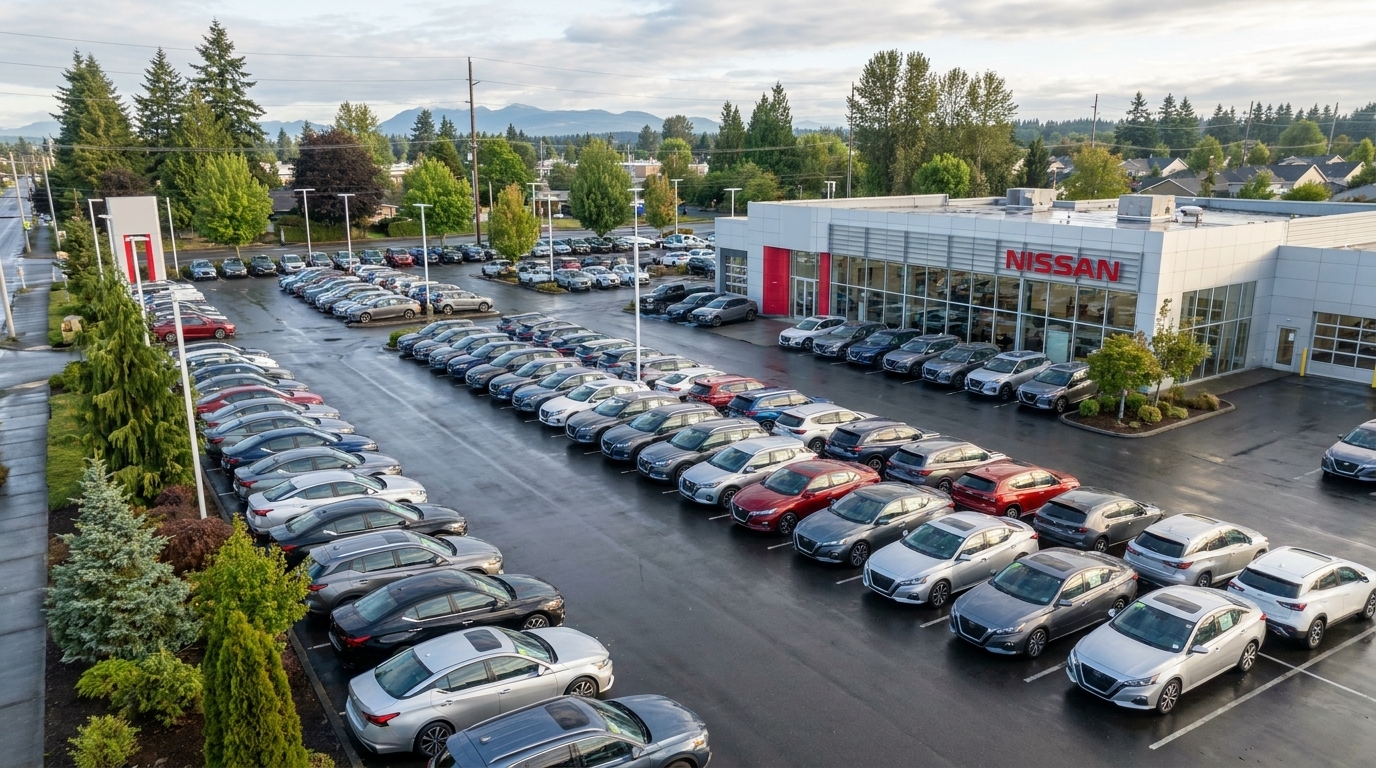
Everett's dealer density along Highway 99 and Evergreen Way — where Nissan of Everett operates at 10500 Evergreen Way — creates real competitive pressure on trade-in offers, but only for models that sell quickly. Rogue, Pathfinder, and Altima move fast; Cube, older Maxima, and first-gen Murano don't. That split explains most appraisal surprises.
Regional demand in Snohomish County favors AWD crossovers and high-MPG sedans. A 2026–2026 Rogue with clean title and average miles trades between $20,000 and $23,000, against a retail asking price around $24,572 for a 2026 Rogue S at nearby franchise lots. By contrast, a 2026–2026 Maxima, Cube, or Murano trades in the $1,500–$3,000 range, with dealer retail asks of $3,500–$4,450. The narrower the spread, the softer the offer — because there's less margin to work with.
What condition issues quietly reduce Nissan appraisals in the Pacific Northwest?
Pacific Northwest climate wear is the single most common reason an Everett trade-in comes in below KBB or Edmunds estimates. Moss growth in door seams, clear-coat oxidation from constant UV-through-cloud exposure, undercarriage corrosion from mag chloride de-icer used on I-5 and US-2 in winter, and cracked windshield chips from mountain-pass gravel all get flagged during inspection and priced into the offer.
Appraisers in Everett also weigh interior humidity damage — musty carpet, foggy headliners, mildew on seat belts — which is uncommon in drier markets but routine here. Addressing these before appraisal (detail, headlight restoration, windshield chip repair) frequently recovers $300–$800 on mainstream Nissan models.
How do seasonal demand shifts change what Everett dealers will pay?
Timing matters. AWD Rogue and Pathfinder appraisals typically firm up from October through February, when Snohomish County buyers shop ahead of Stevens Pass and Snoqualmie ski season and the first hard freezes. Fuel-efficient Altimas and Sentras tend to appraise more strongly from March through early summer as commute-cost anxiety rises and tax refunds hit.
EV trade-ins, including the Ariya, are more volatile. A 2026 Ariya FWD currently trades between $16,000 and $18,000 against a used retail ask around $21,989 in Everett — a spread that reflects cautious dealer pricing on battery-age uncertainty and thinner local EV buyer demand than Seattle proper.
What does the Everett trade-in landscape look like at a glance?
| Model / Year | Trade-In Range (Everett) | Retail Asking Range | Liquidity |
|---|---|---|---|
| 2026–2026 Altima (<50k mi) | $11,000 – $13,000 | $16,195 – $21,500 | High |
| 2026–2026 Altima | Varies by trim/miles | $16,350 – $18,199 | High |
| 2026–2026 Rogue (clean title) | $20,000 – $23,000 | ~$24,572 (2026 S) | High |
| 2026 Pathfinder S | Varies by miles/condition | ~$27,111 | High |
| 2026 Ariya FWD | $16,000 – $18,000 | ~$21,989 | Moderate (EV volatility) |
| 2026–2026 Maxima / Cube / Murano | $1,500 – $3,000 | $3,500 – $4,450 | Low (400+ days on lot) |
How does Washington's trade-in tax credit change the real number?
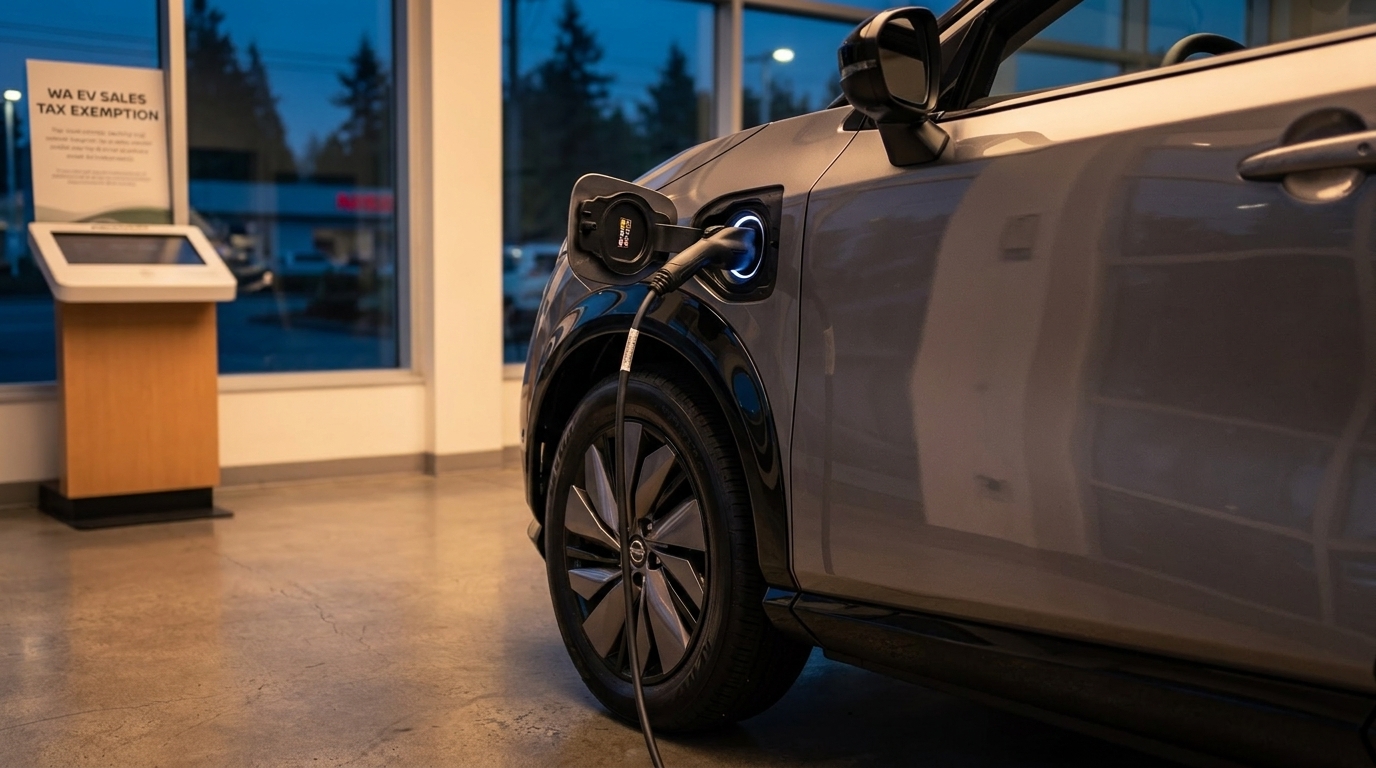
Washington subtracts the trade-in value from the taxable purchase price of a new or used vehicle before sales tax is calculated. In Everett, where the combined state and local rate approaches 9–10% (6.5% state plus local additions), a $13,000 trade-in on an Altima swap effectively adds roughly $1,170–$1,300 of tax savings on top of the appraisal — value a private sale cannot replicate.
That tax mechanic is why an offer that looks $1,000 lower than a Craigslist ask often nets more money in practice. Washington also caps dealer documentation fees at $200, which is what franchise stores including Nissan of Everett work within.
What should Everett sellers do before requesting an appraisal?
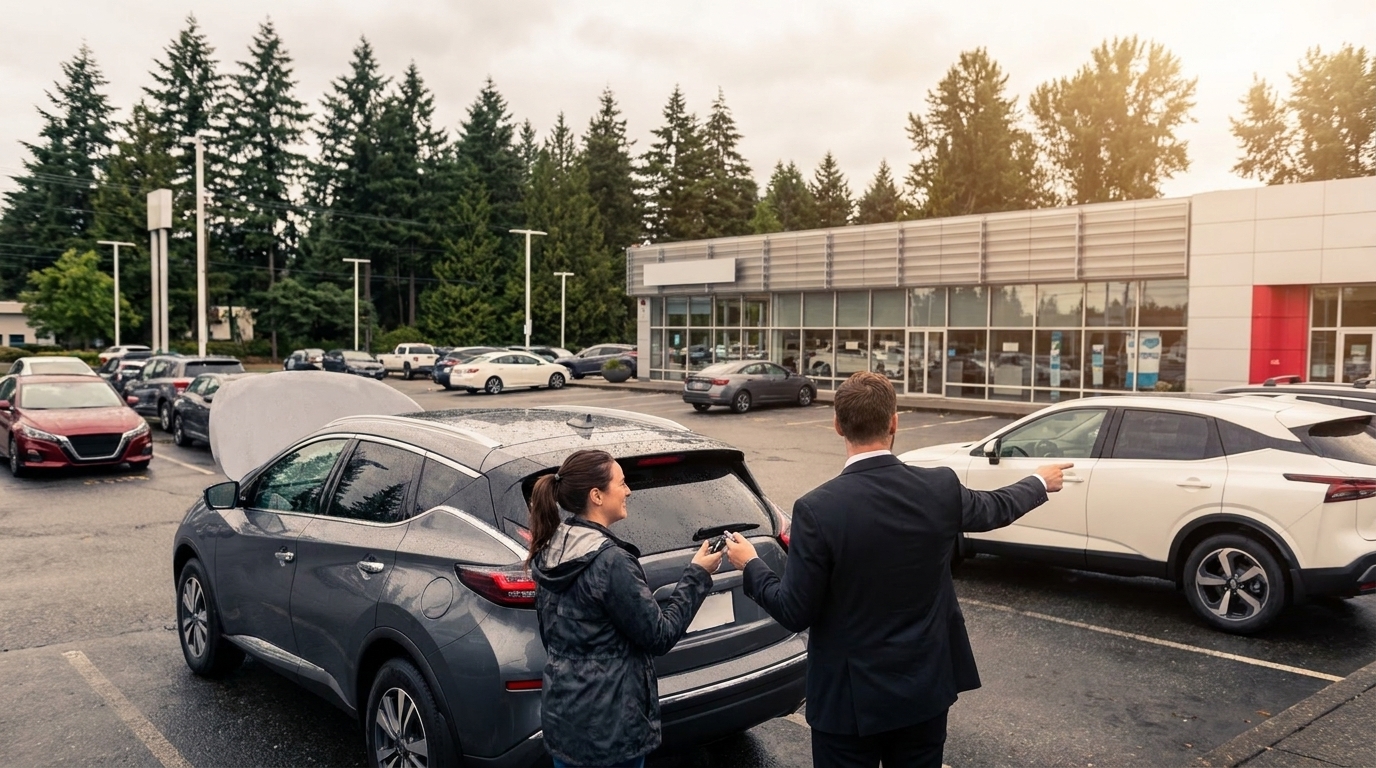
Bring the clear title (or the current loan payoff quote if there's a lien), both key fobs, current registration, and any service records. Detail the vehicle, address obvious cosmetic issues, and pull a KBB Instant Cash Offer through Nissan of Everett's online tool as a baseline before visiting any lot. If negative equity exists, Washington dealerships can roll the difference into the replacement loan, though that shifts cost, not eliminates it.
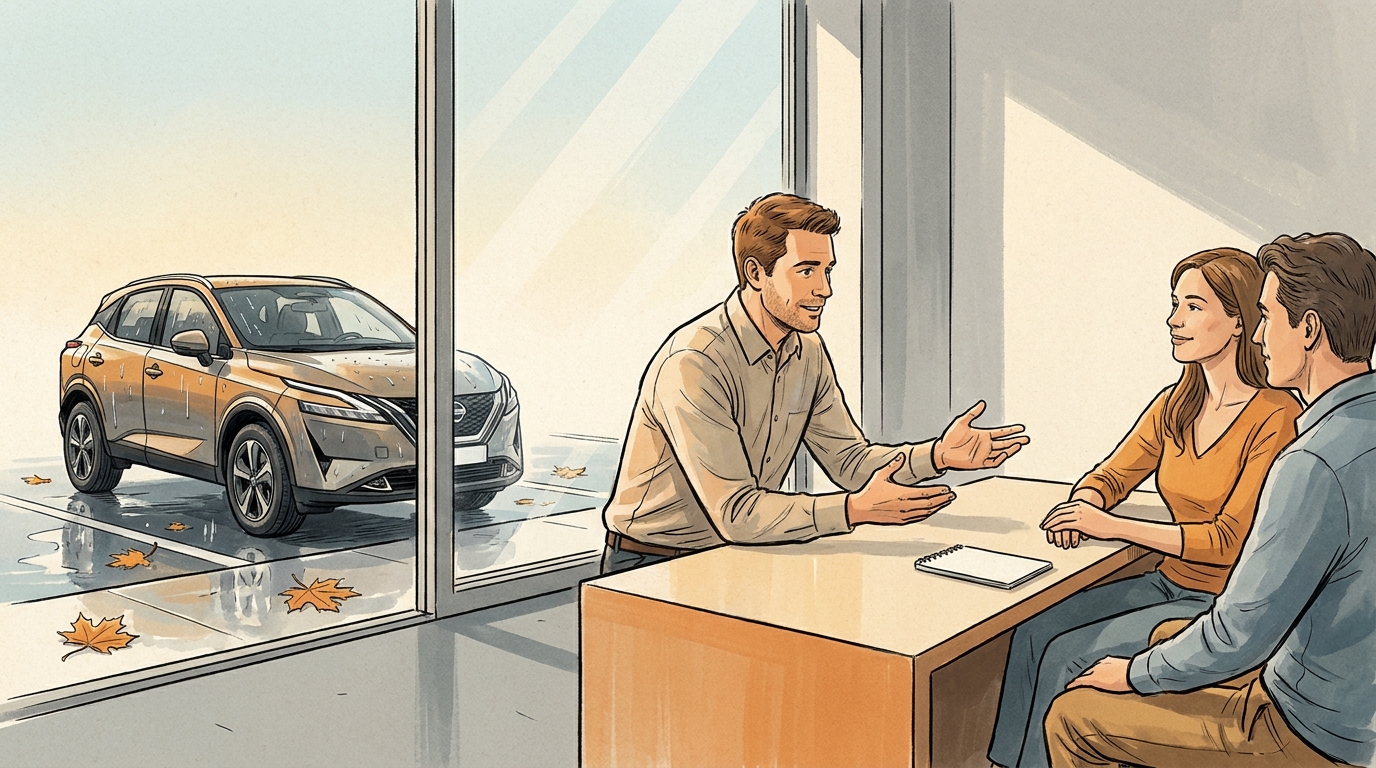
Sellers should expect a straightforward appraisal conversation from a reputable franchise Nissan store like Nissan of Everett.
Frequently asked questions
Why is my Nissan trade-in offer lower in Everett than the KBB online estimate?
KBB online estimates use national wholesale averages, while Everett appraisers price against local auction results and lot turnover data. Slow-moving models such as older Cubes and Muranos, which some Everett independents hold 400+ days, get discounted more aggressively. Weather-related condition issues common to the Pacific Northwest — moss, oxidation, undercarriage corrosion — also reduce the in-person offer versus the online number.
Does Washington's sales tax really make a dealer trade-in better than a private sale?
Often yes. Washington subtracts the trade-in value from the taxable purchase price before applying sales tax. With Everett's combined rate near 9–10%, a $13,000 trade-in saves roughly $1,170–$1,300 in tax on the replacement vehicle. A private sale that pays $500–$1,000 more than the trade-in offer can still net less after that tax credit is factored in.
What's a realistic trade-in range for a low-mileage 2026–2026 Nissan Altima in Everett?
A 2026–2026 Altima in average condition with under 50,000 miles typically trades between $11,000 and $13,000 in the Everett market. Comparable retail asking prices run $16,195 to $21,500. Trim level, service history, single-owner status, and time of year all move the number within that range, with spring appraisals generally firmer as fuel-economy demand rises.
Are older Nissans like the Cube or first-gen Murano worth trading in at all?
They are, but expect $1,500 to $3,000 based on current Everett dealer retail asks of $3,500 to $4,450 for 2026–2026 Maxima, Cube, and Murano listings. Some independents hold these over 400 days, which suppresses trade-in offers. The Washington sales tax credit still applies, so trading in often beats the effort and risk of a private sale on a low-value car.
How much do EVs like the Nissan Ariya lose at trade-in versus retail?
The 2026 Ariya FWD currently trades in the Everett market between $16,000 and $18,000 against used retail asking prices around $21,989. That spread is wider than comparable ICE crossovers because battery-age uncertainty and thinner local EV demand outside Seattle push dealers toward conservative offers. Complete service and charging records help narrow the gap.
Can I trade in a Nissan if I still owe more than it's worth?
Yes. Washington dealerships can roll negative equity — the difference between the loan payoff and the appraised value — into the new vehicle loan. This does not erase the shortfall; it finances it, increasing the monthly payment or loan term. Bringing the current payoff quote from the lender to the appraisal appointment allows the dealer to structure the deal accurately in one visit.
The bottom line for Everett sellers
A trade-in appraisal in Everett is a function of the model's local liquidity, its Pacific Northwest condition profile, the calendar month, and the Washington tax math working in the seller's favor. When those levers align — a Rogue or Altima in clean condition, detailed and documented, appraised in its strong season — offers land near the top of the ranges above. When they don't, understanding why is the first step to negotiating a better number or timing the trade differently.
Readers in Everett who want a documented appraisal on a Nissan trade-in can reach Nissan of Everett at https://www.nissanofeverett.com or at 10500 Evergreen Way to run the KBB Instant Cash Offer tool and compare it against a live in-person inspection.