When to Buy a Car: Seasonal Timing Guide for Best Deals
Discover the best time to buy a car in 2026 with this seasonal timing guide. Learn when dealership promotions peak and how to maximize savings in Everett.
When to Buy a Car: Seasonal Timing Guide for Best Deals
Timing a car purchase correctly can mean the difference between paying sticker price and walking away with a genuinely competitive deal. Yet most buyers approach car buying timing the same way they approach grocery shopping — whenever the need arises. The reality is that seasonal car sales cycles follow predictable patterns, and understanding those patterns gives buyers measurable leverage at the negotiating table.
This guide breaks down the calendar strategically, identifying which months, seasons, and specific windows tend to produce the strongest dealership promotions — and why the underlying mechanics work the way they do.
How Seasonal Car Sales Cycles Actually Work
Dealerships operate under monthly, quarterly, and annual sales targets set by manufacturers. When those targets are within reach — or at risk of being missed — incentives shift. Manufacturer rebates increase, financing rates drop, and sales staff gain more flexibility on price. These pressure points are largely predictable because they follow the same calendar year after year.
Understanding this structure reframes car buying timing from a matter of luck into a matter of research. Buyers who align their purchase with periods of high dealer motivation consistently report better outcomes than those who buy impulsively. In a market like Everett, where inventory levels and regional demand also play a role, timing awareness becomes even more valuable.
The Best Months to Buy a Car in 2026
End of the Month: A Recurring Opportunity
Regardless of season, the final days of any calendar month tend to be favorable for buyers. Sales consultants working toward monthly quotas are often more willing to work on pricing and terms during this window. The effect is modest but consistent — showing up on the 28th rather than the 3rd of any given month is a low-effort timing strategy that costs nothing.
The same logic applies to the end of quarters — March, June, September, and December — when pressure compounds across both monthly and quarterly targets simultaneously.
December and Year-End: The Strongest Window
December consistently produces some of the most aggressive dealership promotions of the year, and that pattern holds true in 2026. Manufacturers push hard to close out annual production figures, dealers work to clear remaining model-year inventory, and the combination produces financing deals and cash-back offers that rarely appear at other points in the calendar.
The trade-off is that inventory can thin late in the month as popular configurations sell through. Buyers who prioritize selection should shop in early-to-mid December rather than waiting until the final week. In Everett, where winter weather can affect how motivated buyers feel about visiting lots, arriving prepared during this window pays off.
October and November: New Model Overlap
By October, most automakers have begun delivering the following model year's vehicles to dealerships. That means current-model-year inventory needs to move, and dealers reduce prices accordingly. A buyer willing to purchase the current model year — rather than waiting for the newest version — can often secure meaningful discounts without sacrificing much in terms of features or reliability.
November adds Black Friday and pre-holiday promotional events to the equation. Manufacturers frequently time national incentive campaigns to this period, creating a compounding effect alongside the natural model-year clearance dynamic.
Seasonal Patterns: A Quarter-by-Quarter Breakdown
Winter (January–February): Overlooked but Effective
January is statistically one of the quieter months for car sales volume, which works in buyers' favor. Foot traffic drops after the holiday rush, dealership lots carry over unsold year-end inventory, and manufacturers maintain New Year incentive packages to restart momentum. Buyers willing to shop in cold weather often face less competition for available stock.
February follows a similar pattern, with Presidents' Day weekend typically marking the first significant promotional push of the calendar year. Manufacturer-backed financing offers and lease specials frequently anchor these campaigns.
Spring (March–May): Competitive but Active
Spring represents the beginning of peak buying season. Tax refund money enters the market, weather improves, and consumer confidence in large purchases tends to rise. Volume picks up sharply, which means inventory is plentiful but dealer motivation to discount is somewhat lower than in slower months.
That said, the end-of-quarter pressure in March can produce deals, and manufacturers often run spring sales events specifically to capture this seasonal demand. Spring is a reasonable time to buy, but buyers should not expect the same flexibility they would find in December or January.
Summer (June–August): Timing Depends on Strategy
Summer is high-volume season for car dealerships. Families purchasing before school years, graduates entering the market, and general consumer activity all drive foot traffic. From a pure timing standpoint, summer is not the optimal window for maximum discount — but it is the best time for selection, as lots are stocked heavily and manufacturers are running competitive programs to support the volume.
June's end-of-quarter window is worth noting as an exception. Buyers who can time a June purchase to the final few days of the month often find more room to negotiate than the rest of summer would suggest.
Fall (September–November): The Strategic Sweet Spot
Many car-buying analysts consider fall — particularly October and November — the most balanced period for timing a purchase. New model year vehicles have arrived, current-model-year pricing is under pressure, and the approaching holiday season begins generating manufacturer incentives. Buyers get the benefit of fresh inventory alongside meaningful motivation for dealers to move older stock.
For buyers in Everett who want a combination of selection and pricing flexibility, September through November represents a window worth prioritizing.
Dealership Promotions: What to Look For
Not all promotional periods are created equal. The most impactful dealership promotions typically fall into three categories: manufacturer cash-back rebates (applied directly to the purchase price), low or zero-percent financing offers (which reduce total interest paid over the loan term), and lease specials (which lower monthly payments by adjusting residual values or money factors).
These promotions are often stackable — a buyer may qualify for a cash rebate and a reduced financing rate simultaneously. Understanding which programs are active before setting foot in a dealership allows buyers to enter negotiations informed rather than reactive. Most manufacturer websites publish current incentive schedules, and contacting Nissan of Everett directly is one of the most reliable ways to confirm which regional offers apply at any given time.
Frequently Asked Questions About Car Buying Timing
What is the single best month to buy a car?
December consistently ranks as the month with the most aggressive dealership promotions, driven by annual manufacturer targets, model-year clearance, and holiday incentive campaigns. However, January and October are strong alternatives for buyers who miss the December window or prefer less competitive lots.
Does the day of the week matter for car buying?
Weekdays — particularly Monday through Wednesday — tend to result in more attentive service and slightly more negotiating flexibility than weekend visits. Dealerships are busiest on Saturdays, which shifts leverage slightly toward the dealer simply due to volume of traffic.
Is it better to buy at the end of a model year or the beginning?
End of model year (typically September through November) generally produces better pricing on the outgoing model. The trade-off is that selection narrows as inventory sells through. Buyers who want a specific trim or color should move earlier in that window rather than waiting.
Do local market conditions affect timing in Everett?
Yes. Regional demand patterns, local inventory levels, and seasonal weather all influence how aggressively Everett-area dealerships price vehicles at different points in the year. Winter months, when buyer traffic is lower locally, can create additional flexibility beyond what national timing data would suggest.
How do I know if a promotional offer is genuinely good?
The most reliable method is to compare the promotional financing rate against current market rates and calculate total cost of ownership over the loan term. A zero-percent financing offer, for example, is only valuable if the purchase price itself is competitive — some promotions require buyers to forgo cash rebates in exchange for reduced financing rates. Contact Nissan of Everett to review which current programs can be combined.
Does buying a car online change the best timing windows?
No — the underlying calendar pressure points remain the same regardless of how the transaction is completed. Manufacturer rebates, financing specials, and model-year clearance incentives apply whether a buyer starts the process online or walks onto the lot. The end-of-month, end-of-quarter, and year-end windows still produce the most dealer motivation, and those dynamics hold whether you are negotiating in person or through a digital retail process.
Should I time my purchase around interest rate changes?
Broader interest rate conditions can affect what manufacturer-backed financing programs look like from month to month, but trying to predict rate movements is less reliable than working the seasonal calendar. Manufacturer zero-percent or low-rate offers are often insulated from market rate shifts. Focusing on December, October–November, and late January still gives buyers the most consistent advantage regardless of the broader rate environment.
Putting It Together: A Practical Approach for Everett Buyers
Car buying timing is not about gaming the system — it is about understanding where the natural pressure points in the retail automotive calendar fall and aligning a purchase decision accordingly. For most buyers, October through early December and late January represent the periods with the most consistent combination of incentives, dealer motivation, and reasonable inventory levels.
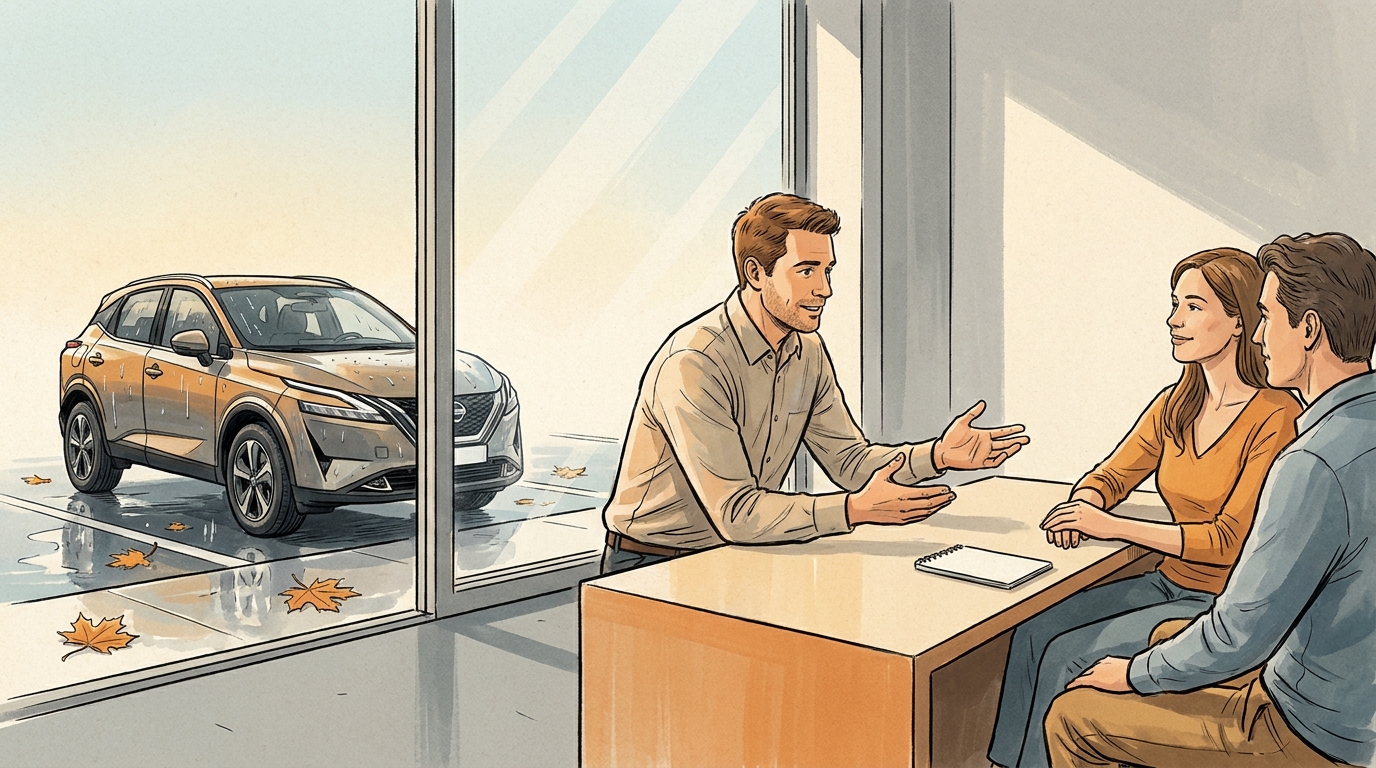
The experience of purchasing also matters as much as the timing. One customer who worked with Nissan of Everett wrote that the sales team "listened to what we had to say, understood our goals, and met us in the middle with options that fit our needs" — which reflects the kind of consultative approach that makes a well-timed purchase feel like a genuinely good outcome rather than simply a transaction.
Nissan of Everett holds a 4.4-star rating across more than 1,000 Google reviews as of April 2026, reflecting consistent customer feedback around transparency, responsiveness, and staff knowledge — qualities that matter especially when buyers arrive having done their timing homework and want a straightforward conversation about what is available and what is possible.
Buyers in Everett who want to align their purchase with the most favorable point in the seasonal car sales cycle — and work with a team that can navigate manufacturer incentives clearly — can find current inventory and promotional information at nissanofeverett.com.