How to Negotiate Car Prices: Step-by-Step Dealership Guide
Learn how to negotiate car prices at a dealership with actionable steps, insider tips, and smart auto buying strategies that work in 2026.

How to Negotiate Car Prices: Step-by-Step Dealership Guide
Most car buyers walk into a dealership knowing they should negotiate — but few know exactly how. The result is a familiar pattern: an offer is made, a counteroffer is given, and somewhere in the confusion, buyers end up paying more than they intended. Car price negotiation is a learnable skill, and in 2026's market, where average new vehicle transaction prices remain elevated, having a clear strategy before stepping onto the lot can make a measurable difference.
This guide breaks down the dealership negotiation process into concrete, sequential steps — from research to final signature. The advice applies whether someone is shopping for a new Nissan in Everett or a used vehicle anywhere else in the region.
Why Car Price Negotiation Still Matters in 2026
Some buyers assume that market pricing tools and online transparency have eliminated the need to negotiate. That assumption is expensive. While vehicle pricing has become more visible through tools like Kelley Blue Book, Edmunds, and manufacturer websites, the final transaction price at most dealerships still involves negotiation — particularly on trade-in value, financing rates, dealer-installed accessories, and documentation fees.
Buyers who enter negotiations with documented research are generally better positioned than those who rely on the dealership's initial offer alone. The gap between sticker price and transaction price on new vehicles varies depending on the model, inventory levels, and the buyer's preparation.
Step 1: Research Before You Set Foot on the Lot
Effective dealership negotiation begins days — ideally weeks — before any conversation with a salesperson. Buyers should identify the specific vehicle make, model, trim, and optional packages they want, then collect pricing data from at least two independent sources. Edmunds' True Market Value, Kelley Blue Book's Fair Purchase Price, and manufacturer websites all provide useful benchmarks for 2026 models.
Beyond the vehicle price itself, buyers should research current manufacturer incentives, regional rebates, and financing rates being offered directly by the automaker. Many buyers focus exclusively on the sticker price while missing thousands in available rebates or preferential rate offers. Understanding the full picture before arriving gives buyers a negotiating foundation that is difficult for a salesperson to dismiss.
Step 2: Get Pre-Approved Financing Before Visiting the Dealership
One of the most effective auto buying strategies available to consumers is separating the financing conversation from the vehicle price conversation. Dealerships earn margin on financing — when buyers allow the monthly payment to become the primary negotiation metric, the vehicle's actual price often becomes secondary. Buyers who arrive with a pre-approved loan from a bank or credit union hold a clear negotiating advantage.
Pre-approval establishes a rate ceiling. If the dealership's financing desk can beat that rate, the buyer benefits. If not, the buyer proceeds with their own financing. Either way, the conversation about price and the conversation about payments remain distinct — which is exactly where buyers want them.
Step 3: Know Your Trade-In Value Independently
Trade-in value is one of the most commonly misunderstood components of a vehicle purchase. Dealerships evaluate trade-ins based on market demand, reconditioning costs, and lot inventory — not simply on what a buyer believes the vehicle is worth. Buyers who obtain independent appraisals from online car-buying platforms or regional dealers before negotiating have a documented offer they can reference at the table.
The practical approach is to negotiate the new vehicle price first, then introduce the trade-in as a separate transaction. Combining them too early allows a salesperson to adjust one number while appearing to improve the other — a well-documented tactic that benefits the dealership rather than the buyer.
Step 4: Make the First Offer — and Make It Specific
Conventional negotiation wisdom suggests that making the first offer concedes leverage. In car buying, the opposite is often true. A buyer who opens with a specific, well-researched offer — supported by market data — immediately signals preparation. Salespeople respond differently to a buyer who cites documented regional transaction data for the exact model than to one who simply says "Can you do better?"
The opening offer should be realistic but below the target price, leaving room for a counter. A common approach is to open below the documented fair market value, leaving room for a counter while remaining defensible. This range is defensible, shows good faith, and creates space for a final number that genuinely represents a fair deal.
Step 5: Negotiate One Variable at a Time
Experienced dealership negotiation requires keeping each element of the deal on its own track. Price, trade-in, financing, and add-ons should each be addressed sequentially rather than simultaneously. When multiple variables are bundled, it becomes nearly impossible to evaluate whether any individual component represents a fair outcome.
Dealer add-ons — paint protection, fabric treatments, extended warranties, and accessories — are frequently presented at the end of the transaction when buyer fatigue is highest. Each of these is negotiable. Buyers should evaluate add-ons separately, research their actual market value, and decline any that cannot be justified by independent pricing data.
Step 6: Understand Dealer Fees and What Is Negotiable
Documentation fees, dealer preparation charges, and market adjustment fees vary significantly by state and dealership. Documentation fees and other charges vary by state and dealership, so buyers should confirm which fees are fixed and which are discretionary. Buyers should request an itemized out-the-door price early in the process — not just the vehicle price — so that fees are visible before any agreement is reached.
Not all fees are negotiable, and attempting to eliminate legitimate government fees wastes goodwill without benefit. The focus should be on dealer-discretionary charges: market adjustments above MSRP, unnecessary add-ons already installed, and inflated documentation fees where they exceed regional norms.
How Transparent Dealerships Make Negotiation More Productive
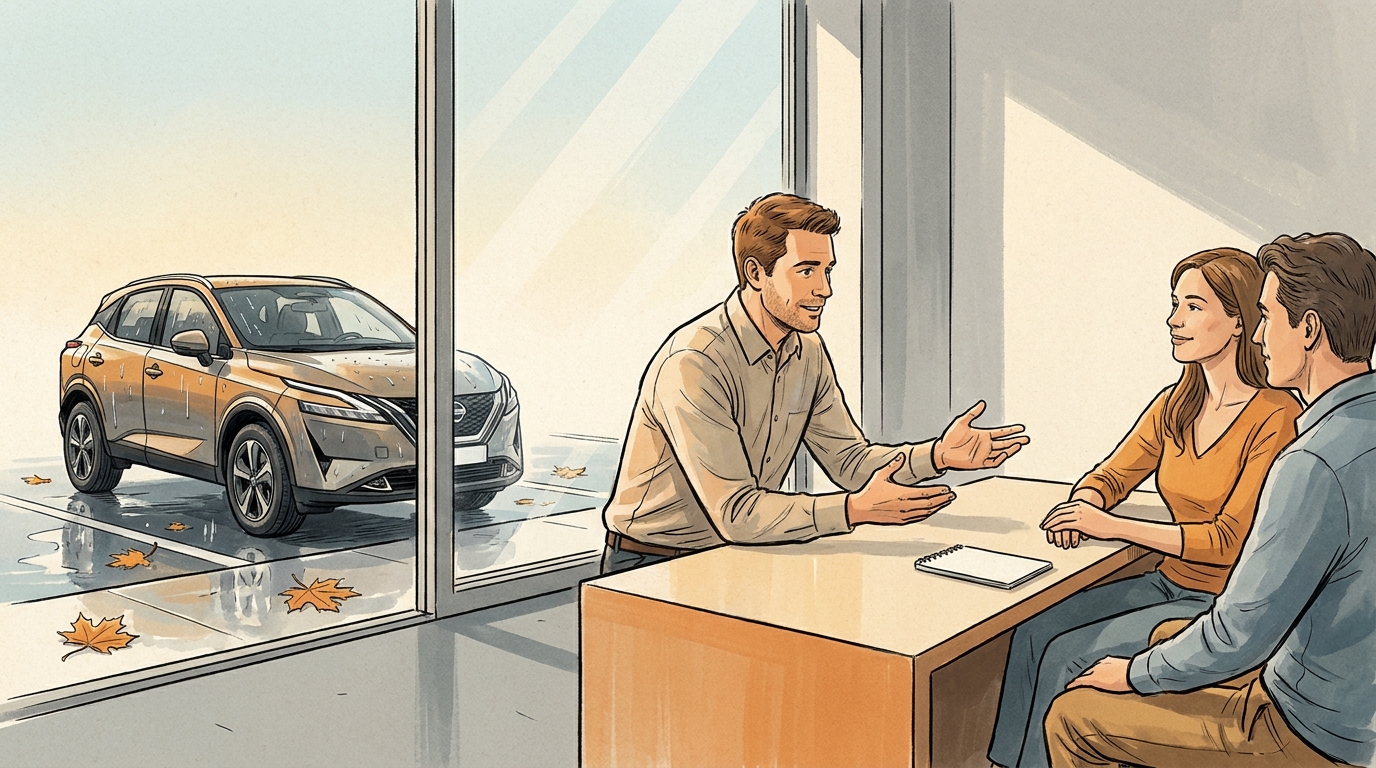
The negotiation experience varies considerably depending on the dealership. Buyers who work with sales staff that prioritize transparency — providing itemized pricing upfront, explaining available incentives, and engaging honestly with documented offers — typically reach agreement more efficiently and with greater confidence in the outcome.
Nissan of Everett reflects this approach in its customer feedback. One customer wrote that their salesperson "listened to what we had to say, understood our goals, and met us in the middle with options that fit our needs." Another noted arriving at "an extremely reasonable price" after working with the dealership's sales team. With a 4.4-star rating from more than 1,000 Google reviews as of April 2026, Nissan of Everett's track record reflects consistently respectful, responsive service — the kind of environment where informed buyers can negotiate productively rather than defensively.
Common Car Price Negotiation Mistakes to Avoid
- Focusing only on monthly payment: Monthly payment negotiation obscures the total cost of the vehicle. Always negotiate the purchase price first.
- Revealing the maximum budget too early: Once a salesperson knows the ceiling, negotiation often stops there.
- Skipping the out-the-door price request: Fees added at signing can significantly increase the final cost beyond what was agreed verbally.
- Neglecting to compare the dealer financing rate to an independent pre-approval: Even a small difference in rate across a multi-year loan can represent several hundred dollars in total cost.
- Making emotional decisions under time pressure: Urgency tactics are designed to shortcut the buyer's decision process. Walking away remains a legitimate and often effective negotiating tool.
Frequently Asked Questions: Car Price Negotiation
Is it still possible to negotiate below MSRP in 2026?
Yes, on many models. Negotiating below MSRP depends on vehicle supply, regional demand, and how long a specific unit has been in inventory. High-demand models with limited inventory are harder to discount. Slower-moving models and end-of-model-year vehicles typically offer more room. Researching days-on-lot data through tools like Edmunds can help buyers identify vehicles where the dealership has more motivation to move.
What is the best day or time to buy a car?
End-of-month and end-of-quarter periods are when dealerships are most motivated to close additional deals to meet sales targets. Weekday visits also tend to allow more time with sales staff compared to busy weekend floor traffic, which can make the negotiation more thorough and less rushed.
Should a buyer negotiate via email before visiting?
Email negotiation is a well-established approach that allows buyers to solicit competing quotes from multiple dealerships without the pressure of an in-person setting. Many buyers use this method to establish a competitive baseline price before arriving to complete the transaction. It works particularly well for straightforward purchases where the exact vehicle configuration is already determined.
How much can a buyer typically save by negotiating?
Savings vary by vehicle segment and market conditions. On a new vehicle, a well-prepared buyer using documented market data and a structured approach can often negotiate meaningfully off the initial offer, depending on the model's demand and the dealership's margin. Trade-in negotiation and financing optimization can add further savings on top of that. Contact Nissan of Everett for current pricing on specific models.
What if the dealership won't negotiate?
Some dealerships operate on fixed-price or one-price models. In those cases, savings may still be achievable through trade-in value, financing rate, or add-on decisions. If the vehicle price itself is non-negotiable, buyers should confirm that the out-the-door price reflects no unnecessary add-ons and that financing terms have been fully compared against external options.
How does rolling taxes and fees into financing affect negotiation?
Financing taxes, registration, and fees into a loan can simplify the buying process but increases the total amount financed and the interest paid over the loan term. Buyers should evaluate the full loan total — not just the monthly payment — when assessing this option. Nissan of Everett's finance team can walk buyers through how this structure affects the overall deal on a specific vehicle.
Is it worth getting multiple dealership quotes before committing?
Yes. Soliciting quotes from more than one dealership on the same vehicle configuration gives buyers a real-time price reference and creates competitive pressure that can benefit the buyer. Once a baseline is established, buyers can bring that context to their preferred dealership and negotiate from a position of documented market knowledge rather than assumption.