How to Trade In a Car at a Dealership in Woodinville, WA
Step-by-step guide to trading in a car at a Woodinville, WA dealership in 2026, including Washington sales tax credit rules and title transfer timelines.
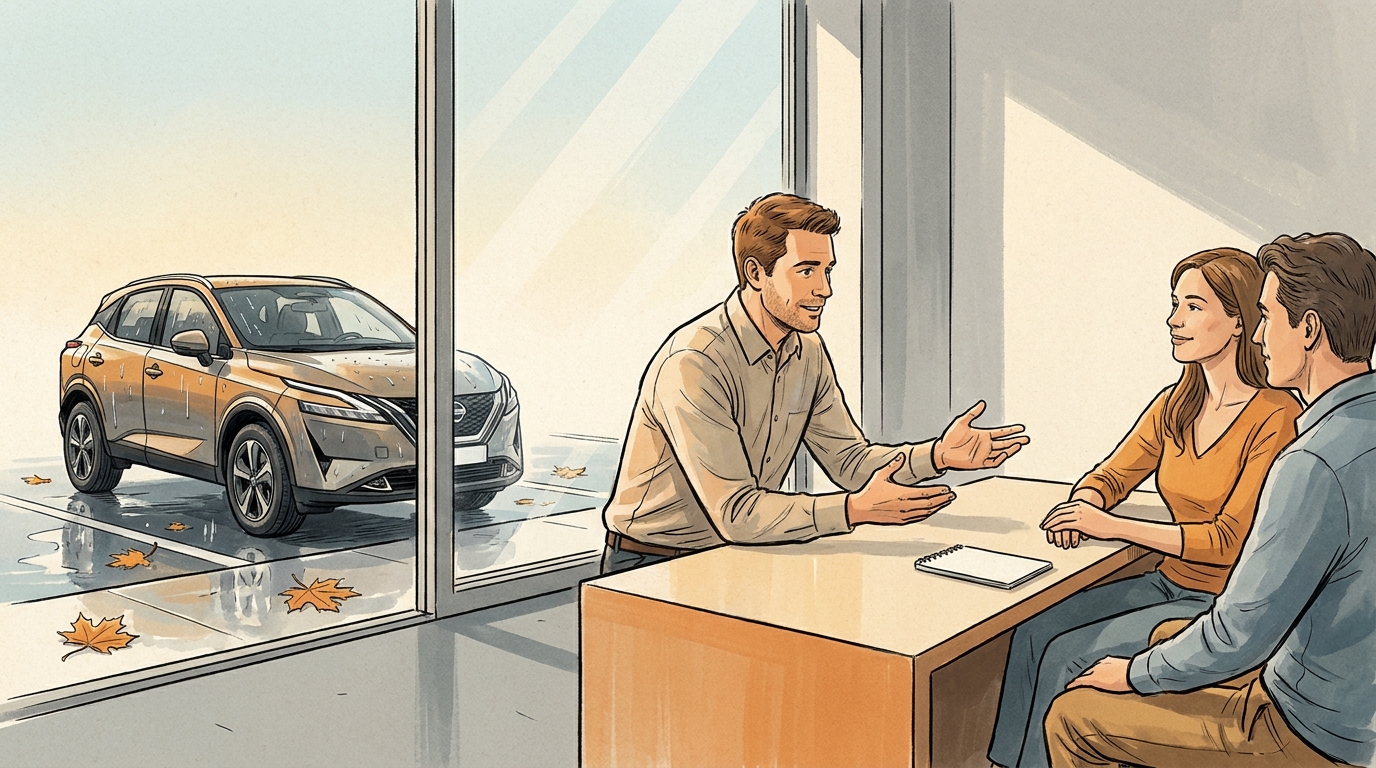
Trading in a car at a licensed Woodinville dealership works in a specific way under Washington law: the dealer credits the appraised trade-in value against the taxable selling price of the new vehicle, so the buyer pays retail sales tax only on the difference. That single rule — codified in Washington's retail sales tax statutes and administered by the Department of Revenue (DOR) — is why trading in at a dealer rather than selling privately can produce a meaningfully smaller tax bill on the replacement vehicle. This guide walks through the process step by step, with the local and 2026 regulatory context Woodinville shoppers actually need.
Step 1: Understand the Washington trade-in sales tax credit before you shop
In Washington, the trade-in allowance reduces the taxable selling price of a vehicle purchased from a licensed motor vehicle dealer. The taxable amount equals the total selling price minus the allowed trade-in value, and the trade and paperwork must occur at the time of sale to qualify. This credit does not apply to private-party sales — a buyer who sells their old car on Craigslist and buys a new one from a dealer pays sales tax on the full purchase price.
That distinction matters in a market like Woodinville, where King and Snohomish County combined sales tax rates push the effective rate well above the state's base. Every dollar of trade-in allowance is a dollar that isn't taxed at the local combined rate, which is why the "is it worth trading in?" math almost always favors the dealer route in this state.
Step 2: Know the 2026 luxury motor vehicle tax rules
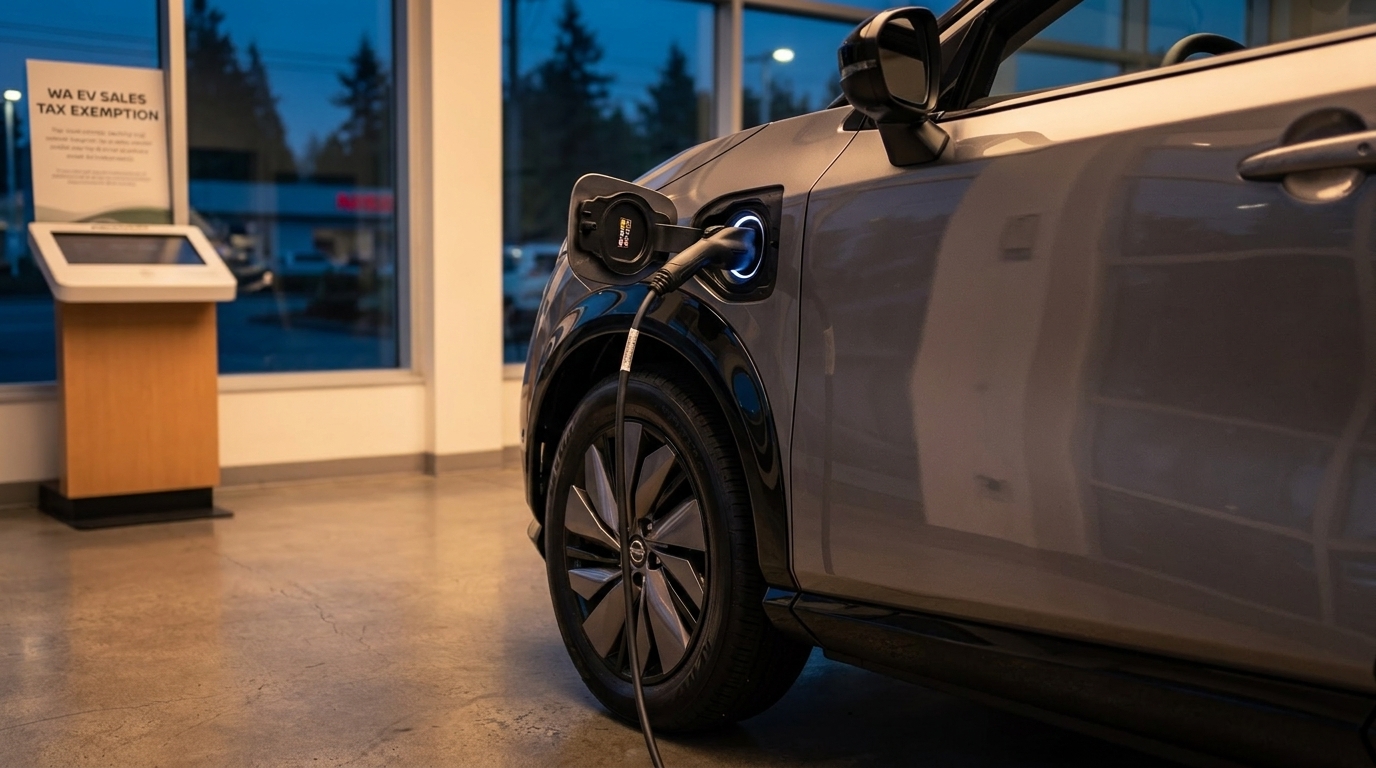
Beginning January 1, 2026, Washington applies a separate 8% luxury motor vehicle tax on the portion of a vehicle's selling price (plus trade-in property value) exceeding $100,000. Trade-in value does not reduce the base for this luxury tax — it only reduces the ordinary retail sales tax base. The exempt threshold increases by 2% each July 1, rounded to the nearest dollar, so it lands at roughly $102,000 mid-2026.
For most Woodinville shoppers looking at mainstream sedans, SUVs, and trucks, the luxury tax is not a factor. It becomes relevant for high-end trucks, performance vehicles, and premium SUVs where the transaction price crosses six figures. The luxury tax also exempts certain categories — commercial motor vehicles under RCW 46.25.010, vehicles with GVWR over 10,000 lbs (other than motor homes), farm vehicles, off-road vehicles, and snowmobiles — which is worth knowing if the trade involves a work truck or recreational vehicle.
Step 3: Prepare your trade-in vehicle and documents
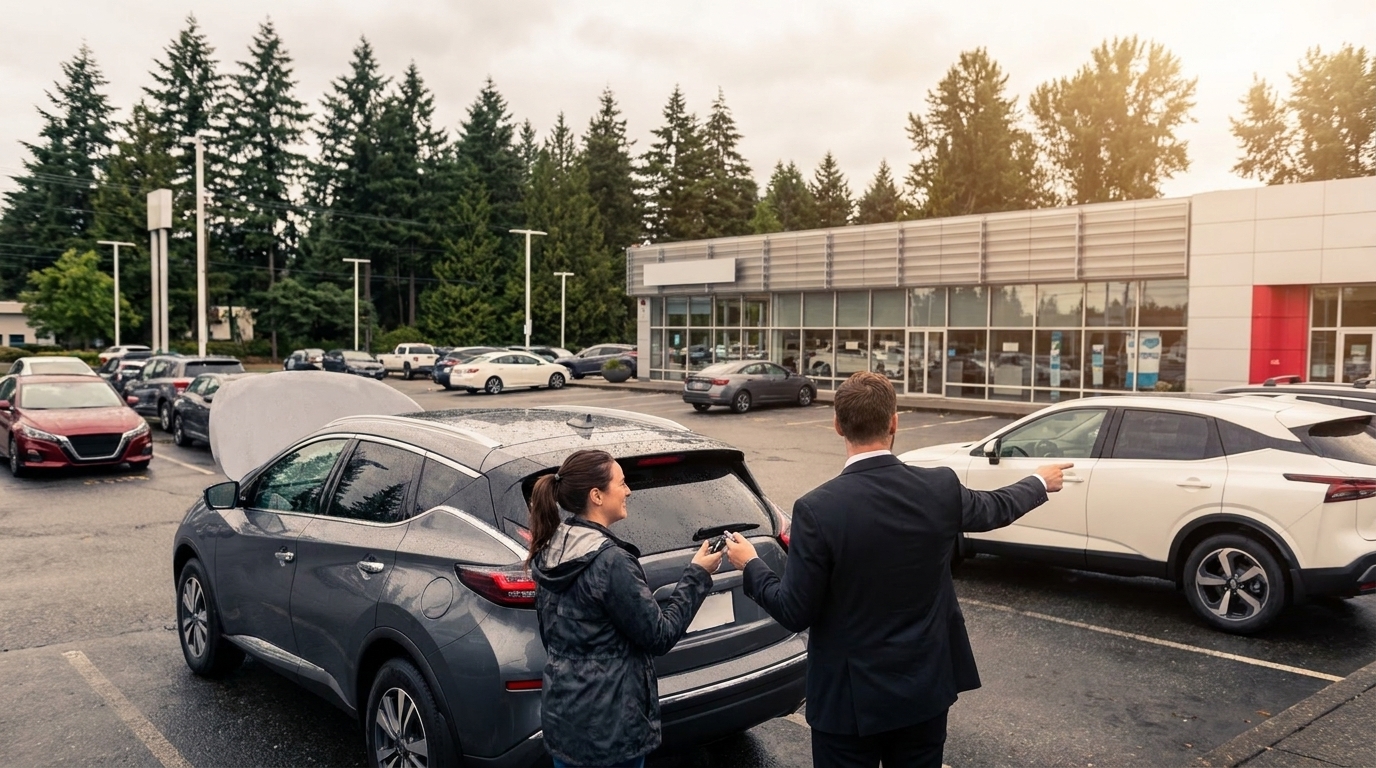
Before driving to a dealership along the SR-522 corridor or the Woodinville-Redmond Road, gather the paperwork the dealer will need to process the trade. Missing documents are the most common reason a trade-in stalls at the finance desk.
- Current Washington certificate of title (or a payoff letter and account number if a lienholder holds the title)
- Current registration
- Valid driver's license for every titled owner
- All keys and remotes, owner's manual, and any service records that support the vehicle's condition
Cosmetic detail work rarely moves an appraisal meaningfully, but a clean, mechanically sound car with documented maintenance almost always appraises better than one presented with warning lights on the dash. Given the Pacific Northwest's wet climate, addressing obvious water intrusion, moss on trim, or worn wipers before the appraisal is a low-cost way to protect the number.
Step 4: Get the appraisal and negotiate two numbers separately
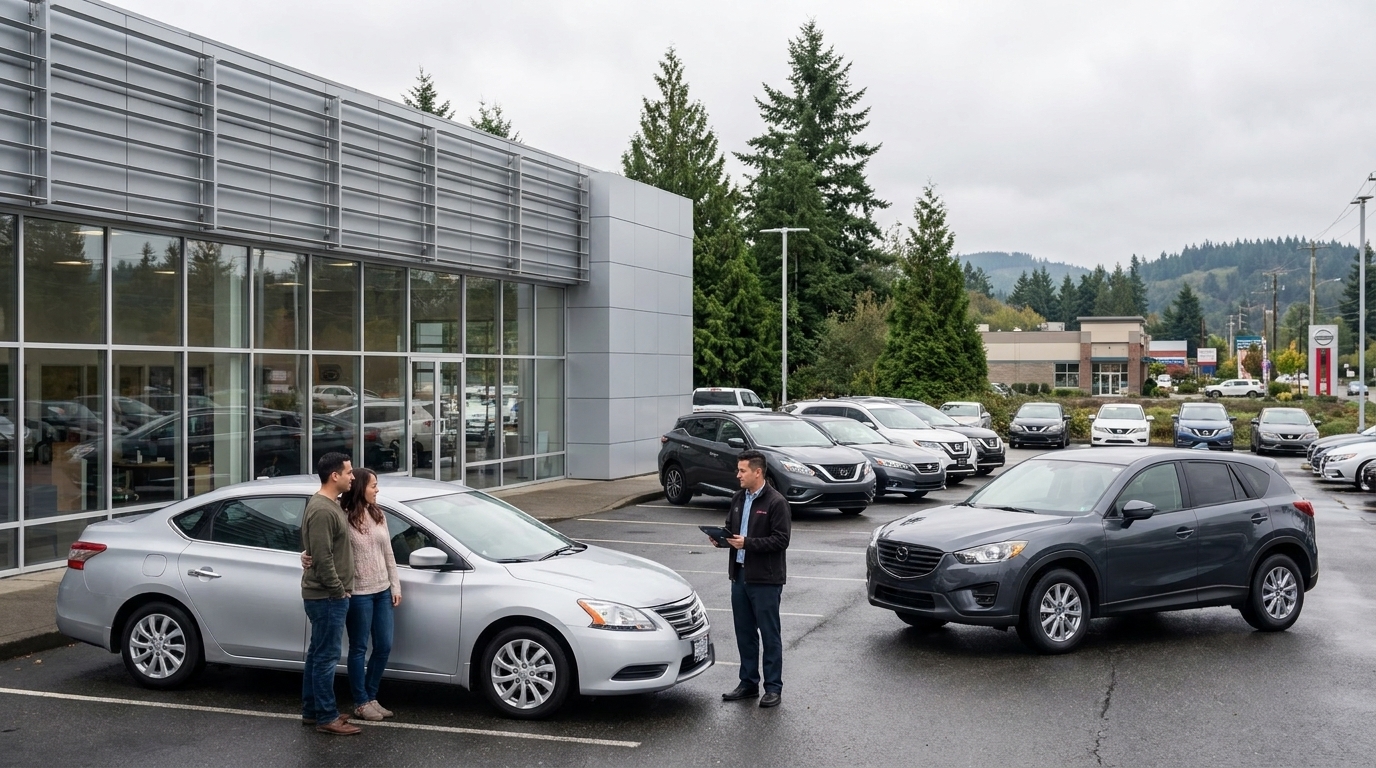
Dealers appraise trade-ins based on condition, mileage, market demand, and current wholesale auction values. The critical negotiating discipline for a Woodinville buyer is to treat the trade-in offer and the new-vehicle price as two separate transactions. Blending them makes it hard to see whether a "great trade number" is being offset by a thinner discount on the vehicle being purchased.
Ask for the appraisal in writing. Under RCW 46.70.180(2) and WAC 308-66, licensed Washington dealers must reduce consignment and trade-in terms to writing before accepting the vehicle. A written appraisal that clearly states the allowed trade-in value is what the DOR will look for if the tax treatment is ever questioned.
Step 5: Sign the paperwork and confirm tax calculation
At the signing table, the purchase order should show the selling price, the trade-in allowance, and a taxable amount equal to the difference. Retail sales tax — both the state portion and the local combined rate applicable to the point of delivery — is then calculated on that reduced base. If the transaction crosses the $100,000 luxury threshold, the 8% luxury tax should appear as a separate line item calculated on the full amount over the threshold, without any reduction for the trade.
The dealer collects all applicable taxes and remits them to DOR. The Department of Licensing (DOL) will not issue a title in the buyer's name until sales tax is paid in full, which is why dealer-handled transactions are typically smoother than private sales that require an in-person DOL visit.
Step 6: Title transfer and Report of Sale timelines
Washington dealers must complete title transfer within 15 days of the sale under RCW 46.12.075, and the seller (or the dealer on the seller's behalf) must file a Report of Sale within five business days per RCW 46.12.650(2). Most Woodinville-area dealerships handle both electronically, so the buyer typically leaves with temporary tags and receives the new title by mail from DOL within a few weeks.
Once assigned, the dealer takes on the responsibility for that vehicle — the previous owner's liability ends when the transfer paperwork is properly executed.
Step 7: Know the consumer protections that apply to your trade
Washington provides strong statutory protections around dealer handling of trade-in funds. Under RCW 46.70.180(9), all funds a dealer receives — including proceeds tied to trade-in vehicles — must be placed in a trust account and may not be commingled with dealer assets until lienholder and consignor interests are satisfied. Any violation of Chapter 46.70 RCW is a per se Consumer Protection Act (RCW 19.86) violation under RCW 46.70.310, which exposes non-compliant dealers to DOL administrative action, license suspension, civil penalties, and private lawsuits including damages and attorney fees.
For a Woodinville buyer, the practical takeaway is simple: work with a licensed Washington dealer, insist on written documentation of the trade allowance and payoff figures, and confirm any lien on the trade-in is being paid off directly by the dealer within the timeframe stated in the purchase agreement.
Trading in vs. selling privately in the Woodinville market
Selling privately can produce a higher gross price for a well-kept vehicle, particularly for models in strong demand across the greater Seattle-Bellevue-Everett corridor. But the private-sale buyer pays sales tax on the full price of their next vehicle at DOL — there is no trade-in credit available on a private transaction. Netting the tax savings, transaction time, and paperwork risk, trading in at a licensed dealer is often the stronger financial choice for Washington residents even when the private-sale sticker looks higher on paper.
Frequently asked questions
Does Washington's trade-in tax credit apply if I trade a vehicle at a dealership outside my county?
Yes. The trade-in allowance reducing retail sales tax applies at any licensed Washington motor vehicle dealer statewide, so a Woodinville resident trading in at a dealership in Everett, Bellevue, or elsewhere in the state receives the same credit. The applicable local sales tax rate is based on the point of delivery.
Can I trade in a vehicle with a loan balance?
Yes. The dealer pays off the existing lien directly and applies the net equity (appraised value minus payoff) as the trade-in allowance against the new vehicle's taxable price. If the loan balance exceeds the appraised value, the negative equity is typically rolled into the new financing rather than reducing the taxable base further.
Does the trade-in credit apply to leased vehicles?
The trade-in allowance under Washington's retail sales tax rules applies to qualifying motor vehicles owned and traded to the dealer at the time of sale. Lease returns and lease buyouts have distinct tax treatment, and buyers with a lease they want to exit should confirm the specific tax mechanics with the dealer's finance office before signing.
Are there vehicles Washington dealers cannot accept as trade-ins for the tax credit?
Yes. Manufactured homes and modified park model RVs do not qualify for the sales tax trade-in allowance. The credit applies to qualifying motor vehicles and certain recreational land vehicles recognized by DOR.
Working with a Woodinville-area dealership
Woodinville shoppers have easy access to dealerships along the I-405 and I-5 corridors, and the trade-in process is materially the same at any licensed Washington store. Nissan of Everett, a short drive north via I-405 and I-5, works with Woodinville-area buyers on trade appraisals, lien payoffs, title transfer, and Washington-compliant tax handling under the rules described above. Buyers who want to start with a written trade estimate before visiting can reach Nissan of Everett at https://www.nissanofeverett.com to begin the appraisal process and review current inventory and financing options.