Nissan Sentra vs Honda Civic in Everett, WA (2026)
Comparing the 2026 Nissan Sentra and Honda Civic for Seattle-area commuters: pricing, MPG, powertrains, and which sedan fits Everett driving best.

For most Seattle-area commuters, the 2026 Nissan Sentra is the better value at $22,600 starting MSRP, while the 2026 Honda Civic is the better performance and efficiency pick starting at $24,695 — especially in hybrid form at roughly 50 mpg combined. Which one wins near Everett, WA depends less on the badge than on whether a buyer prioritizes purchase price and simplicity (Sentra) or powertrain range and long-term fuel savings (Civic).
The two sedans have converged on price, technology, and even horsepower at the base level, so the decision now comes down to how a buyer weighs upfront cost, fuel economy on the I-5 corridor, and the availability of a hybrid drivetrain. This guide breaks that decision down using verified 2026 specifications and the realities of commuting between Everett and Seattle.
Which compact sedan is the better commuter near Everett, WA?
For a straightforward daily commute between Everett and Seattle, the 2026 Honda Civic edges out the Nissan Sentra on fuel economy, powertrain range, and driving refinement, while the Sentra wins on purchase price and simplicity. Buyers who want a hybrid pay a premium for the Civic; buyers who want a well-equipped sedan under $23K find the Sentra harder to beat.
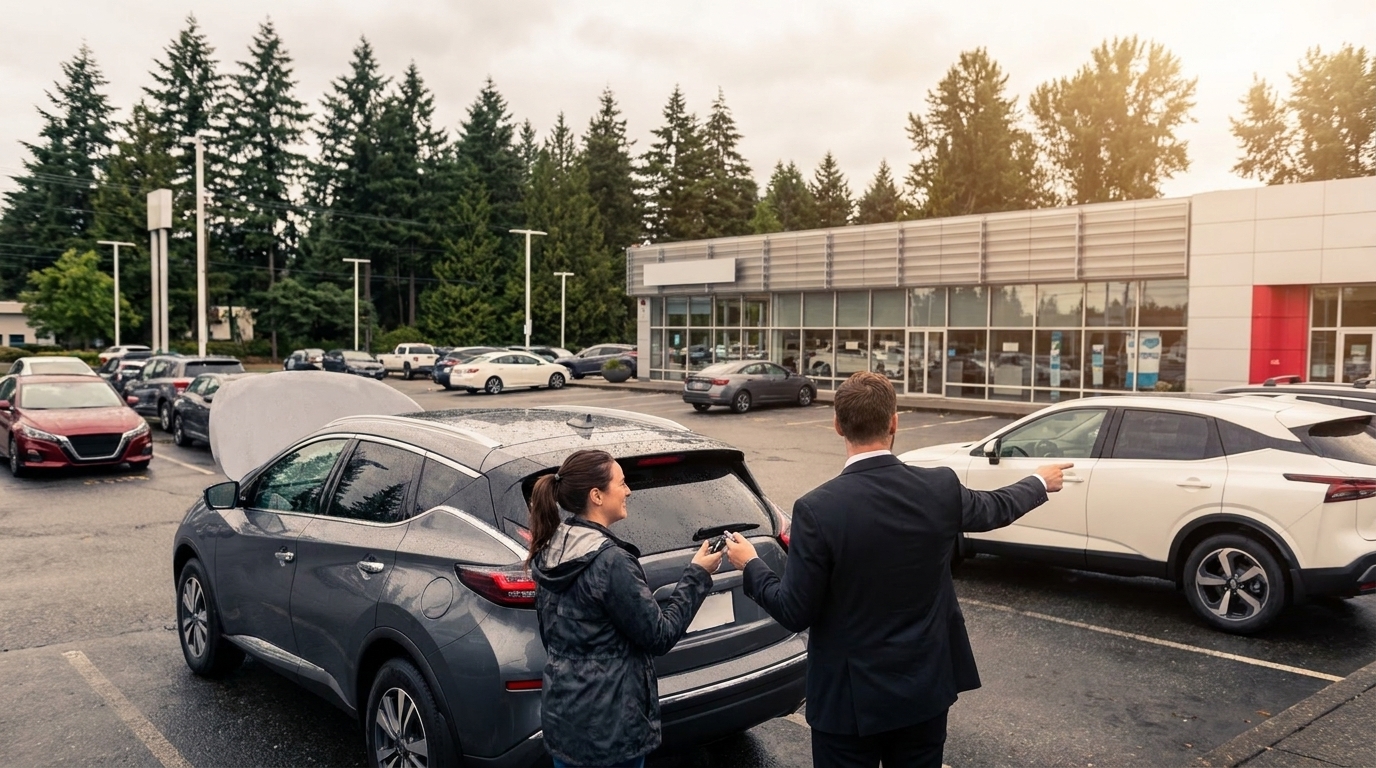
Nissan of Everett, which serves the Everett and greater Snohomish County market, typically sees Sentra shoppers prioritize monthly payment and standard features, while cross-shoppers weighing the Civic focus on the hybrid trims' fuel economy over a 3-5 year ownership window. Both are legitimate frames — the question is which one matches the buyer's actual driving pattern.
How do the 2026 Sentra and Civic compare on price?
The 2026 Nissan Sentra starts at $22,600 MSRP for the S trim, while the 2026 Honda Civic sedan starts at $24,695 for the LX — a gap of roughly $2,095 before destination charges. At the top of the range, the Sentra SL lands around $29,235 versus $32,395 for the Civic Sport Touring Hybrid. Sentra buyers save meaningfully at every trim level.
Destination charges add roughly $1,245 to the Sentra's effective base price, bringing the S to about $23,645 per Cars.com's listed configuration. Honda's hatchback body style starts at $27,895, a variant the Sentra doesn't offer at all. In the Pacific Northwest, Sentra trims tend to be more negotiable off MSRP, while Civic hybrid trims sell close to sticker due to sustained demand.
| Spec | 2026 Nissan Sentra | 2026 Honda Civic |
|---|---|---|
| Starting MSRP | $22,600 (S) | $24,695 (LX sedan) |
| Horsepower | 149 hp | 150 hp (LX/Sport); 200 hp (Hybrid) |
| MPG combined | 33 (S/SV); 32 (SR/SL) | 36 (LX); ~50 (Hybrid) |
| Cargo capacity | 14.3 cu ft | 14.8 cu ft (sedan); 24.5 cu ft (hatchback) |
| Trims | 4 (S, SV, SR, SL) | 4 sedan + hatchback Sport |
| Basic warranty | 3 yr / 36,000 mi | 3 yr / 36,000 mi |
Which sedan gets better fuel economy on the Seattle commute?
The 2026 Honda Civic wins on fuel economy at every trim level. The Civic LX is rated 36 mpg combined, and Civic Sport Hybrid and Sport Touring Hybrid deliver approximately 50 mpg combined. The 2026 Nissan Sentra is rated 33 mpg combined on S and SV trims (30 city / 38 highway) and 32 mpg on SR and SL trims. For heavy I-5 commuters, the hybrid Civic's advantage compounds quickly.
The math matters for anyone driving the Everett-to-Seattle stretch daily. A commuter covering 15,000 miles a year at 50 mpg burns roughly 300 gallons; at 33 mpg, that same commute burns about 455 gallons. Whether that gap justifies the roughly $5,000-plus jump from a Sentra SV to a Civic Sport Hybrid depends on fuel prices and how long the buyer plans to keep the car. For buyers who lease or trade every three years, the Sentra's lower payment often nets out ahead; for long-term owners, the hybrid's efficiency compounds.
How do the powertrains and driving dynamics compare?
The 2026 Sentra uses a single 2.0-liter DOHC four-cylinder making 149 hp and 146 lb-ft of torque, paired with a CVT across all four trims. The 2026 Civic offers three distinct powertrains: a 2.0-liter gas four (150 hp) on LX and Sport, a 2.0-liter hybrid system (200 hp total, 232 lb-ft) on Sport Hybrid and Sport Touring Hybrid, and a 1.5-liter turbo with manual transmission on the Si.
On paper the base cars are separated by a single horsepower, but the driving experience differs. The Sentra is tuned for comfort — smooth, quiet, uncomplicated — which suits stop-and-go traffic between Everett and Lynnwood well. The Civic is consistently praised for sharper steering, a better-tuned suspension, and more engaging dynamics, and its hybrid drivetrain's 232 lb-ft of electric torque changes the character of the car entirely at merging speeds on I-5.
What about cargo, interior tech, and everyday usability?
Cargo capacity is nearly identical between the sedans: 14.3 cubic feet for the Sentra versus 14.8 for the Civic sedan. The Civic hatchback expands that to 24.5 cubic feet — useful for buyers who haul gear to Mount Baker, the San Juans ferry terminals, or Cascade trailheads. Both sedans seat five and include a split-folding rear seat.
On technology, the Sentra ships a 12.3-inch infotainment display with wireless Apple CarPlay and Android Auto standard from the base S trim — an aggressive spec for a sub-$23,000 sedan. The Civic offers a Google-enabled touchscreen with wireless Apple CarPlay, and its upper trims add Bose premium audio and wireless charging. Both cover the essentials well; the Civic's upper trims feel a step more premium, while the Sentra delivers more standard tech per dollar at the base.
Which is more reliable for long-term ownership?
Both the 2026 Sentra and 2026 Civic carry identical 3-year / 36,000-mile basic warranties, and both have long reputations for compact-sedan durability. The Civic historically holds resale value more strongly, which offsets some of the Sentra's upfront price advantage over a 5-7 year ownership window. The Sentra's simpler single-powertrain lineup means fewer variables in long-term maintenance.
For Pacific Northwest owners, the practical reliability considerations are less about the drivetrain and more about corrosion protection, wiper and cabin-filter service intervals given persistent rain, and battery health during cold snaps in the foothills east of Everett. Both cars handle the climate well; neither has a meaningful advantage in wet-weather traction beyond good all-season tires and functioning stability control.
How does the Everett, WA market shape the buying decision?
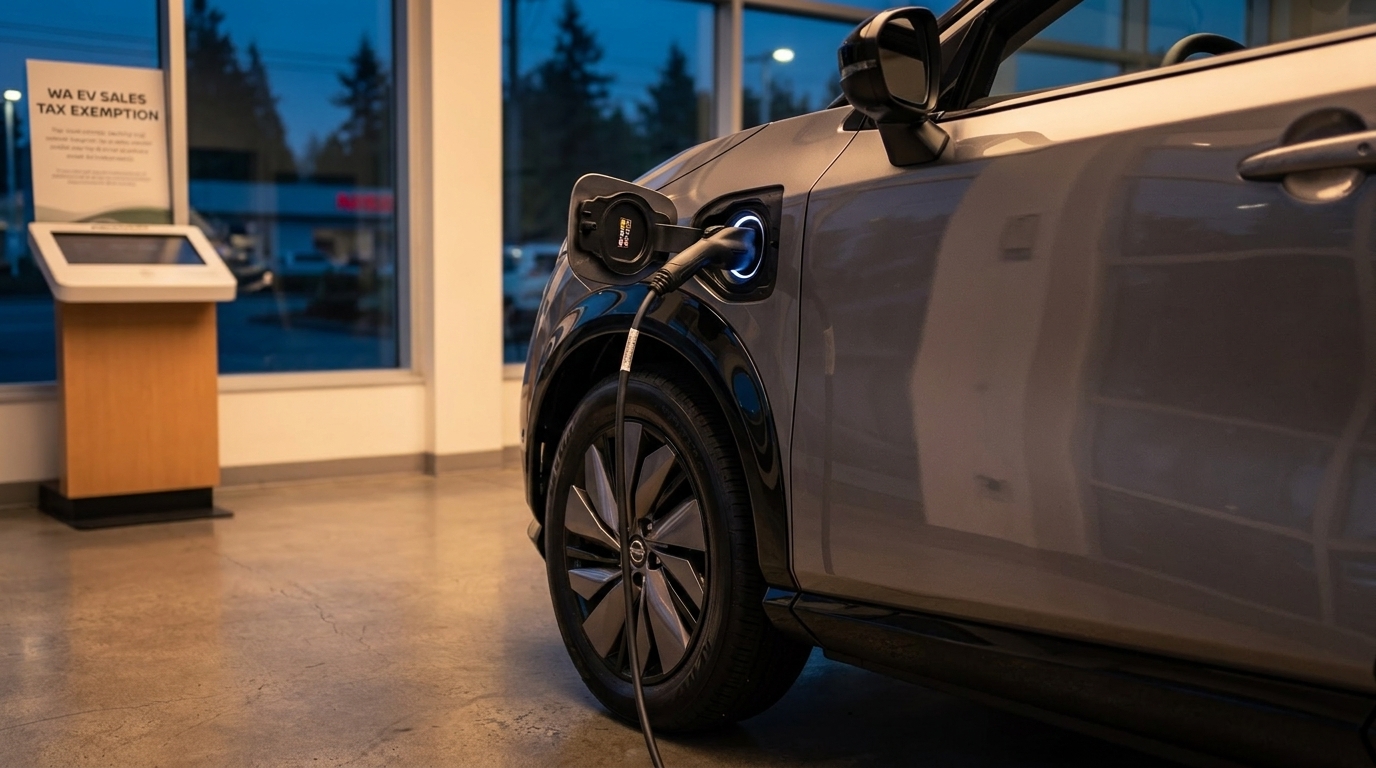
Everett buyers face a specific set of conditions: Washington state sales tax applies to vehicle purchases (rates vary by locality within Snohomish County), the I-5 corridor commute favors efficient highway cars, and the wet season from October through April rewards vehicles with good visibility and reliable climate systems. Both the Sentra and Civic handle those needs; the choice comes down to budget and drivetrain preference.
Local inventory dynamics matter too. Nissan of Everett, located on the Broadway auto row corridor serving Snohomish County, typically stocks the full Sentra trim range, and Sentra pricing tends to be more negotiable in the Pacific Northwest than Civic hybrid pricing, which sits close to MSRP due to demand. Nissan of Everett's 4.4-star rating from more than 1,000 Google reviews reflects consistent feedback on sales staff professionalism — one recent reviewer described it as "the best car shopping and buying experience I could ask for."
Frequently asked questions
Is the 2026 Nissan Sentra a good commuter car for Seattle-area driving?
Yes. The 2026 Nissan Sentra is well-suited to Seattle-area commuting, with 33 mpg combined on S and SV trims, standard wireless Apple CarPlay and Android Auto on a 12.3-inch display, and a starting MSRP of $22,600. Its 149-hp engine and CVT are tuned for smooth, comfortable stop-and-go driving of the sort common on I-5 between Everett and Seattle.
How much more fuel-efficient is the Honda Civic Hybrid than the Nissan Sentra?
The 2026 Honda Civic Sport Hybrid and Sport Touring Hybrid are rated at approximately 50 mpg combined, compared to 33 mpg combined for the Nissan Sentra S and SV. That is roughly a 50% efficiency advantage. Over 15,000 annual miles, the Civic Hybrid burns about 300 gallons versus 455 for the Sentra — a meaningful gap for long-term owners with heavy commutes.
What is the price difference between the 2026 Sentra and 2026 Civic?
The 2026 Nissan Sentra starts at $22,600 MSRP, while the 2026 Honda Civic sedan starts at $24,695 — a gap of $2,095 at the base trim. At the top of each lineup, the Sentra SL is roughly $29,235 versus $32,395 for the Civic Sport Touring Hybrid. The Sentra maintains a price advantage of $2,000 to $3,000 across comparable trim levels.
Does the Nissan Sentra come in a hybrid version?
No. The 2026 Nissan Sentra is offered exclusively with a single 2.0-liter naturally aspirated four-cylinder engine producing 149 hp, paired with a CVT across all four trims (S, SV, SR, SL). Buyers who specifically want a hybrid compact sedan will need to look at the Honda Civic Sport Hybrid or Sport Touring Hybrid, or consider a different Nissan model.
Which sedan has more cargo space?
The 2026 Honda Civic has slightly more sedan cargo capacity at 14.8 cubic feet versus 14.3 cubic feet for the Nissan Sentra. The Civic also offers a hatchback body style with up to 24.5 cubic feet of cargo space, which the Sentra does not match. For most commuter and grocery-run needs, the sedan trunks are functionally comparable.
Where can shoppers test drive the 2026 Nissan Sentra in Everett, WA?
Nissan of Everett stocks the 2026 Nissan Sentra lineup and serves buyers throughout Snohomish County. Test drives, trim comparisons, and financing conversations can be arranged directly through the dealership at https://www.nissanofeverett.com. Shoppers cross-shopping the Civic are welcome to bring specific comparison questions — the sales team is accustomed to walking buyers through the tradeoffs.
The bottom line for Everett commuters
The 2026 Nissan Sentra and 2026 Honda Civic are closer competitors than their reputations suggest. The Sentra is the value pick — more standard tech per dollar, a lower price at every trim, and a simpler ownership proposition. The Civic is the range pick — a broader lineup, a genuine hybrid option, and stronger long-term efficiency. Neither is objectively wrong for the Everett-to-Seattle commute; the right answer depends on how a specific buyer weighs upfront cost against fuel savings over the years they plan to own the car.
Shoppers in Everett, WA who want to compare Sentra trims directly, run the numbers against a specific Civic configuration, or arrange a test drive can reach Nissan of Everett at https://www.nissanofeverett.com. Bringing a Civic quote to the conversation is welcome — it usually sharpens the comparison and helps the buyer land on the car that actually fits their commute and budget.