Nissan Leaf vs Chevy Bolt in Kirkland, WA: 2026 Guide
Compare the 2026 Nissan Leaf and 2026 Chevrolet Bolt EV on range, price, cargo, and charging — plus what Kirkland, WA commuters should weigh before buying.
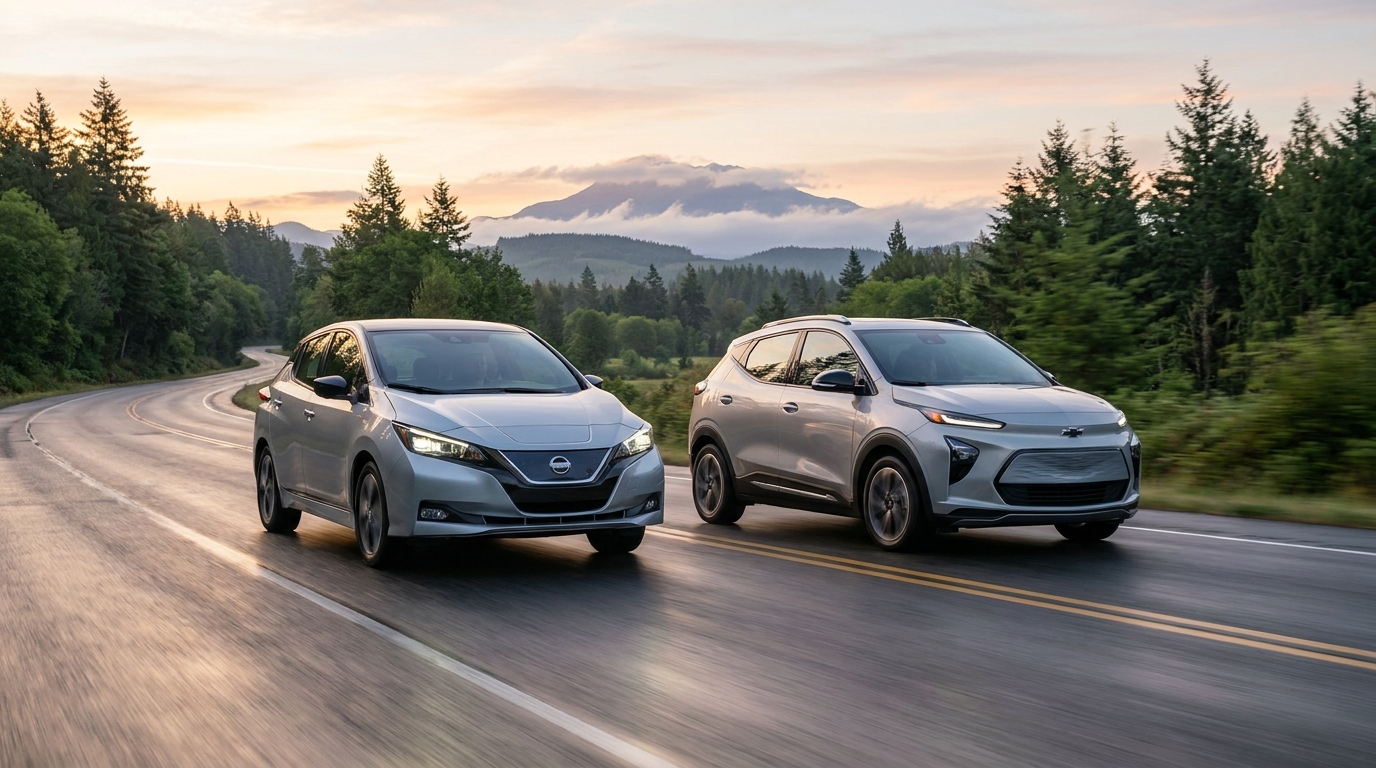
For Kirkland commuters weighing their first electric car, the choice often narrows to two compact hatchbacks: the redesigned 2026 Nissan Leaf and. The short answer: the Bolt EV is the value pick with a lower starting price and better efficiency at 120 MPGe combined, while the Leaf is the range-and-space pick with a 75 kWh battery, 214 horsepower, and 20.0 cubic feet of cargo behind the rear seats. Which one fits depends on how far you drive, where you charge, and how much cabin flexibility you need for weekend trips over the Cascades or ferry runs from downtown Kirkland.
The Quick Answer for Kirkland Buyers
For daily commuters running the I-405 corridor between Totem Lake, Bellevue, and Renton, the Bolt EV's 120 MPGe combined efficiency and starting price in the $26,595–$27,495 range for the 1LT trim make it the most affordable serious EV on the shortlist. For drivers who regularly head to Snoqualmie, Leavenworth, or the San Juans and want a bigger battery buffer, the 2026 Leaf's 75 kWh pack and 214 hp powertrain are the better match, starting at $29,990 before destination.
Both seat five, both carry an 8-year / 100,000-mile battery warranty, and both are front-wheel-drive hatchbacks that fit the reality of Eastside parking garages. The interesting decisions come in the details.
Price and Value
The 2026 Chevrolet Bolt EV wins on sticker. Its 1LT trim starts between $26,595 and $27,495, with Edmunds citing a figure of approximately $29,700. The 2026 Nissan Leaf S+ opens at $29,990 before destination and dealer fees.
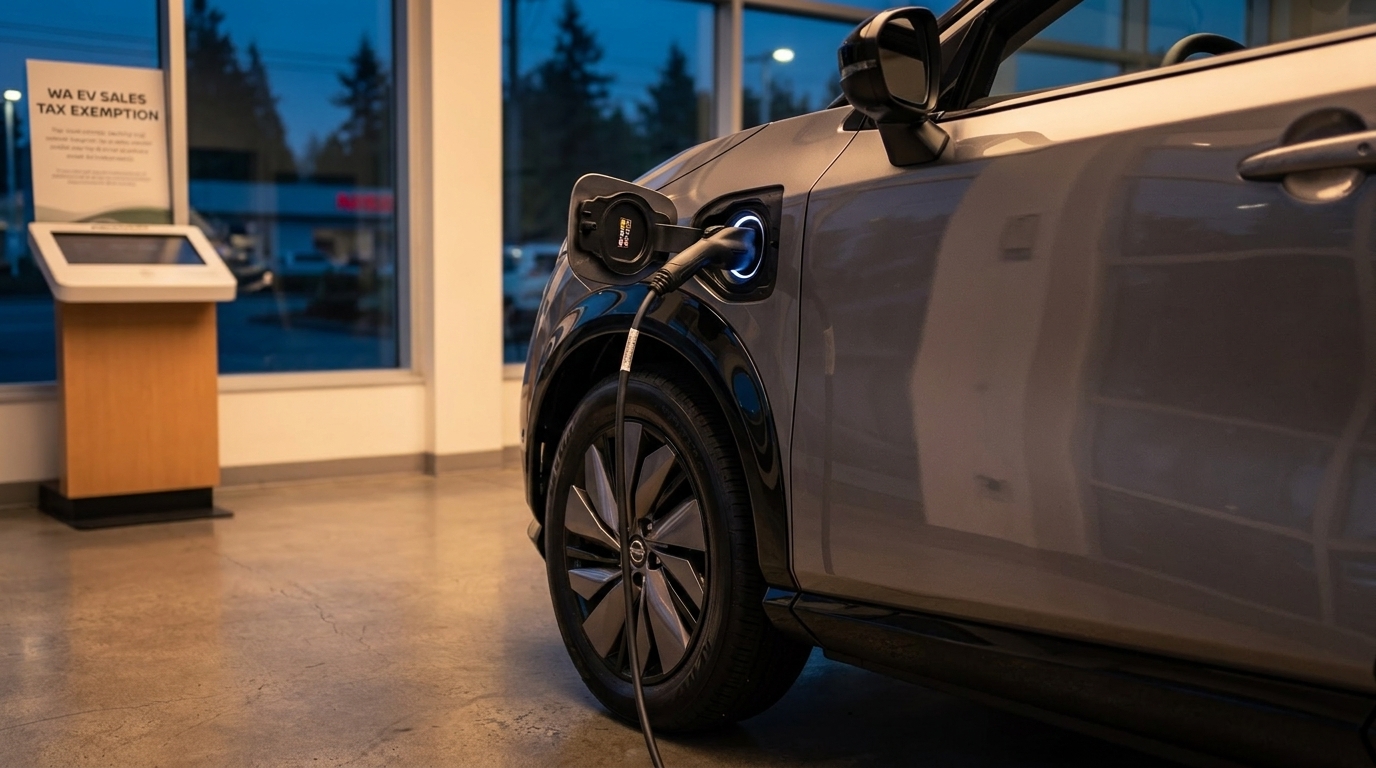
That said, MSRPs are national figures. Actual transaction prices in Kirkland vary with dealer inventory, incentives, and any Washington State EV sales-tax exemption the vehicle may qualify for. Because the exemption has price caps and eligibility rules that change, buyers should confirm current status with the Washington Department of Revenue or verify with the dealer at the time of purchase rather than assume it applies.
Range and Battery
The 2026 Nissan Leaf carries a 75 kWh battery across its S+, SV+, and Platinum+ trims, giving it a meaningful range advantage over the 2026 Bolt EV's 65 kWh pack. For Kirkland drivers, that extra 10 kWh translates into fewer mid-week top-ups and more comfortable round trips to Bellingham, Portland, or the Olympic Peninsula without hunting for a DC fast charger.
The Bolt EV counters with efficiency. Its 120 MPGe combined rating (131 city / 109 highway) beats the Leaf's 114 MPGe combined (122 city / 105 highway) by 6 MPGe. On a smaller battery, that efficiency helps stretch each kWh further — an advantage that shows up on the electric bill more than in the range figure.
Performance
The 2026 Leaf produces 214 horsepower from its single permanent-magnet synchronous motor, versus 200 hp in the Bolt EV. That 14 hp gap is noticeable in freeway merges onto 405 during evening rush, though neither car is aimed at enthusiasts.
Torque is essentially a tie: the Bolt EV edges the Leaf at 266 lb-ft versus 261 lb-ft. Both send power through a single-speed direct-drive transmission to the front wheels, which is standard for compact EVs at this price.
Cargo and Practicality
Behind the rear seats, the Leaf offers 20.0 cubic feet of cargo space, compared with 16.6 cubic feet in the Bolt EV — a 3.4 cubic-foot advantage that matters for Costco runs to the Totem Lake store or hauling gear to Marymoor. Fold the rear seats, and the picture flips slightly: the Bolt EV opens up to 57.0 cubic feet versus the Leaf's 55.5 cubic feet.
For most day-to-day loading, the Leaf's larger seats-up figure is the more relevant number. For occasional big loads — flat-pack furniture, a mountain bike, camping kit — the two are close enough that either works.
Charging in a Rainy-Season Climate
The 2026 Leaf supports 150 kW DC fast charging, moving from 10% to 80% state of charge in roughly 35 minutes under ideal conditions. For Kirkland owners who rely on public fast chargers along I-90 or I-5 during winter road trips, that speed is competitive with current-generation compact EVs.
The 2026 Bolt EV's DC fast-charging capability has not been confirmed at the same level as newer-generation EVs, which is one of the trade-offs behind its lower price. Most Bolt EV owners in the Puget Sound region charge overnight at home on a Level 2 wallbox and treat DC fast charging as a road-trip backup rather than a routine. Given Kirkland's mild but wet climate, a covered or garage-mounted home charger is worth planning for regardless of which model you choose.
Trims and Choice
The 2026 Leaf offers three trims — S+, SV+, and Platinum+ — giving buyers more room to match features to budget. The S+ base trim may lack certain comfort features (buyers should verify heat pump availability and other equipment by trim before committing).
The 2026 Bolt EV comes in two trims, 1LT and 2LT. Fewer choices simplify the shopping process but leave less room to tailor equipment.
Comparison at a Glance
| Specification | 2026 Nissan Leaf | 2026 Chevrolet Bolt EV |
|---|---|---|
| Starting MSRP | $29,990 (S+) | $26,595–$27,495 (1LT) |
| Horsepower | 214 hp | 200 hp |
| Torque | 261 lb-ft | 266 lb-ft |
| Battery | 75 kWh | 65 kWh |
| EPA Combined | 114 MPGe | 120 MPGe |
| Cargo (behind rear seats) | 20.0 cu ft | 16.6 cu ft |
| Cargo (seats folded) | 55.5 cu ft | 57.0 cu ft |
| Trims | 3 | 2 |
| Battery Warranty | 8 yr / 100,000 mi | 8 yr / 100,000 mi |
Which One Fits Your Kirkland Driving?
Choose the 2026 Chevrolet Bolt EV if the lowest entry price and the best efficiency matter more than range headroom, and if your driving is mostly local — commutes to Bellevue or Redmond, errands around Juanita and Kingsgate, and occasional Seattle trips. The 120 MPGe rating and $26,595–$27,495 starting range make it the clear value pick.
Choose the 2026 Nissan Leaf if you want more range from the larger 75 kWh battery, more usable cargo behind the rear seats, more horsepower for I-405 merges, and three trims to fit different feature preferences. It costs more up front, but the additional capability is real.
Frequently Asked Questions
Is the Nissan Leaf or Chevy Bolt better for long trips?
The 2026 Nissan Leaf is better suited to long trips thanks to its 75 kWh battery and 150 kW DC fast-charging capability, which supports a 10–80% top-up in about 35 minutes. The 2026 Bolt EV's 65 kWh battery and slower fast-charging make it a stronger fit for local driving with occasional highway trips.
Which EV is more affordable in 2026?
The 2026 Chevrolet Bolt EV is the more affordable of the two, starting between $26,595 and $27,495 for the 1LT trim, compared with $29,990 for the 2026 Nissan Leaf S+ before destination fees. Local incentives and any applicable Washington State exemptions can shift the final math.
Do both cars have the same warranty?
Yes. Both the 2026 Leaf and 2026 Bolt EV carry a 3-year / 36,000-mile basic warranty and an 8-year / 100,000-mile warranty on the battery and electric components.
Which has more cargo space?
The Leaf has more cargo space behind the rear seats at 20.0 cubic feet versus 16.6 cubic feet for the Bolt EV. With the rear seats folded, the Bolt EV is slightly larger at 57.0 cubic feet versus 55.5 cubic feet.
The Bottom Line
Both cars are credible compact EVs for Kirkland households, and the right answer depends on how the trade-offs line up with your driving. Value and efficiency-focused buyers will lean Bolt EV; range, power, and cabin-space buyers will lean Leaf. Because Washington's EV tax rules, dealer inventory, and available incentives all move over time, it's worth confirming current pricing and eligibility before committing.
Kirkland-area drivers who want to compare the 2026 Nissan Leaf in person, walk through trim differences across S+, SV+, and Platinum+, or ask about current Washington State EV exemption eligibility can reach Nissan of Everett at https://www.nissanofeverett.com. It's a short drive up I-405 from Kirkland and a straightforward way to move from spec-sheet comparison to a test drive.