Kirkland Area Driving Conditions: Choosing the Right Vehicle Features
Navigating Kirkland's wet roads and hill terrain in 2026? Learn which vehicle features matter most for local driving conditions and how to choose wisely.
Kirkland Area Driving Conditions: Choosing the Right Vehicle Features
If you've driven through Kirkland on a January morning — wipers working hard, headlights cutting through low fog, tires feeling the slick pull of a rain-soaked hill — you already know the question isn't whether local weather affects your driving. The question is whether your car is actually built for it.
Choosing a vehicle for Kirkland isn't the same as choosing one in Phoenix or Denver. The Pacific Northwest has its own set of demands: persistent rainfall, occasional snow and ice at elevation, steep neighborhood grades, and that peculiar mix of cold mornings and mild afternoons that keeps road surfaces unpredictable from October through March. Getting the vehicle features right matters more here than the brochure usually suggests.
This guide breaks down what Kirkland drivers should actually prioritize — and why some features that sound optional are genuinely worth having.
Understanding Kirkland Road Conditions
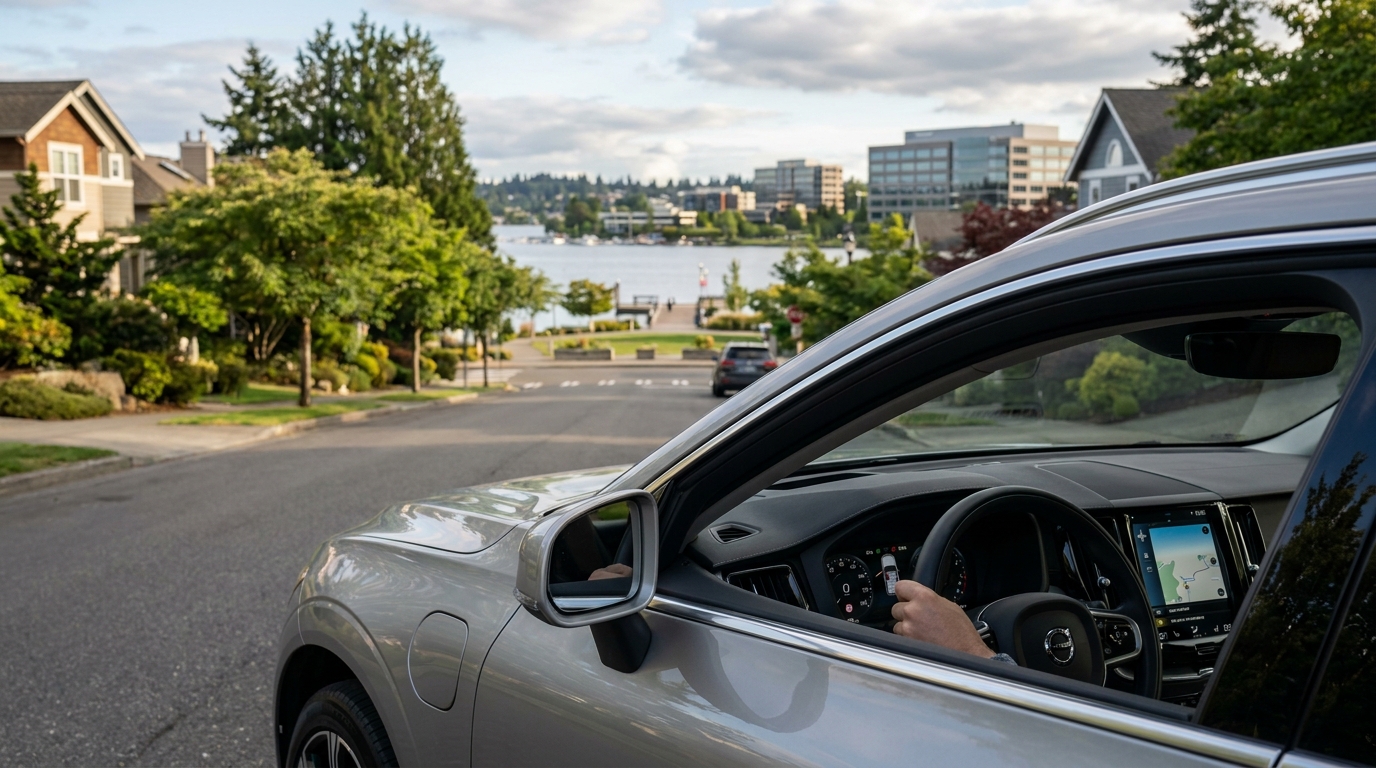
Kirkland sits along the eastern shore of Lake Washington, and its topography is a mix of waterfront flats and residential hills that rise sharply inland. The roads that connect neighborhoods like Juanita, Bridle Trails, and Totem Lake aren't always forgiving when conditions deteriorate.
Rain is the constant. The area sees substantial precipitation spread across many wet days each year. That means hydroplaning risk, reduced stopping distances, and limited visibility are everyday concerns — not seasonal ones. And while Kirkland doesn't see heavy snowfall every winter, freezing rain and light snow occur often enough that being caught unprepared on a steep grade is a genuine risk.
These aren't abstract concerns for most Kirkland commuters. They show up in how your car handles a left turn on a wet surface, how quickly you stop at a crosswalk on Juanita Drive, and whether you make it up your driveway after an unexpected ice event.
All Wheel Drive in Kirkland: Worth It or Overkill?
All wheel drive in Kirkland is one of the most common questions car buyers ask — and it's worth answering directly. AWD is not overkill here. For drivers who navigate hilly streets, commute during wet winters, or simply want more confidence on slick surfaces, it's one of the most practical investments you can make in a Pacific Northwest vehicle.
The case for AWD comes down to how traction is distributed. In a front-wheel-drive vehicle, the same wheels doing the steering are also doing the pulling — a setup that works fine in mild conditions but can feel squirrely on a wet hill or during a sudden lane change in the rain. AWD distributes power across all four wheels, which gives the vehicle more surface contact during acceleration and helps maintain control when grip is reduced.
That said, AWD isn't a replacement for good tires or driver awareness. A well-equipped AWD vehicle on worn tires will underperform a two-wheel-drive car on fresh all-season rubber. The two work best together.
AWD Vehicles Worth Considering for Kirkland Driving
In the crossover and SUV segment — which tends to suit Kirkland's mix of highway commutes and hilly neighborhoods — AWD options have expanded significantly. Models like the Nissan Rogue and Nissan Pathfinder offer available AWD systems that help maintain traction and control, a useful feature when you're transitioning from a dry arterial to a wet residential street mid-commute.
Sedans with available AWD, like the Nissan Altima with Intelligent AWD, are also worth a look if you want better fuel economy than an SUV without giving up wet-weather confidence. These systems are lighter and more efficient than traditional AWD setups, and they engage automatically without driver input.
Key Vehicle Features for Winter Driving in Kirkland
Beyond the drivetrain, several specific features make a noticeable difference on Kirkland roads during winter months. Here's what to evaluate when you're shopping:
Traction and Stability Control
These are standard on virtually every new vehicle sold today, but knowing how a specific model implements them matters. Look for systems that don't simply cut engine power when slip is detected — more sophisticated setups apply braking to individual wheels, which keeps you pointed in the right direction without killing momentum on an uphill grade.
Heated Features
Heated seats and a heated steering wheel sound like comfort features, but in Kirkland winters they're also a safety issue. Cold hands grip less effectively. A heated wheel means you're less likely to wear bulky gloves that reduce tactile feedback on slick roads. Heated mirrors, which prevent fogging and ice accumulation, are worth prioritizing too.
Advanced Driver Assistance Systems (ADAS)
Automatic emergency braking, lane departure warning, and blind-spot monitoring are particularly valuable in low-visibility conditions. On a rainy evening on I-405 or navigating 85th Street in reduced visibility, having a system that responds faster than human reaction time isn't a luxury — it's a genuine safety margin.
Nissan offers driver assistance technology on select models in the current lineup that can help reduce fatigue on long wet-weather commutes — contact Nissan of Everett for specifics on available features.
Ground Clearance
For buyers who use routes through Bridle Trails or access properties with unpaved driveways, ground clearance is a practical spec to check, not an off-road fantasy. An extra two inches of clearance can make a meaningful difference when debris washes across roads during heavy rain events.
Tire Compatibility
Check what tire sizes a vehicle supports before you buy. Some vehicles have limited options for all-season or winter tire fitment, which matters if you plan to run a dedicated set of winter tires during December through February. Wider tires, popular on sport trims, can actually perform worse on ice and snow than narrower alternatives.
Crossover vs. SUV vs. Sedan: What Makes Sense for Kirkland?
There's no single right answer, but there are sensible patterns for local conditions.
Compact crossovers — think Nissan Rogue or comparable models — hit a practical sweet spot for most Kirkland drivers. They sit high enough to improve sightlines in rain, offer available AWD, and fit comfortably in the parking structures and tight residential streets common in the area. Fuel economy has improved substantially in this segment, reducing the traditional penalty for choosing an SUV-adjacent vehicle over a sedan.
Larger three-row SUVs make sense for families with gear, but their turning radius and parking footprint can be limiting in dense Kirkland neighborhoods. If you're commuting solo or with one passenger most days, you're likely carrying more vehicle than you need.
Sedans remain a competitive option for buyers who prioritize fuel economy and highway comfort. The Nissan Altima with Intelligent AWD in particular addresses the biggest objection most Kirkland buyers have about sedans — wet-weather traction — without sacrificing the efficiency and handling balance that makes sedans appealing in the first place.
Frequently Asked Questions: Cars and Kirkland Weather
Do I need AWD if I mostly drive on flat roads in Kirkland?
If your daily route stays on flat arterials and highways, front-wheel drive with quality all-season tires handles Kirkland rain competently. But most Kirkland residents encounter hills at some point — whether in their neighborhood or on routes to parks and trailheads. AWD provides a meaningful margin of confidence in those situations, and it tends to add replay value when you resell, since Pacific Northwest buyers actively seek it.
Are winter tires necessary in Kirkland?
For most Kirkland drivers, a quality set of all-season tires handles typical winter conditions adequately. Winter-specific tires become a stronger recommendation if you regularly drive elevated routes where snow and ice accumulate more predictably, or if you make trips over Snoqualmie Pass. If you do invest in winter tires, make sure the vehicle you buy supports an appropriate tire size for them.
What's the most important safety feature for wet-weather driving?
Automatic emergency braking is widely regarded as one of the highest-impact safety features for wet-weather driving. Stopping distances increase significantly on wet pavement, and a system that can begin braking before the driver reacts can mean the difference between a near-miss and a collision. Prioritize this above most comfort features when comparing trim levels.
How do I evaluate whether a specific car handles well in the rain?
Test drive it in actual rain if you can — not just a dry-day lot loop. Pay attention to how quickly the car responds to steering input, whether the brakes feel progressive, and how the visibility is from the driver's seat during a light rain. Wide A-pillars create blind spots that matter significantly in wet, low-light conditions.
Does EV or hybrid technology change the wet-weather calculus for Kirkland drivers?
Not significantly in terms of traction — what matters most is still whether the vehicle offers AWD and quality tires. Electric motors do deliver torque more immediately than combustion engines, which some drivers find helpful on slick starts. If you're considering a hybrid or EV, apply the same AWD and ADAS checklist you would to any other vehicle, then contact Nissan of Everett for specifics on available models.
How much does AWD typically add to a vehicle's cost, and is it worth it in Kirkland?
AWD availability and its effect on pricing varies by model and trim, so contact Nissan of Everett for a current quote on the specific vehicle you're considering. For most Kirkland buyers, the added confidence on wet hills, the resale appeal to Pacific Northwest buyers, and the real-world traction benefit make AWD one of the higher-value options to include when configuring a vehicle for local conditions.
Matching the Right Vehicle to Kirkland Conditions
Kirkland's driving environment rewards vehicles that prioritize traction, visibility, and active safety technology. None of those features require buying the most expensive trim — but they do require knowing what to look for before you get to the lot. Spending an afternoon understanding which features matter for your specific routes and habits will serve you better than defaulting to the most popular model or the one with the best advertised fuel economy.
Nissan of Everett, rated 4.4 stars from over 1,071 Google reviews as of April 2026, has built a reputation on exactly this kind of informed guidance. One customer wrote that a staff member gave them "a detailed explanation about Nissan cars, their quality, durability, available options" — the kind of conversation that helps buyers make genuinely informed decisions rather than guessing at what they need. Another noted being treated with "pure professionalism to the highest degree" from first encounter through purchase. That specificity matters more than ever when the goal is matching a vehicle to real local conditions.
Kirkland drivers who want to work through these questions with someone familiar with Pacific Northwest vehicle selection can visit Nissan of Everett at nissanofeverett.com or reach the team at (425) 347-5763. Their team works regularly with buyers navigating exactly these trade-offs — AWD vs. FWD, crossover vs. sedan, feature priority for winter driving — and can walk you through current inventory with that local context in mind.