How to Find Reliable Used Cars in Kirkland: Complete Inspection Checklist
A complete used car inspection checklist for Kirkland buyers in 2026. Learn what to examine before purchasing any pre-owned vehicle to avoid costly surprises.
How to Find Reliable Used Cars in Kirkland: Complete Inspection Checklist
Buying a used car in Kirkland is one of the more significant financial decisions most households make in a given year — and one of the more emotionally charged ones. The Pacific Northwest market moves quickly, inventory shifts with the seasons, and the gap between a sound pre-owned vehicle and an expensive problem can be surprisingly narrow. Yet the majority of buyers still walk onto a lot or respond to a private listing without a structured plan for evaluating what they're looking at.
This checklist exists to close that gap. Whether shopping at a franchised dealership, an independent lot, or through a private party, the same fundamentals apply. A methodical approach protects the buyer, speeds up the decision, and creates a clear paper trail for negotiation.
Why Used Car Inspections Matter More Than Ever in 2026
The average transaction price for a used vehicle in the United States remains elevated compared to pre-pandemic norms, making each purchase carry more financial weight. In competitive suburban markets like Kirkland, desirable inventory — compact SUVs, reliable sedans, fuel-efficient crossovers — moves within days. That pace can pressure buyers into shortcutting due diligence, which is precisely when problems slip through.
Industry data consistently shows that a significant proportion of used vehicle buyers encounter unexpected repair costs within the first year of ownership. A pre-purchase inspection is the most effective single action a buyer can take to reduce that risk. The checklist below addresses every major category a qualified inspector — or an informed buyer — should evaluate.
Before You Inspect: Gather the Paperwork First
A physical inspection is only half the picture. Before examining a single panel or tire, buyers should request and review the vehicle's documentation. This step costs nothing and can immediately eliminate candidates with problematic histories.
- Vehicle History Report: Run a report through a recognized service using the VIN. Look for accident disclosures, odometer rollback flags, salvage or flood title designations, and the number of previous owners.
- Maintenance Records: A vehicle with consistent oil changes, scheduled service, and documented repairs signals an owner who treated it as an asset rather than a throwaway.
- Title Status: Confirm the title is clean, not salvage, rebuilt, or lemon-law buyback. In Washington State, title branding is required by law to be disclosed, but private sellers occasionally obscure this.
- Recall History: Check the NHTSA database using the VIN to confirm all open safety recalls have been addressed. Unresolved recalls on used inventory are more common than most buyers realize.
Exterior Inspection Checklist
A thorough exterior walkthrough takes roughly fifteen minutes and can reveal prior accident damage, deferred maintenance, and rust — all of which affect both safety and resale value.
Body and Paint
- Check panel gaps along doors, hood, and trunk. Uneven gaps often indicate accident repair or panel replacement.
- Look for paint overspray on rubber trim, glass edges, or door jambs — a sign of a repaint that may be concealing damage.
- Examine the vehicle under direct sunlight or a flashlight at a low angle. Rippling, swirls, or color mismatches between adjacent panels indicate body filler.
- Inspect the lower rocker panels, wheel wells, and undercarriage edges for rust. In the Pacific Northwest, road moisture accelerates corrosion on vehicles that haven't been properly maintained.
Glass, Lights, and Tires
- Check all glass for chips, cracks, or stress fractures — particularly the windshield, which is costly to replace.
- Confirm all exterior lights function: headlights (high and low beam), brake lights, turn signals, reverse lights, and DRL units.
- Examine tires for even wear across the tread surface. Uneven wear patterns suggest suspension misalignment or deferred rotation schedules. Check that all four tires match in brand and size.
- Verify the spare tire is present and inflated, and that the jack and lug wrench are in the vehicle.
Interior and Cabin Inspection Checklist
The interior tells a story about how a vehicle was actually used on a daily basis. High-mileage vehicles with mint interiors deserve scrutiny; low-mileage vehicles with worn seats and pedal pads often have odometers that don't tell the full story.
- Upholstery and surfaces: Check seats, headliner, door panels, and carpets for wear, staining, or odor. Musty smells may indicate water intrusion or mold.
- Pedal wear: Heavily worn brake and accelerator pedals on a vehicle claiming low mileage is a red flag worth investigating.
- Electronics: Test every switch, button, and screen. HVAC controls, infotainment system, backup camera, USB ports, window switches, and sunroof mechanisms should all respond correctly.
- Dashboard warning lights: Start the engine and confirm all warning lights extinguish after the initial startup cycle. A persistent check engine, ABS, or airbag light indicates an active fault code.
- Seatbelts and safety systems: Pull each seatbelt fully to confirm it retracts properly. Inspect the seatbelt pillars and under-seat areas for deployment residue from airbags, which would confirm a prior significant collision.
Mechanical Inspection Checklist
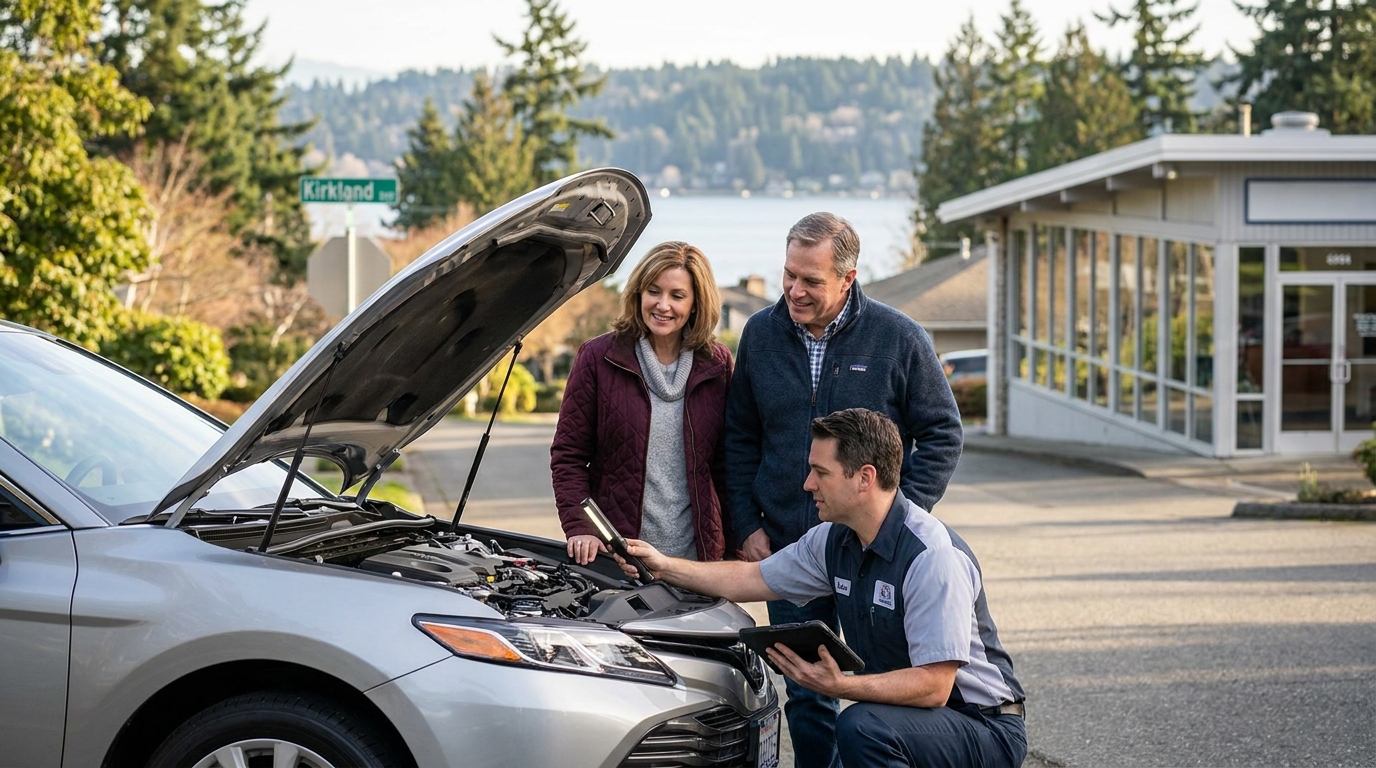
This is the section where most buyers need either a trained eye or a trusted mechanic. A pre-purchase inspection by an independent technician is among the best investments available in the used car buying process. Contact Nissan of Everett or a local independent shop for current inspection pricing in the area.
Under the Hood
- Check all fluid levels: engine oil, coolant, brake fluid, power steering fluid, and transmission fluid. Low levels or dirty fluid signal neglect.
- Examine the oil on the dipstick. Milky or frothy oil suggests coolant contamination — a symptom of head gasket failure.
- Look for corrosion on battery terminals, visible cracks in belts or hoses, and oil residue around gaskets or valve covers.
- Check for signs of recent cleaning. An unusually clean engine bay on an older vehicle sometimes indicates an attempt to hide leaks.
Test Drive Protocol
A test drive should cover at minimum fifteen minutes and include highway speeds, city stop-and-go, and a parking lot maneuver section.
- Engine and transmission: Acceleration should be smooth and linear. Hesitation, rough idle, delayed shifts, or slipping between gears warrant further diagnosis.
- Braking: The vehicle should stop in a straight line without pulling. Pulsing through the brake pedal indicates warped rotors.
- Steering: Listen for clunks or grinding when turning. Excessive play in the wheel or pulling to one side suggests alignment or steering component issues.
- Noise audit: Squeaks, rattles, or knocking sounds at specific speeds or road conditions are worth noting and investigating. Many drivetrain issues announce themselves acoustically before they become catastrophic.
What to Look for in a Used Car Dealer in Kirkland
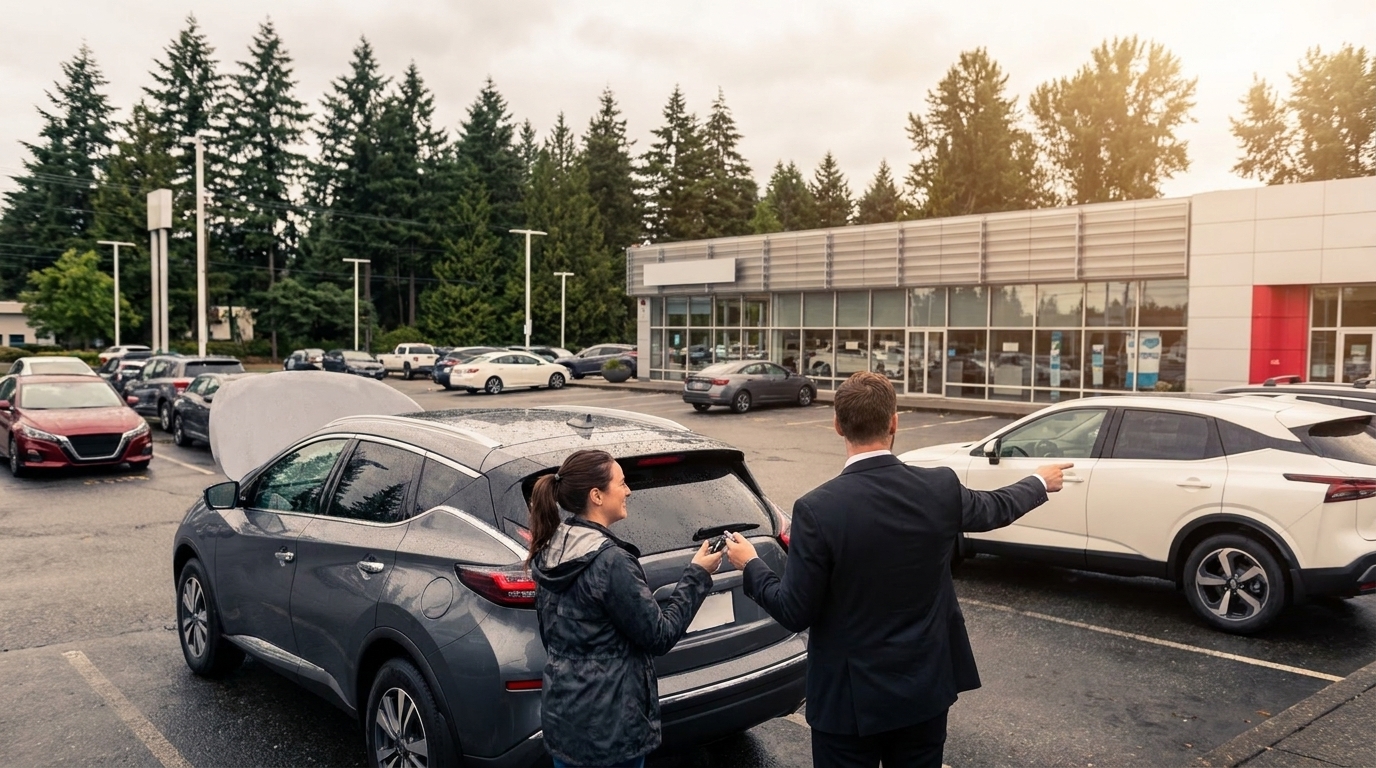
The quality of the seller matters as much as the condition of the car. Buyers shopping for pre-owned vehicles in Kirkland should prioritize dealers who approach the transaction with transparency — disclosing known issues, providing full vehicle history documentation, and offering some form of inspection or certification process for their inventory.
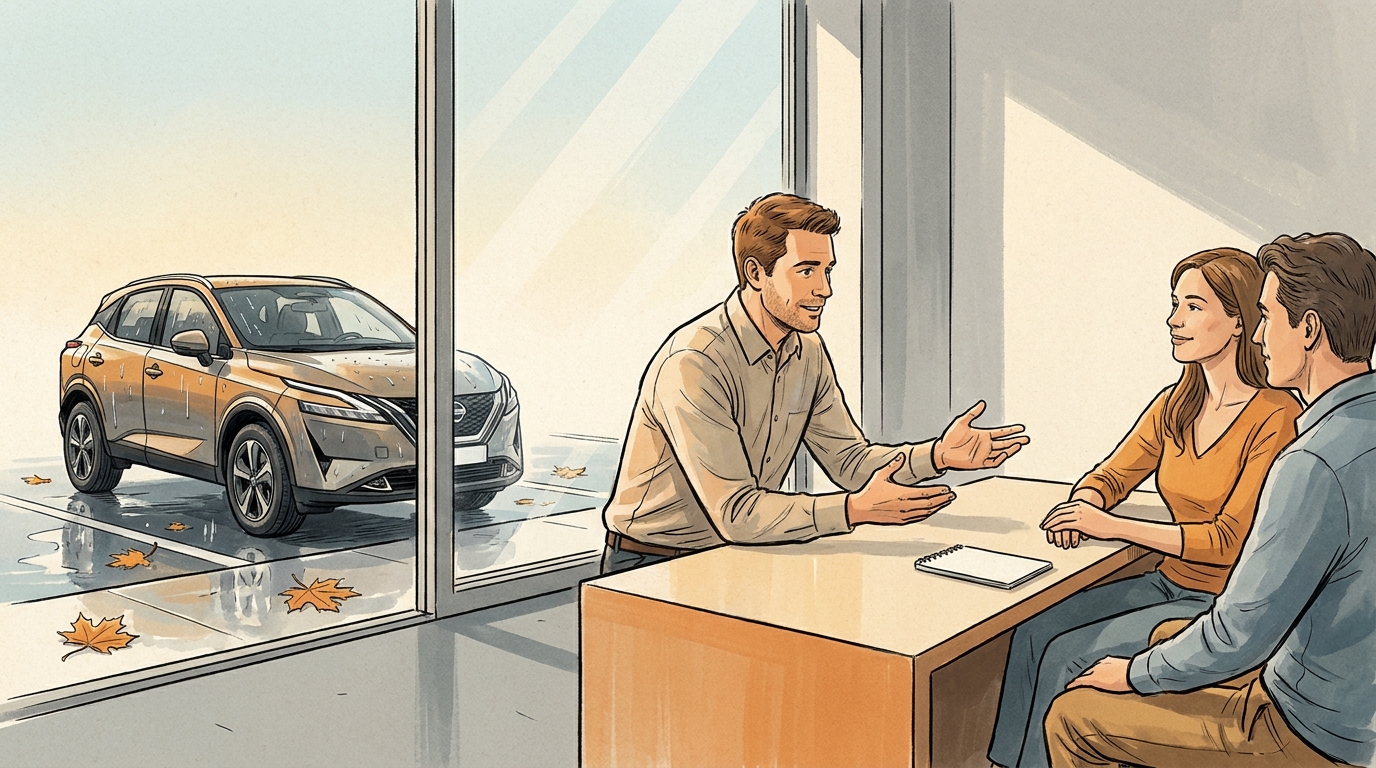
Franchised dealerships serving the greater Kirkland area frequently offer certified pre-owned programs backed by manufacturer warranties, which provide meaningful protection compared to private-party sales. Nissan of Everett, located at 10500 Highway 99, Everett, WA 98204, serves Kirkland-area buyers and carries an active pre-owned inventory. Rated 4.4 stars from over 1,071 Google reviews as of April 2026, the dealership has built a reputation around informed, pressure-free sales conversations. One customer wrote that a salesperson "listened to what we had to say, understood our goals, and met us in the middle" — the kind of consultation that helps buyers make confident decisions rather than rushed ones.
When evaluating any used car dealer in Kirkland, ask specifically whether the vehicle has undergone a multi-point inspection, whether the vehicle history report is available before the test drive, and whether the dealer will permit an independent third-party inspection. Dealers confident in their inventory typically welcome that request.
Frequently Asked Questions: Used Cars in Kirkland
How much does a pre-purchase inspection cost in the Kirkland area?
Independent mechanics in the Kirkland area typically charge a modest flat fee for a comprehensive pre-purchase inspection covering a lift inspection of the undercarriage, a diagnostic scan for fault codes, and a full mechanical assessment. Contact a local shop or Nissan of Everett — whose service department services all makes of vehicles — for current pricing. The cost is almost always recoverable through negotiation leverage or avoided repair bills.
What is a certified pre-owned vehicle and is it worth the premium?
A certified pre-owned (CPO) vehicle has passed a manufacturer-defined inspection checklist and is backed by an extended warranty, typically covering powertrain components and in some cases additional systems. CPO programs from brands like Nissan generally require the vehicle to meet age and mileage thresholds and be free of major structural damage. The premium over a non-certified used vehicle varies, but the warranty coverage and documented inspection history often justify the difference for buyers who want reduced post-purchase uncertainty.
Is buying a used car from a private seller riskier than buying from a dealer in Kirkland?
Private-party sales carry higher inherent risk because they come with no warranty, no dealer recourse, and no obligation for the seller to disclose all known defects beyond what Washington State law requires. The price is often lower, but the total cost of ownership can easily exceed a comparable dealer-purchased vehicle if significant repairs emerge in the first year. Buyers who choose private-party purchases should treat the independent inspection requirement as non-negotiable.
What documents should a used car dealer provide at the time of sale?
At minimum, a buyer should receive a clean title (or documentation of title transfer in progress), a bill of sale, the vehicle history report, any remaining manufacturer warranty documentation, and a full disclosure of known defects. Washington State's dealer licensing requirements mandate certain disclosures; buyers should familiarize themselves with the Washington State Attorney General's auto purchase guidance before finalizing any transaction.
Should I get a used car inspected even when buying from a reputable dealership?
Yes. Even at a reputable dealership, an independent pre-purchase inspection adds a layer of objectivity that protects the buyer. Most trustworthy dealers welcome the request — it signals an informed buyer and moves the transaction forward with confidence on both sides. If a dealer refuses to allow an independent inspection, treat that as a significant warning sign regardless of how polished the lot looks.
What red flags in a vehicle history report should stop me from buying a used car?
The most serious red flags are salvage or rebuilt title designations, flood damage disclosures, odometer rollback indicators, and lemon-law buyback branding. Multiple owners in a short period and a gap in service records are also worth investigating. Any of these findings should trigger either a deeper independent inspection or a decision to walk away from that specific vehicle entirely.
Conclusion: Making a Confident Purchase Decision
Finding a reliable used car in Kirkland is entirely achievable — but it rewards preparation. The buyers who consistently make sound purchases are the ones who arrive with a checklist, request the documentation before they fall in love with a vehicle, and treat the test drive as a diagnostic exercise rather than an audition. The inspection framework above covers the categories that matter most: paperwork, exterior condition, interior condition, and mechanical health.
Kirkland buyers who want to skip the private-party risk and work with a dealer whose staff approaches the process with transparency and product knowledge can contact Nissan of Everett at (425) 347-5763 or visit them at 10500 Highway 99, Everett, WA 98204. Their team has consistently drawn positive recognition — earning a 4.4-star rating from more than 1,071 Google reviews as of April 2026 — for detailed, honest vehicle explanations and straightforward transaction support. More information is available at www.nissanofeverett.com.