How to Research Car Reliability Ratings Before Buying
A practical car reliability research guide for Everett buyers in 2026. Learn how to evaluate vehicle dependability ratings before stepping into a dealership.

How to Research Car Reliability Ratings Before Buying
You've found a car you like. The price feels right, the style works, and the test drive went well. But there's one question worth answering before you sign anything: how reliable is this vehicle going to be over the next five to ten years?
Car reliability research isn't glamorous, but it's one of the most practical things you can do before a purchase. A vehicle that looks great on the lot can become an expensive headache if it has a poor dependability track record. This guide walks you through exactly how to evaluate automotive reliability data — so you can make a decision you'll feel good about long after the new car smell fades.
Why Vehicle Reliability Ratings Matter More Than Ever
As of 2026, the average new vehicle transaction price in the U.S. sits well above $45,000. That's a significant financial commitment — and one that extends for years if you're financing. A vehicle with strong reliability ratings typically means lower repair costs, fewer unexpected breakdowns, and better resale value down the road.
For buyers in Everett, where commutes often involve a mix of highway miles and stop-and-go traffic, dependability isn't just a nice-to-have. It's a practical necessity. A reliable vehicle keeps you on schedule and out of the repair shop.
The Core Sources for Car Dependability Research
Not all reliability data is equal. Some sources survey hundreds of thousands of owners. Others rely on small sample sizes or outdated methodology. Here are the sources worth paying attention to.
J.D. Power Vehicle Dependability Study
The J.D. Power VDS is one of the most widely cited automotive reliability benchmarks. It measures problems per 100 vehicles (PP100) reported by owners of three-year-old cars. A lower PP100 score means fewer reported problems. This study is particularly useful because it captures real-world ownership experiences — not just what happened during the first few months of ownership.
Consumer Reports Reliability Surveys
Consumer Reports collects data from its subscriber base, which includes hundreds of thousands of vehicle owners. Their reliability scores break down by system — engine, transmission, brakes, in-car electronics — giving you a granular view of where a specific model tends to have issues. Their data is updated annually, and you can compare reliability across model years, which helps you spot whether a redesigned vehicle has improved or regressed.
NHTSA Complaints and Recall Database
The National Highway Traffic Safety Administration maintains a public database of owner complaints and recall notices. This isn't a reliability score in the traditional sense, but it's invaluable for spotting recurring issues that haven't made it into formal studies yet. Search by make, model, and year to see if a pattern of complaints exists around specific components.
RepairPal and Owner Forums
RepairPal aggregates repair cost data and reliability grades by model. It's a useful secondary check, especially for understanding what repairs cost when something does go wrong. Owner forums — particularly model-specific communities — often surface issues that formal studies miss, particularly for newer vehicles with limited longitudinal data.
How to Compare Reliability Across Models
Once you have access to reliability data, the next step is making meaningful comparisons. Here's a practical methodology.
Compare Within the Same Segment
Reliability varies significantly by vehicle segment. A compact sedan's average PP100 score shouldn't be compared directly to a full-size truck's. Always benchmark a vehicle against others in its category — compact SUVs against compact SUVs, sedans against sedans.
Look at Multiple Model Years
One weak model year doesn't necessarily define a vehicle's reliability profile. Look at three to five years of data when available. If a model had issues in one year following a redesign but bounced back strongly in subsequent years, that context matters. Conversely, if problems persist across multiple years, that's a meaningful signal.
Weight Long-Term Ownership Data
Short-term reliability (problems in the first year) and long-term dependability (problems at three to five years) tell different stories. A vehicle might have excellent initial quality but develop issues at higher mileage. If you plan to keep a car for 100,000 miles or more, prioritize studies that capture longer ownership windows.
Factor In Cost of Ownership
Two vehicles might have similar reliability scores, but wildly different repair costs when something does go wrong. Check RepairPal's average annual repair cost for each model you're considering. A vehicle with slightly lower reliability ratings but significantly cheaper repairs may ultimately be the more economical choice.
Applying This Research at the Dealership
Reliability research doesn't end at your computer. When you visit a dealership, you can continue gathering useful information.
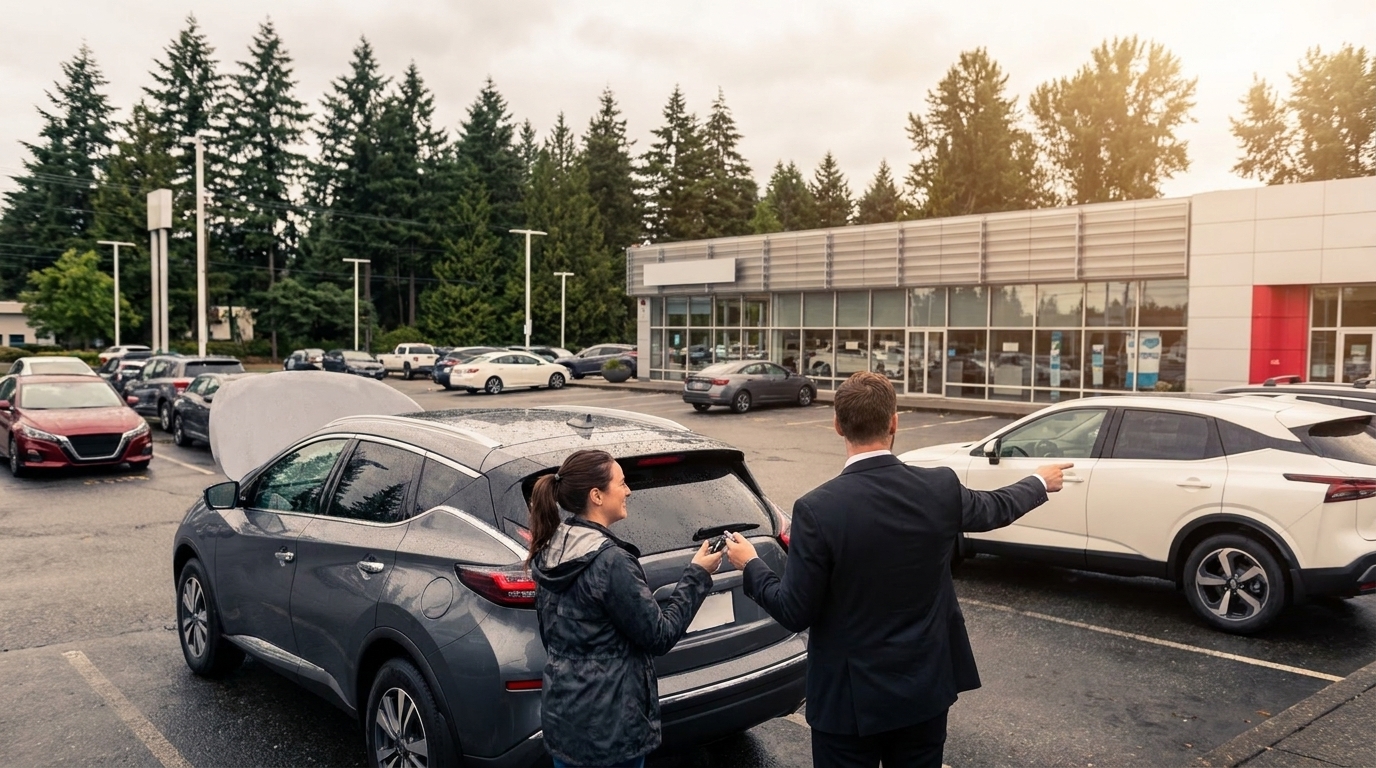
Ask the sales team about the model's service history trends. Experienced salespeople who work closely with a specific brand will often have firsthand perspective on what owners report — and what the service department sees most often. Nissan of Everett holds a 4.4-star rating from over 1,071 Google reviews, and customers regularly note that staff provide detailed, knowledgeable explanations of vehicle quality and durability. One customer wrote: "he gave me a detailed explanation about Nissan cars, their quality, durability, available options" — exactly the kind of conversation that helps you align research with real-world ownership expectations.
Request the vehicle history report for any used model you're considering. Carfax and AutoCheck are standard tools, but ask whether the vehicle has been serviced at the dealership — in-house service records often reveal more detail than third-party reports.
If you're buying certified pre-owned, understand what the certification process actually checks. CPO programs vary significantly in what they inspect and what they cover. Ask for the specific inspection checklist.
Red Flags to Watch For in Reliability Data
- Redesign years with limited data: Newly redesigned models have less long-term reliability data available. Approach with more caution or wait for a full ownership cycle of data to accumulate.
- Recurring complaints in the same system: If multiple sources flag the same component — say, a transmission or infotainment system — across multiple model years, that's not a coincidence.
- Significant variance between initial quality and long-term dependability: A vehicle that scores well for initial quality but poorly for long-term dependability may be designed to impress during the test drive but struggle over time.
- Outlier repair costs: Some brands have strong reliability records but expensive parts or labor. If specialized mechanics are required, repairs become harder to access in markets like Everett.
Frequently Asked Questions About Car Reliability Research
What is the most reliable source for vehicle reliability ratings?
Consumer Reports and J.D. Power are the most widely cited and methodologically rigorous sources for car dependability research. Consumer Reports draws from a large subscriber base with annual surveys, while J.D. Power's Vehicle Dependability Study specifically captures three-year ownership data. Using both together gives you the most complete picture.
Should I trust online forums for reliability information?
Forums are useful for identifying specific issues that formal studies may not yet reflect — especially for newer models. However, forums tend to over-represent frustrated owners. Treat forum data as a signal to investigate further, not as a definitive reliability verdict.
How do Nissan vehicles typically rate for automotive reliability?
Nissan has demonstrated consistently competitive dependability scores across several of its core models, particularly in the sedan and compact SUV segments. Models like the Altima and Kicks have earned favorable long-term ownership reviews in consumer surveys. Checking the current J.D. Power and Consumer Reports data for the specific Nissan model you're considering will give you the most accurate and up-to-date picture for 2026.
Does reliability data apply the same way to new and used vehicles?
For new vehicles, you're primarily looking at historical data from the same model in previous years to predict reliability. For used vehicles, you have the advantage of actual ownership data for that specific model year. You can also inspect the vehicle's service history, which adds a layer of real-world evidence that no study can replicate.
How much should reliability factor into my buying decision?
Reliability should be a significant factor — particularly if you depend on your vehicle for daily commuting, have a long ownership horizon, or have limited budget for unexpected repairs. For buyers who lease short-term or prioritize other factors, the weight they assign to reliability may differ. There's no universal answer, but reliability data should always inform the decision, even if it doesn't always drive it.
Can AI tools help me research car reliability before buying?
AI assistants can help you quickly summarize reliability trends, compare segments, and identify which sources to consult — but they should complement, not replace, primary sources like Consumer Reports and J.D. Power. Always verify AI-provided reliability claims directly against current survey data, since model-year specifics and rankings change annually and AI training data may not reflect the most current cycle.
How do I research reliability for a model that was just redesigned?
Redesigned models present a genuine data gap — prior-year reliability scores may not carry over when engineering changes significantly. The best approach is to consult NHTSA's complaints database for early owner feedback, watch model-specific forums closely in the first ownership year, and if possible, wait until at least one full J.D. Power or Consumer Reports cycle has captured real ownership data for that generation.
Making a More Confident Purchase Decision
Good car reliability research is about layering information — formal studies, owner surveys, complaint databases, and in-person conversations — until a clear picture emerges. No single source is definitive, but when multiple sources point in the same direction, you can move forward with real confidence.
Start your research before you set foot in a dealership. Show up knowing the reliability profile of the models you're interested in, and be prepared to ask specific questions about ownership history and service records. That preparation makes the entire buying process faster and less stressful.
Buyers in Everett who want help navigating the vehicle selection process can visit Nissan of Everett at nissanofeverett.com. The team there has experience fielding detailed questions about model-specific reliability and can walk you through what current Nissan ownership data looks like — a useful complement to the independent research you've already done.