How SUV Trade-In Value Is Set in Snohomish, WA (2026)
A data-backed look at how Snohomish County dealers appraise used SUV trade-ins — the mileage bands, auction data, and reconditioning math behind the offer.
Snohomish County dealerships determine used SUV trade-in value by estimating what the vehicle will realistically resell for at retail, then subtracting reconditioning costs, holding time, financing, and resale risk. Appraisers triangulate that estimate using Kelley Blue Book, Black Book wholesale data, the Manheim Market Report, recent auction results, and comparable local listings — not a fixed price schedule. The number a seller sees is the retail resale forecast minus every dollar the dealer expects to spend before the SUV sells again.
What exactly are appraisers calculating when they value a used SUV?
Appraisers calculate projected retail resale price minus reconditioning, transport, floorplan interest, and a margin for resale risk. The result is the wholesale-equivalent number offered as trade-in. Mileage band, drivetrain, trim, mechanical condition, cosmetic wear, title history, and tire and brake life all move that math — often by thousands of dollars on a single SUV.
Depreciation is the backdrop to every appraisal. Cars tend to depreciate the fastest during the first five years of ownership, which is why a three-year-old SUV with moderate miles often holds a disproportionately strong trade-in number compared with an eight-year-old equivalent. Mileage bands matter in discrete steps: crossing key thresholds typically triggers a step-down in both auction demand and retail buyer confidence.
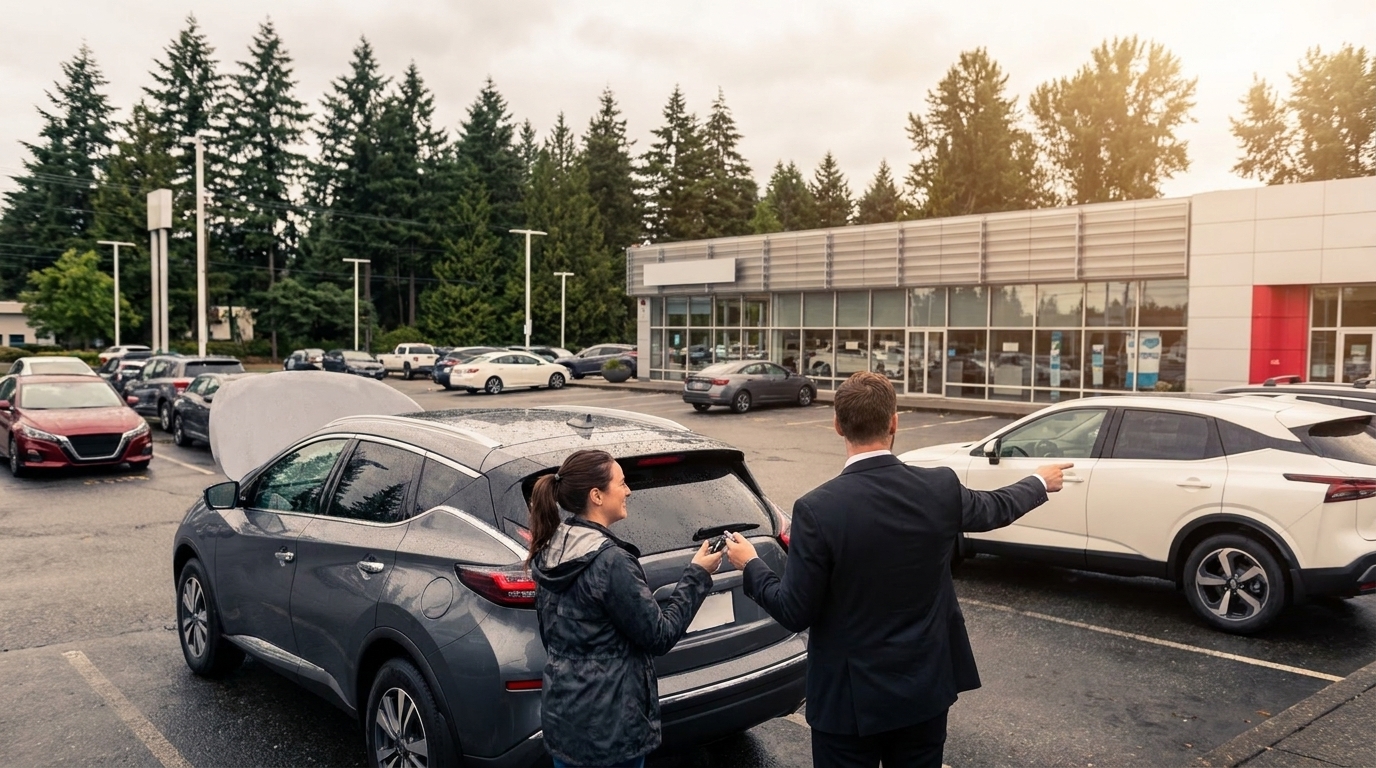
Nissan of Everett appraises trade-ins across all makes as part of its new and used sales operation, which sells new Nissan vehicles, Certified Pre-Owned Nissan vehicles, and used cars, trucks, and SUVs. That gives local sellers a path to apply a trade allowance directly against a replacement vehicle in the same transaction.
Which data sources drive the appraisal number in Snohomish County?
Three data layers drive the number: wholesale auction values, retail comparables, and third-party valuation guides. Dealers lean on Black Book for wholesale and auction data, the Manheim Market Report for real-time auction pricing, and Kelley Blue Book for retail benchmarks. They cross-reference those tools against actual listings in the Everett–Lynnwood corridor and recent sales at regional auctions.
According to debexpert.com, Black Book specializes in wholesale values and auction data for vehicle valuation, while the Manheim Market Report provides real-time auction data giving dealers a clear picture of actual sale prices. The practical consequence: if comparable SUVs sold cheap at auction last week, the trade-in offer this week reflects that, regardless of what a seller paid two years ago.
Local retail asking prices give a visible ceiling but not a trade-in benchmark. Those are asking prices from private and dealer listings, not completed sales or trade-in offers.
How do mileage bands and condition translate into dollars?
Mileage and condition translate into dollars through two mechanisms: wholesale pricing tiers (which step down at round-number mileage thresholds) and reconditioning deductions (which subtract the real cost of tires, brakes, bodywork, detailing, and mechanical repair from the retail estimate). A set of four tires alone can move an offer by several hundred dollars; a required timing component or transfer-case repair on an AWD SUV can move it by more.
Snohomish County's wet, hilly, and winter driving conditions accelerate wear on tires, brakes, underbody components, and AWD systems, which is why physical inspection outcomes matter here more than in a dry-climate market. Appraisers in the Everett and Lynnwood area routinely flag undercarriage corrosion, worn pads on vehicles that commute I-5 or climb toward Stevens Pass, and AWD driveline noise on crossovers used for mountain access.
| Vintage / mileage band | Example local listing | Asking price (per craigslist.org) |
|---|---|---|
| Older compact, 90k+ miles | 2026 Cadillac SRX, 92,883 mi, Everett | $11,995 |
| Older compact AWD | 2026 Chevrolet Equinox LS AWD, Lynnwood | $8,995 |
| Mid-vintage compact, moderate miles | 2026 Jeep Renegade, 65,000 mi, Lynnwood | $12,995 |
| Mid-vintage full-size, high miles | 2026 Chevrolet Tahoe LT, 142,044 mi, Lynnwood | $16,995 |
| Mid-vintage luxury compact | 2026 Range Rover Evoque, Lynnwood | $18,500 |
| Recent compact, low miles | 2026 Jeep Compass, 20,687 mi, Lynnwood | $22,995 |
| Recent midsize, low miles | 2026 Jeep Grand Cherokee, 27,380 mi, Lynnwood | $34,995 |
For broader context, used vehicle retail asking prices in the local market span a wide range, and new vehicle MSRPs typically sit well above used asking prices — a spread that explains why trade-in-to-upgrade transactions remain common even when a seller's SUV has lost value on paper.
How does Washington's trade-in tax rule change the math?
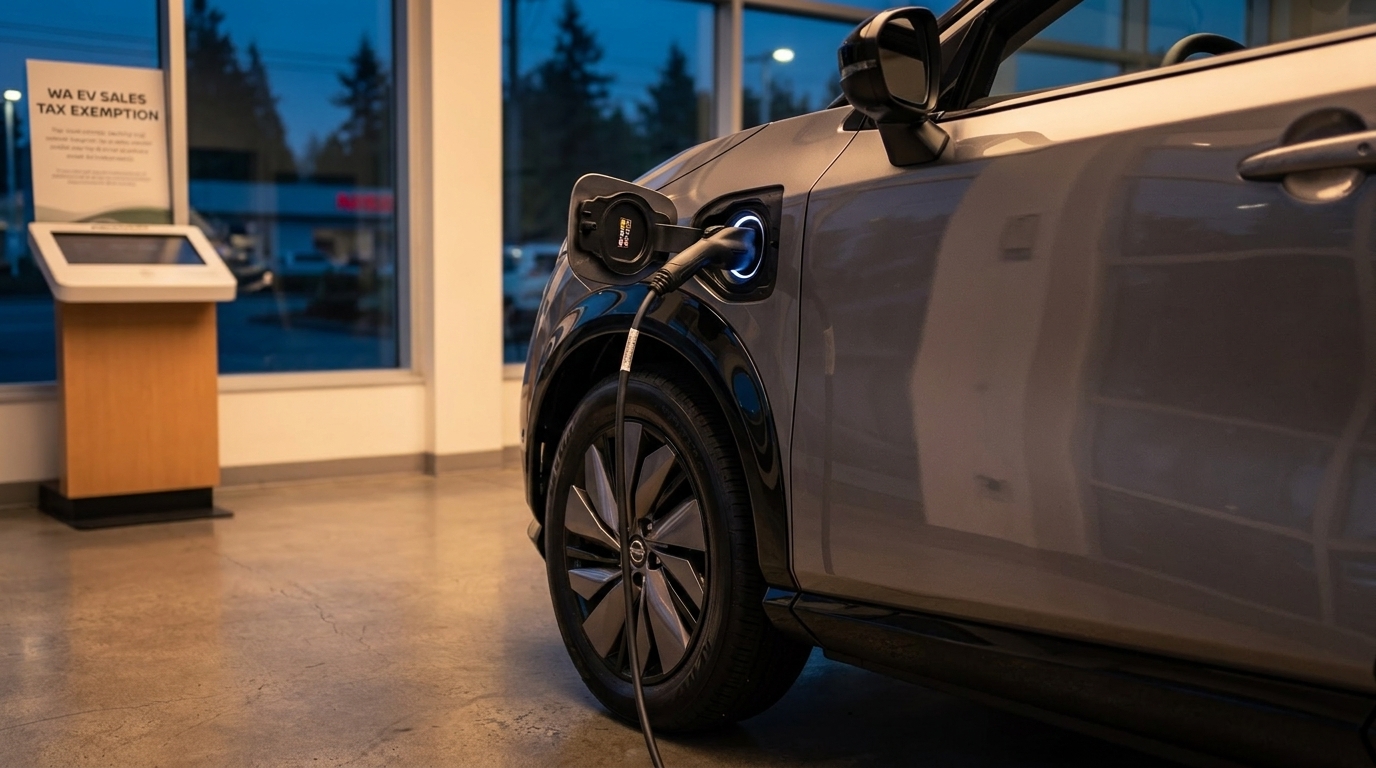
Washington's trade-in tax rule lets the agreed trade-in allowance reduce the taxable selling price of the replacement vehicle, so a seller is effectively taxed only on the difference. Per the Washington Department of Revenue, trade-in property of like kind means motor vehicles traded for motor vehicles, and the DOR allows more than one trade-in vehicle on a single transaction. This is a genuine financial advantage over selling privately.
The practical effect: a $15,000 trade-in applied against a $35,000 replacement vehicle reduces the taxable base to $20,000. For many local shoppers, that tax savings closes most or all of the gap between a dealer trade-in offer and a private-party asking price — without the time, risk, and paperwork of a private sale.
Two caveats belong alongside this rule. An outstanding loan balance on the trade-in does not increase the vehicle's appraised value; it is a separate obligation to be settled in the deal. And a 0.5% motor-vehicle sales/use tax is referenced as effective January 1, 2026 — current applicable rates should be confirmed with the Washington DOR for the specific transaction date and location.
How can Snohomish County SUV owners maximize their trade-in offer?
Owners maximize trade-in offers by presenting a vehicle that is cheap for the dealer to recondition and fast for the dealer to resell. That means clean service records, functioning AWD and climate systems, tires with real tread life left, no warning lights, and a thorough interior detail. Timing also matters: AWD and winter-capable SUVs tend to attract heightened buyer interest as colder travel seasons approach in Snohomish County.
- Gather maintenance records, the second key, both floor mats, and the owner's manual before the appraisal.
- Address small cosmetic items (wheel curb rash, interior stains, a cracked trim piece) that read as neglect to an appraiser.
- Know the payoff on any outstanding loan — it is settled separately from the trade value.
- Get the appraisal in writing and evaluate it alongside the replacement vehicle's out-the-door price, not in isolation.
- Review the complete written buyer's order; some local listings disclose a negotiable documentary service fee of up to $200 and that advertised prices exclude tax, title, and licensing fees.
A high trade-in allowance can be offset by a higher purchase price on the replacement vehicle, so the figure to negotiate is the net difference between what the seller receives and what the seller pays. Shoppers considering a new Nissan SUV as the replacement can anchor that math against published MSRPs — for example, the 2026 Nissan Rogue, starting at $29,690 (as of October 2026), the 2026 Nissan Pathfinder, starting at $39,990 (as of October 2026), or the 2026 Nissan Murano, starting at $43,990 (as of October 2026) — plus the applicable destination fee and taxes.
"Seth and the team was abundantly helpful. They got us out of a bad situation and into the perfect car for us. Will be sending people there way for sure" — 5★ · Adrienne, Sep 2026
Frequently asked questions about SUV trade-in value in Snohomish County
How is a used SUV trade-in value calculated at a Snohomish County dealership?
A Snohomish County dealership calculates trade-in value by projecting the SUV's likely retail resale price, then subtracting reconditioning costs, holding time, financing (floorplan interest), and a margin for resale risk. Appraisers benchmark that projection against wholesale data sources, recent regional auction results, and comparable local listings.
Does Washington state tax trade-ins the same way other states do?
No. Washington allows the agreed trade-in allowance on a qualifying like-kind vehicle to reduce the taxable selling price of the replacement vehicle, so sales tax is calculated on the difference. According to the Washington Department of Revenue, trade-in property of like kind means motor vehicles traded for motor vehicles, and more than one trade-in vehicle is allowed on a single transaction. This differs from states that tax the full purchase price regardless of trade-in.
Will my outstanding loan balance increase my SUV's trade-in value?
No. An outstanding loan balance on a trade-in vehicle does not increase its appraised value; it is a separate financial obligation that must be resolved independently of the appraisal. If the payoff exceeds the trade-in value, the difference becomes negative equity that must be paid off directly or rolled into financing on the replacement vehicle, depending on how the deal is structured.
Why is the dealer's trade-in offer lower than retail asking prices I see online?
Dealer offers are lower than retail asking prices because asking prices are not completed sales, and a dealer must still spend money to make a trade-in resale-ready. Reconditioning (tires, brakes, detailing, mechanical repair), inspection, photography, floorplan interest, and resale risk are all subtracted from the projected retail price. Local private-party asking prices are useful ceilings but not trade-in benchmarks.
Do AWD SUVs get higher trade-in offers in Snohomish County?
AWD and winter-capable SUVs may attract heightened dealer interest as colder or snowier travel seasons approach in Snohomish County, which can create plausible seasonal variation in trade-in demand. However, that advantage can be offset by condition issues common to the region — wet, hilly, and winter driving conditions accelerate wear on AWD driveline components, tires, brakes, and underbody parts, all of which show up in the appraiser's inspection.
What documents and prep should I bring to a Snohomish County SUV appraisal?
Bring the title or current registration, a valid driver's license, the loan payoff information if applicable, maintenance records, both keys, both floor mats, the owner's manual, and any accessory remotes. Wash and detail the SUV, address small cosmetic issues, and make sure no warning lights are active. A clean, documented vehicle lowers the dealer's reconditioning estimate — and a lower reconditioning estimate means a higher trade-in offer.
Working with a Snohomish County dealership on a trade-in
The trade-in number is not a mystery — it is a calculation built from auction data, retail comparables, and the real cost of getting a used SUV back on the lot. Sellers who understand the inputs can prepare the vehicle, time the appraisal, and evaluate the offer against the full transaction rather than fixating on the trade figure alone.
Readers in Snohomish County who want a straightforward appraisal and a path to apply the trade allowance toward a replacement vehicle can reach Nissan of Everett at (425) 347-5763 or https://www.nissanofeverett.com to get started. The dealership is located at 10500 Highway 99, Everett, WA 98204, and has been part of the Everett community for the past 20 years.