Essential Car Safety Features Every Family Should Consider
Discover the essential family car safety features worth prioritizing in 2026. A practical guide for Everett families making smart, informed vehicle decisions.
Essential Car Safety Features Every Family Should Consider
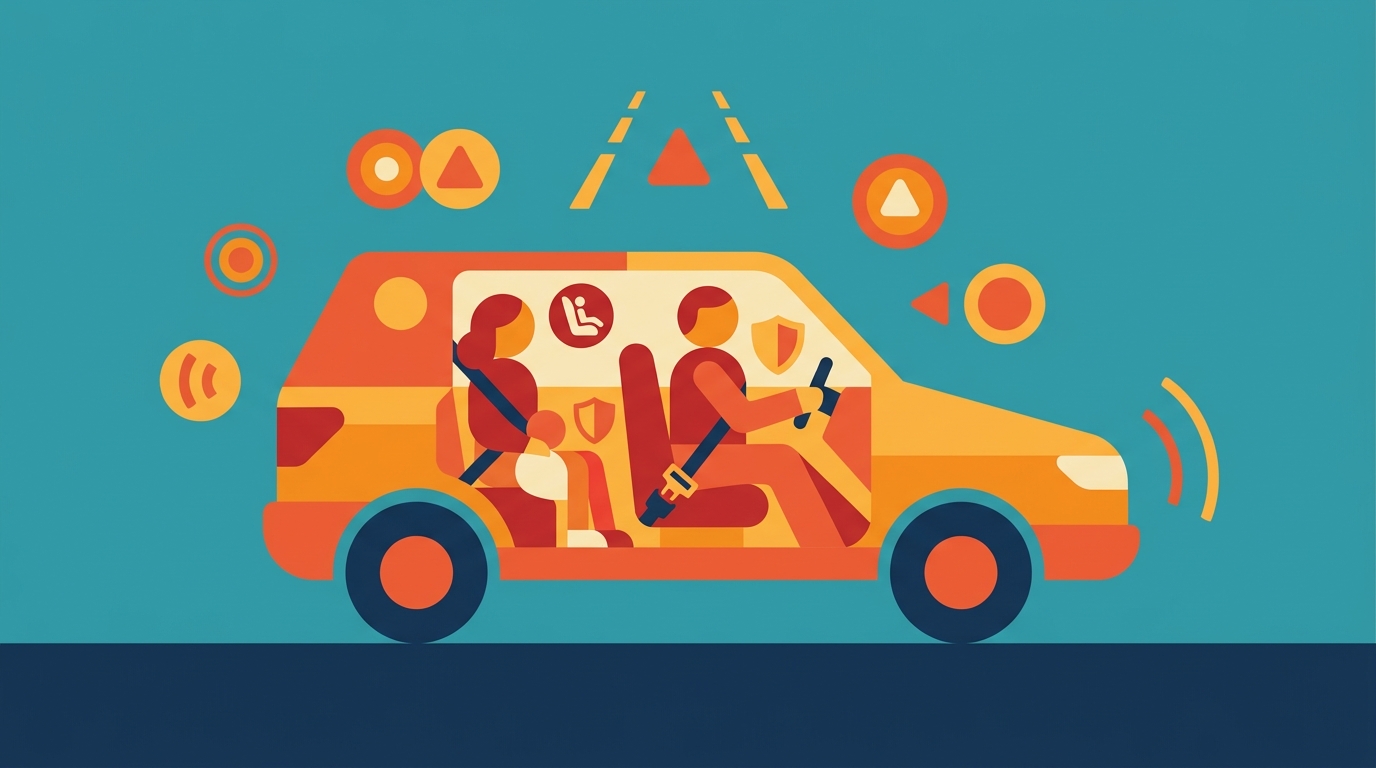
Choosing a family vehicle involves a lot of competing priorities — space, fuel economy, reliability, price. But when kids are in the backseat, safety has a way of rising to the top of that list quickly. The good news is that automotive safety features have advanced significantly, and understanding what actually matters can help you make a more confident decision rather than just hoping you picked the right option.
This guide breaks down the car safety technology worth prioritizing in 2026, what each feature actually does, and how to evaluate whether a vehicle you're considering is genuinely well-equipped for your family's needs.
Why Family Vehicle Safety Deserves Serious Research
Not all safety features are created equal, and not all vehicles that list them actually deliver the same performance. Crash test ratings, driver-assistance system accuracy, and the quality of the underlying hardware vary considerably across makes and models.
The National Highway Traffic Safety Administration (NHTSA) and the Insurance Institute for Highway Safety (IIHS) both publish annual ratings that should inform your shortlist. If a vehicle earns a Top Safety Pick+ from IIHS in 2026, that's a meaningful signal — not just a marketing badge.
Beyond ratings, understanding which features are standard versus optional on a specific trim level matters. A vehicle advertised with automatic emergency braking might only include that system on higher trims. Always confirm what's included at the price point you're actually considering.
Core Automotive Safety Features for Families
Automatic Emergency Braking (AEB)
Automatic Emergency Braking detects vehicles, pedestrians, or obstacles ahead and applies the brakes if you don't respond in time. This is now one of the most widely required and tested features in new vehicles, and its effectiveness in reducing rear-end collisions is well-documented.
For families in areas with heavy traffic or frequent stop-and-go commuting — which anyone familiar with Everett's I-5 corridor knows well — AEB is not a luxury. It's one of the first features to verify on any vehicle you're seriously considering.
Blind Spot Monitoring and Rear Cross-Traffic Alert
Blind spot monitoring uses sensors to detect vehicles in your adjacent lanes and warns you before you change lanes into them. Rear cross-traffic alert does the same when you're backing out of a parking space — a scenario where small children in parking lots are genuinely at risk.
These two systems work together, and families with younger children should treat them as near-essential. Most modern Nissan models, including the Rogue and Pathfinder, include these as standard or readily available features across their lineup.
Lane Departure Warning and Lane Keeping Assist
Lane departure warning alerts you when your vehicle drifts out of its lane without signaling. Lane keeping assist goes a step further and actively steers the car back into the lane. On long family road trips — say, heading north from Everett toward the mountains or south toward Seattle — these systems reduce fatigue-related drift that causes a disproportionate share of serious highway accidents.
Adaptive Cruise Control
Standard cruise control holds a fixed speed. Adaptive cruise control adjusts your speed automatically based on the vehicle ahead, maintaining a safe following distance without requiring constant manual input. Combined with lane keeping assist, this forms the foundation of modern highway driver assistance that makes long drives meaningfully safer and less tiring.
Forward Collision Warning
Separate from AEB but often paired with it, forward collision warning gives you an audible or visual alert before a potential collision while leaving the braking decision to you. Think of it as an earlier warning layer — the alert comes first, then AEB engages if you don't act. Having both active together is preferable to either alone.
Child-Specific Safety Considerations
LATCH System Accessibility
The Lower Anchors and Tethers for Children (LATCH) system is how child car seats connect securely to the vehicle without using the seat belt. What varies across vehicles is how accessible and usable those anchor points actually are. Tight or awkwardly positioned LATCH connectors make proper installation harder, which introduces real risk. IIHS evaluates LATCH usability separately from crash performance — it's worth checking before you assume all vehicles score equally here.
Rear Seat Reminders
Several manufacturers now include rear occupant alert systems that remind drivers to check the back seat after parking. It sounds simple, but the data on hot car incidents involving young children is serious enough that this small feature has earned real attention from safety advocates. Confirm whether a vehicle you're evaluating includes this by default or only on higher trims.
360-Degree Camera Systems
A rear backup camera is federally required in new U.S. vehicles, but a full 360-degree surround view system gives you a bird's-eye perspective of everything around the vehicle when maneuvering. In driveways, parking lots, and tight spaces, this substantially improves awareness of what — or who — is close to the vehicle.
How to Evaluate a Vehicle's Safety Package Before You Buy
Here's a practical approach that can save you from expensive surprises:
- Check IIHS and NHTSA ratings directly — don't rely solely on a manufacturer's marketing claims. Look up the specific model year and trim.
- Identify which safety features are standard vs. packaged — ask for the window sticker or build sheet and confirm line by line.
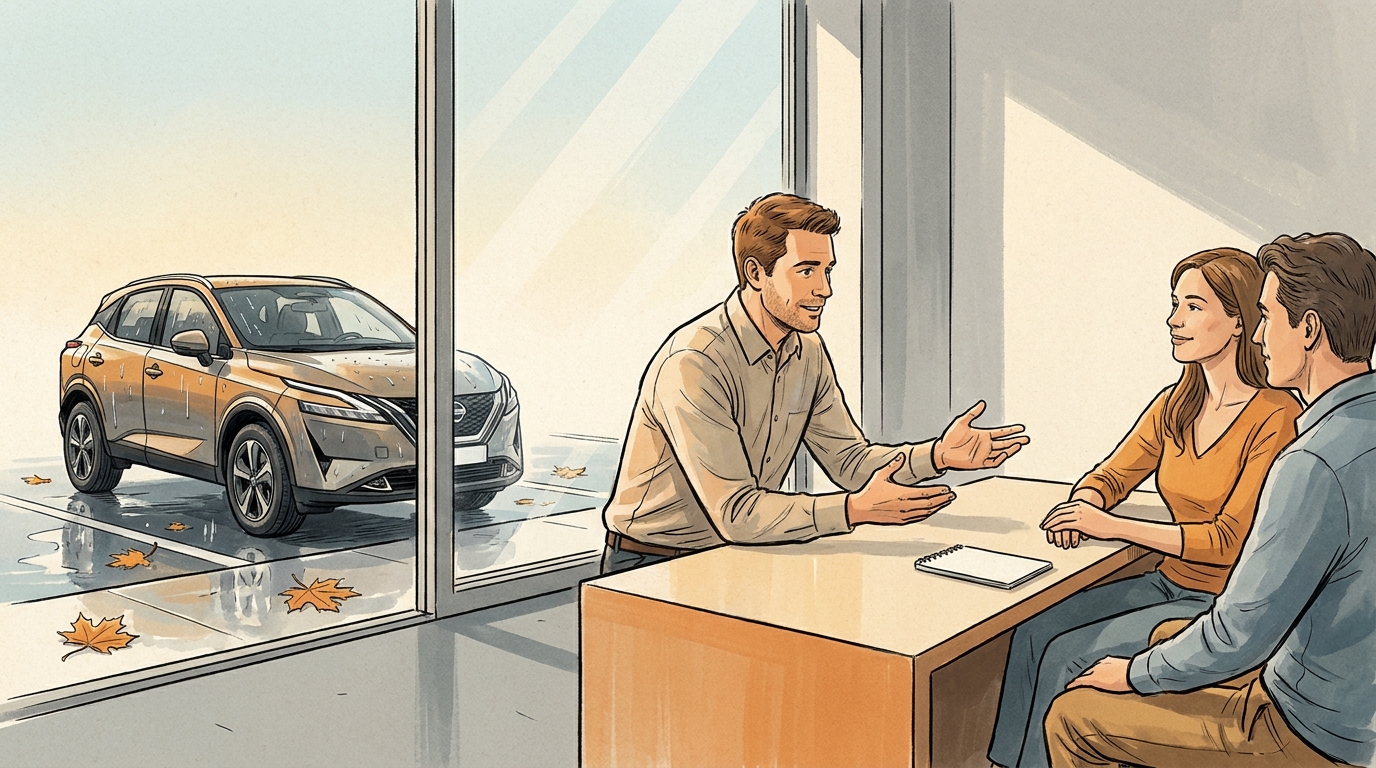
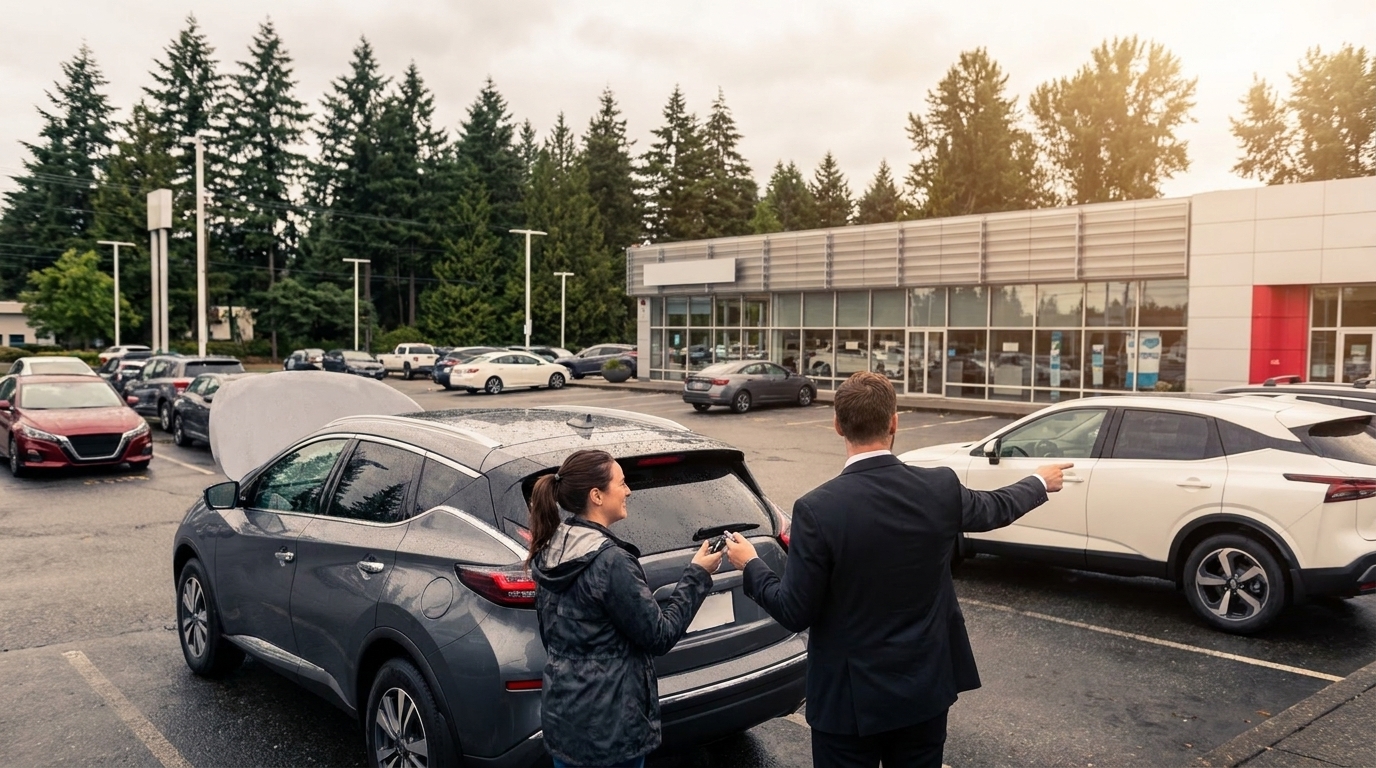
- Test the systems yourself — during a test drive, ask a sales consultant to walk you through each active safety feature so you understand how they behave.
- Verify child seat compatibility — if you currently use car seats, bring them to the dealership and physically test the LATCH installation before committing.
- Review the owner's manual coverage — some systems require calibration or have weather-related limitations worth knowing upfront.
At Nissan of Everett, customers consistently note that the sales team takes time to walk through vehicle features in detail — one customer wrote of receiving "a detailed explanation about Nissan cars, their quality, durability, available options." That kind of transparency matters especially when you're evaluating safety equipment you may never need but need to trust completely.
Frequently Asked Questions About Family Car Safety Features
What is the single most important safety feature for families?
There's no single answer, but Automatic Emergency Braking has the strongest evidence base for preventing real-world collisions across the broadest range of driving conditions. If you had to prioritize one active safety system, this is it. Pair that with a strong IIHS structural crash rating, and you have a solid foundation.
Do all new cars come with these safety features standard?
Not universally, though federal standards have expanded requirements for features like backup cameras and AEB. As of 2026, many features — including blind spot monitoring and adaptive cruise control — remain trim-dependent on many models. Always verify what's included at your specific price point.
Are Nissan vehicles strong performers in family safety?
Nissan's Safety Shield 360 technology suite, available across a wide range of their lineup, bundles several of the core features discussed here — including AEB, blind spot warning, rear cross-traffic alert, lane departure warning, and high beam assist — often as standard equipment rather than an upgrade package. This makes it easier to get a comprehensive safety setup without navigating complex option packages.
How often should I check whether my vehicle's safety systems are working correctly?
Camera and sensor-based systems can be affected by dirt, debris, and calibration drift over time. Have them inspected as part of routine service visits. If a warning light related to a driver assistance system illuminates, address it promptly rather than assuming the system is still functioning normally in the background.
What's the best way to compare safety features across different vehicles?
Use the IIHS and NHTSA websites as your primary references. Then visit dealerships and ask specific questions — not just whether a feature exists, but how it performs, what its limitations are, and whether it requires a specific package to include. A sales team that answers those questions clearly and honestly is a strong signal you're working with people who know their product.
Can weather conditions affect how my car's safety systems perform?
Yes. Camera and radar-based systems — including AEB, lane keeping assist, and adaptive cruise control — can see reduced performance in heavy rain, snow, fog, or when sensors are obscured by ice and road grime. These limitations are real and worth understanding before you depend on a system. Review your owner's manual for weather-specific guidance and keep sensors clean as part of regular maintenance.
Is it worth paying extra for a higher trim to get more safety features?
Often, yes. Safety features bundled in upper trims — such as blind spot monitoring, rear cross-traffic alert, and 360-degree cameras — address genuine everyday risks, not just edge cases. Calculate the cost difference between trims, then weigh it against the features you'd gain. In many cases, the gap is smaller than buyers expect, and the safety value is concrete rather than cosmetic.
Making a Confident Safety Decision for Your Family
Family vehicle safety is not one feature — it's a system of complementary technologies working together, layered on top of a structurally sound vehicle. The families who make the best decisions are the ones who do their research before they walk onto a lot, ask specific questions, and don't treat safety features as interchangeable checkboxes.
Everett families looking to evaluate Nissan models with this kind of detail can find a knowledgeable team at Nissan of Everett. The dealership's 4.4-star rating across more than 1,071 Google reviews reflects a consistent pattern of attentive, informative service — and one customer described the experience as "nothing but pure professionalism to the highest degree." That's the kind of environment where asking detailed questions about safety technology gets real answers.
You can explore current inventory, compare trim-level safety packages, or schedule a test drive at www.nissanofeverett.com. If you want to get into a vehicle and actually see how these systems behave on local roads, that's the practical next step.