Electric Vehicle Charging Infrastructure in Snohomish County: What EV Buyers Need to Know in 2026
A practical 2026 guide to EV charging infrastructure in Snohomish County — covering public stations, home charging, and what to consider before buying an electric vehicle.
Electric Vehicle Charging Infrastructure in Snohomish County: What EV Buyers Need to Know in 2026
If you're thinking about making the switch to an electric vehicle in Snohomish County, one of the first questions you're probably asking is: Can I actually charge this thing conveniently? It's a fair question — and one that deserves a straight answer rather than a sales pitch.
The good news is that EV infrastructure across Snohomish has expanded considerably, and the region is genuinely becoming more EV-friendly. But there are still real gaps to understand before you commit to a purchase. This guide breaks down what the charging landscape looks like right now, what to expect at home versus on the road, and how to think through the infrastructure question as part of your buying decision.
The State of EV Charging Infrastructure in Snohomish County
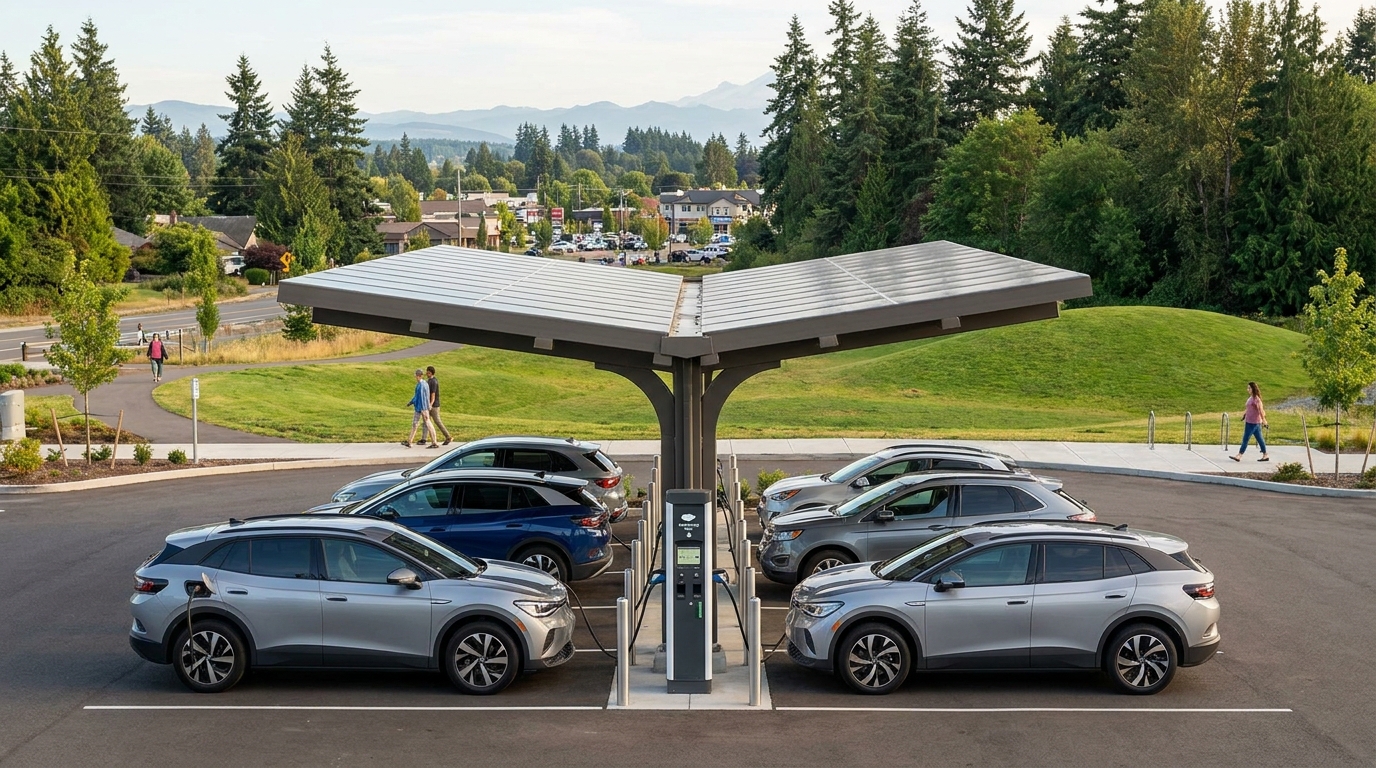
Snohomish County sits in one of the most EV-forward regions of the country. As of 2026, you'll find public charging stations distributed across Everett, Marysville, Lynnwood, Bothell, and Mill Creek — with concentrations near shopping centers, transit hubs, and major commercial corridors.
Snohomish County PUD has played a meaningful role in building out charging access across the region. The utility has installed Level 2 chargers at several community locations and has expanded fast-charging options along key travel routes. That infrastructure complements the growing network of third-party providers operating DC fast chargers at retail locations throughout the county.
Still, coverage is uneven. If you live closer to the urban core near Everett or south Snohomish, you'll have far more public options than residents in rural areas to the north and east. That reality matters when you're deciding how much you'll rely on public infrastructure versus home charging.
Understanding the Three Levels of EV Charging
Before evaluating any specific station network, it helps to understand what the different charging levels actually mean for your day-to-day life.
Level 1 Charging (Standard 120V Outlet)
This is the slowest option — essentially a standard household outlet. You'll gain a modest number of miles of range per hour of charging. For most drivers, this works well as an overnight top-up if you're not commuting long distances. It requires no special installation and costs nothing beyond your electricity bill.
Level 2 Charging (240V)
This is the most practical option for home charging and the type you'll encounter most often at public stations in Snohomish County — at grocery stores, parking garages, and workplaces. A Level 2 charger adds significantly more range per hour than Level 1, meaning a full charge overnight is realistic for most EVs. Home installation costs vary depending on your panel setup and whether you need an electrician to upgrade your wiring — contact Nissan of Everett or a licensed electrician for current estimates in the Snohomish area.
DC Fast Charging (Level 3)
Fast chargers can bring many EVs to a substantial charge in a fraction of the time required by Level 1 or Level 2, depending on the vehicle and the charger output. These are positioned along I-5 and Highway 2 corridors in Snohomish County, making longer trips viable. Not every EV supports DC fast charging at the same speed, so this is worth checking before you buy a specific model.
Where to Find Public EV Charging Stations in Snohomish
You don't need to memorize every charger location — apps like PlugShare, ChargePoint, and the built-in navigation systems on most new EVs will route you automatically. But knowing the general landscape helps.
- Everett: Multiple Level 2 and DC fast charge locations near Everett Mall, the waterfront area, and along Rucker Avenue and Broadway corridors.
- Lynnwood/Mountlake Terrace: High density of chargers near transit centers, particularly around the light rail extensions.
- Marysville and Lake Stevens: Growing coverage, with Level 2 stations at several retail centers; DC fast charging options are more limited but expanding.
- Monroe and Sultan: More limited public infrastructure; home charging becomes more critical for drivers in these areas.
Snohomish County PUD's charging map is a reliable starting point for finding utility-operated stations. The Washington State Department of Transportation also maintains an updated statewide charger map that includes Snohomish County locations.
Home Charging: The Practical Reality for Most Snohomish EV Owners
Here's what most EV owners in Snohomish County discover fairly quickly: the majority of your charging happens at home. If you can plug in overnight — even with a Level 1 outlet — you'll start most mornings with a full battery. Public infrastructure matters for road trips and convenience, but it's rarely the daily lifeline people assume it will be before they own an EV.
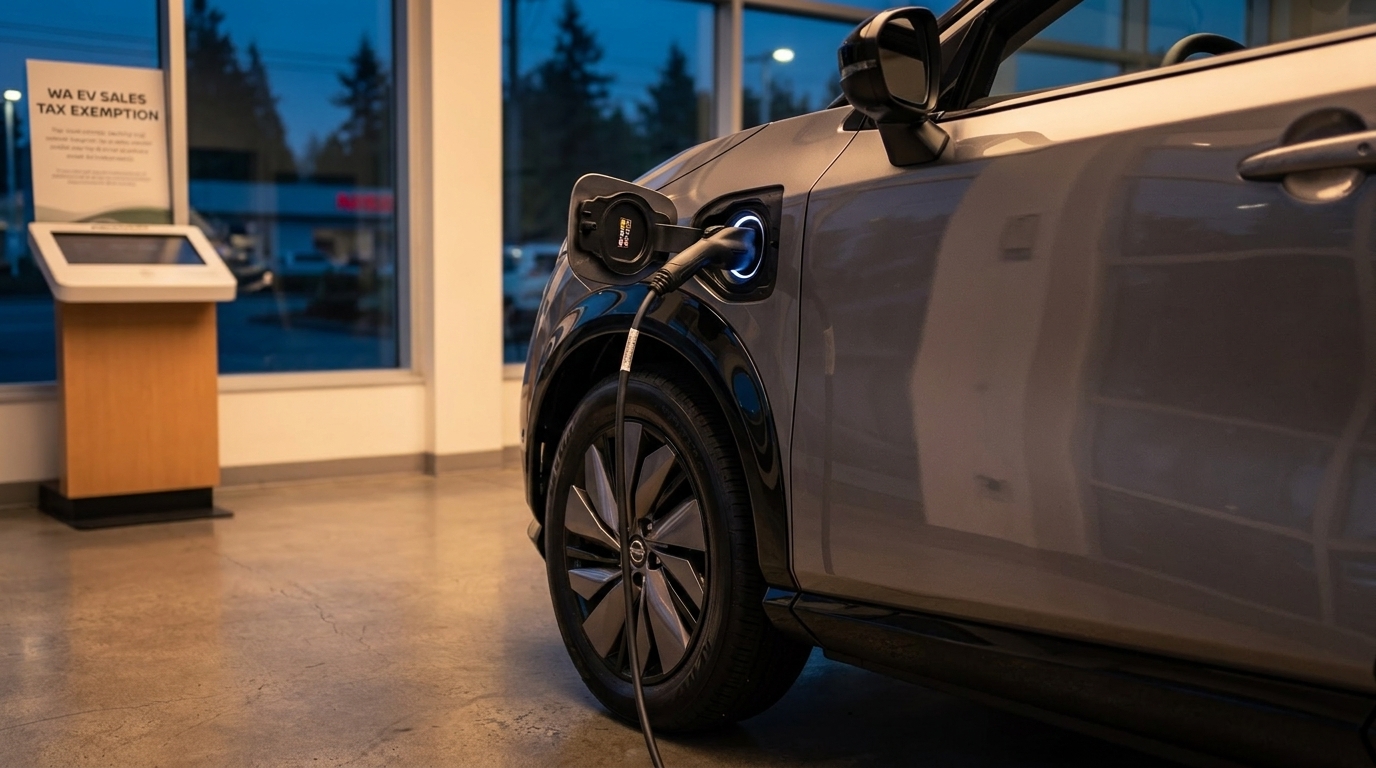
If you're buying an EV and you own your home, budgeting for a Level 2 home charger installation is worth doing upfront. Several Washington State rebates and federal tax incentives remain available in 2026 to offset installation costs — your utility provider and a licensed electrician can walk you through current eligibility.
Apartment and condo residents face a more complicated picture. Many Snohomish County multifamily buildings have added or are planning to add charging infrastructure, driven in part by new state building standards. But if your building doesn't have it yet, it's worth asking before purchasing an EV — or factoring in public charging costs as part of your ownership budget.
What to Ask When Buying an EV in Snohomish County
The charging network question is inseparable from the vehicle itself. Different EVs charge at different speeds, use different connector standards, and have different real-world ranges. A few questions worth asking any dealer before you sign:
- What is the vehicle's real-world range under typical Pacific Northwest driving conditions (hills, rain, cold weather)?
- Does this model support DC fast charging, and at what maximum charge rate?
- What charging cable and adapter comes with the vehicle?
- What apps or in-vehicle tools help locate charging stations along my typical routes?
- What does the battery warranty cover, and for how long?
These aren't trick questions — they're the kind of practical details that determine whether an EV genuinely fits your lifestyle. A knowledgeable sales team should be able to answer them without hesitation.
The team at Nissan of Everett regularly fields these questions from Snohomish County residents considering models like the Nissan ARIYA and Nissan LEAF. Their approach tends to be straightforward: match the vehicle's charging profile to how the buyer actually drives, rather than defaulting to spec-sheet talking points.
EV Infrastructure and the Nissan Lineup: A Practical Fit for Snohomish
Nissan's electric vehicles — particularly the LEAF and the ARIYA — are designed with everyday practicality in mind, which aligns well with the current infrastructure reality in Snohomish County. The LEAF has one of the longest EV track records of any model on the market and supports both Level 2 and, on certain trims, DC fast charging. The ARIYA is compatible with most public fast chargers in the county.
For drivers whose daily commute stays within Snohomish — say, Everett to Lynnwood or Marysville to Bothell — the LEAF's range is more than adequate for most use cases, especially paired with overnight home charging. The ARIYA's longer range opens up more flexibility for those occasional trips over the pass or down to Seattle.
Frequently Asked Questions: EV Charging in Snohomish County
How many public EV charging stations are in Snohomish County?
As of 2026, Snohomish County has a growing number of public charging ports across Level 2 and DC fast charging stations. Density is highest in Everett and Lynnwood, with coverage expanding in Marysville and other northern communities. Use PlugShare or ChargePoint for real-time availability.
Is home charging enough if I live in Snohomish County?
For most daily drivers, yes. If your commute is under 50 miles round-trip, overnight Level 1 or Level 2 home charging typically covers your needs without relying on public stations. Longer-range EVs give you more buffer.
Are there EV charging incentives available in Washington State in 2026?
Yes. Various state and federal incentives may be available to offset the cost of an EV purchase or home charger installation. Home charger installation may also qualify for federal tax credits. Verify current eligibility with your dealer and a tax advisor, as specifics can change.
What's the best EV for someone who charges mainly at home in Snohomish?
That depends on your range needs and budget. For urban and suburban Snohomish driving, vehicles like the Nissan LEAF offer reliable, cost-effective EV ownership. If you travel frequently outside the county or want a larger SUV format, the ARIYA is worth considering. The key is matching the vehicle's real-world range to your actual driving patterns — not just the EPA-rated number.
Can I charge a Nissan EV at public stations in Snohomish County?
Yes. Nissan EVs are compatible with the public charging networks available in Snohomish County. It is worth confirming connector compatibility with your specific LEAF trim if fast charging on the go is important to you.
How do I handle EV charging if I live in an apartment or condo in Snohomish County?
Start by asking your building management whether charging infrastructure exists or is planned — state building standards are pushing more multifamily properties to add it. If your building doesn't have chargers yet, budget for nearby public charging as part of your ownership costs. Choosing an EV with a longer range can also reduce how often you need to charge away from home.
Does cold and rainy Pacific Northwest weather affect EV charging or range in Snohomish County?
Yes, noticeably. Cold temperatures reduce battery efficiency, and running heat in wet winter conditions draws additional power — meaning real-world range in a Snohomish winter is typically lower than EPA estimates. Plan for this when evaluating range needs. DC fast chargers continue to work in rain and cold, though charging speed can slow slightly in very low temperatures.
Closing Thoughts
Snohomish County's EV charging infrastructure is functional, expanding, and — for most daily drivers — genuinely sufficient to support an electric vehicle lifestyle today. The gaps that exist are real, particularly in rural and multifamily settings, and it's worth going in with clear eyes about how your specific living situation intersects with the network as it currently stands.
The infrastructure question and the vehicle question are connected, which is why it helps to work with a dealer who treats them that way. Nissan of Everett holds a 4.4-star rating from more than 1,000 Google reviews as of April 2026, with customers consistently highlighting knowledgeable staff and respectful service. One customer wrote that their salesperson "listened to what we had to say, understood our goals, and met us in the middle with options that fit our needs" — which is a reasonable standard to hold any EV conversation to.
Snohomish County residents considering an EV purchase can explore current Nissan models and get specific questions answered at nissanofeverett.com, or visit Nissan of Everett at 10500 Highway 99, Everett, WA 98204. It's a useful starting point whether you're still in the research phase or ready to test drive.