Nissan Lease End Options in Everett, WA: What to Expect
Returning, buying out, or re-leasing your Nissan in Everett, WA? Here's what each path costs, when to start, and why waiting shrinks your options.
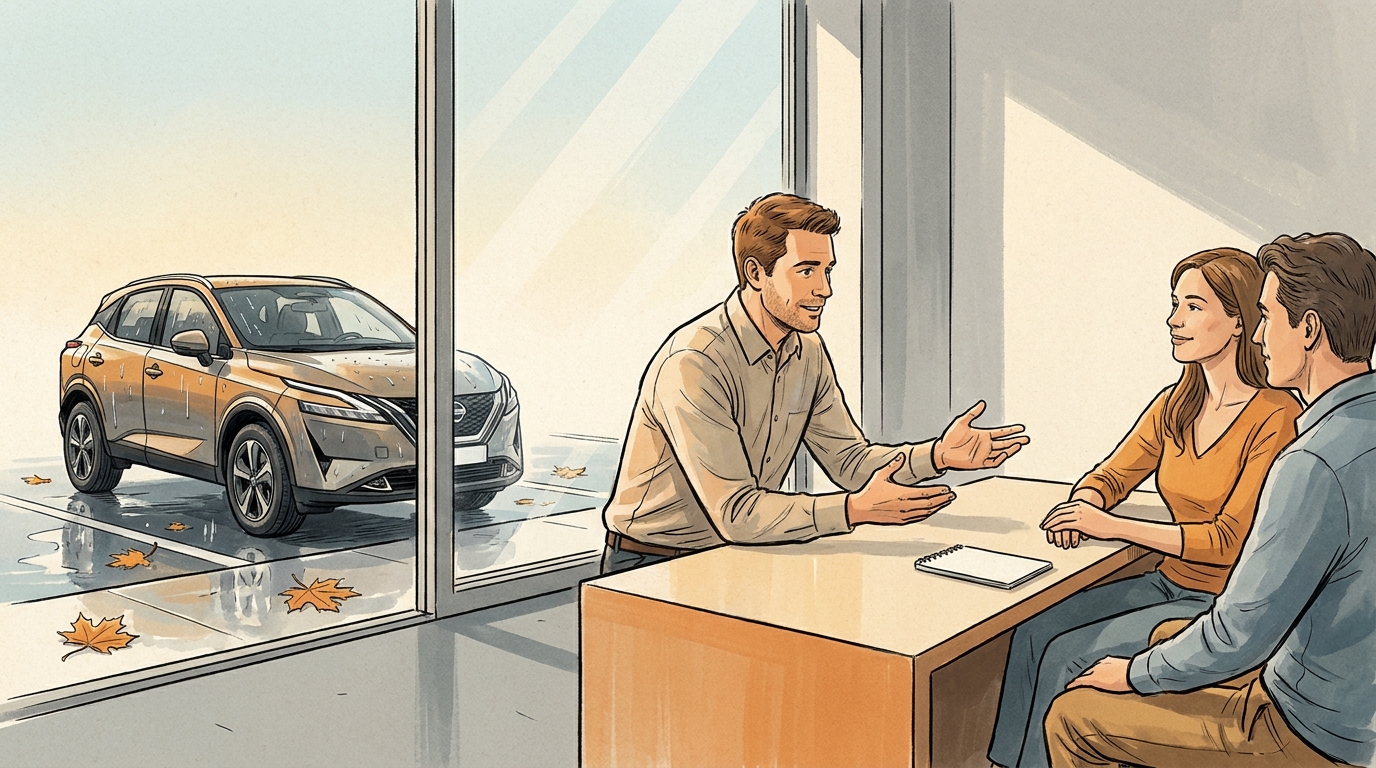
When a Nissan lease ends in Everett, WA, the lessee has three paths: return the vehicle to the dealership, buy it out at the residual value printed in the contract, or roll the equity into a new lease or purchase. Waiting until the final weeks to decide is the single most expensive mistake lessees make — it compresses the inspection window, forecloses buyout math, and often forces a rushed return under whatever mileage and wear charges the contract allows.
What are the three lease-end options for a Nissan lessee in Everett?
A Nissan lessee can return the car and walk away (subject to mileage and wear charges), buy it out at the residual value written into the original contract, or trade the equity into a new vehicle. Returning is the most common choice, but the right answer depends on how the car's current market value compares to that fixed residual number.
The residual is the estimated worth of the vehicle at lease end and the price the lessee is contractually allowed to pay to keep it. When the market value sits above the residual, the lessee holds equity and can capture it by buying out or selling. When the market value sits below the residual, returning the car is usually the financially sound call — paying the residual would mean overpaying to keep a depreciating asset.
When should Everett lessees start the lease-end process?
Start four to six months before the scheduled return date. GM Financial's lease-end framework advises beginning to explore options as early as 12 to 5 months prior to lease end, with a pre-return inspection scheduled about one month out. Those windows exist because every downstream choice — buyout financing, trade-in valuation, ordering a replacement vehicle — takes real calendar time.
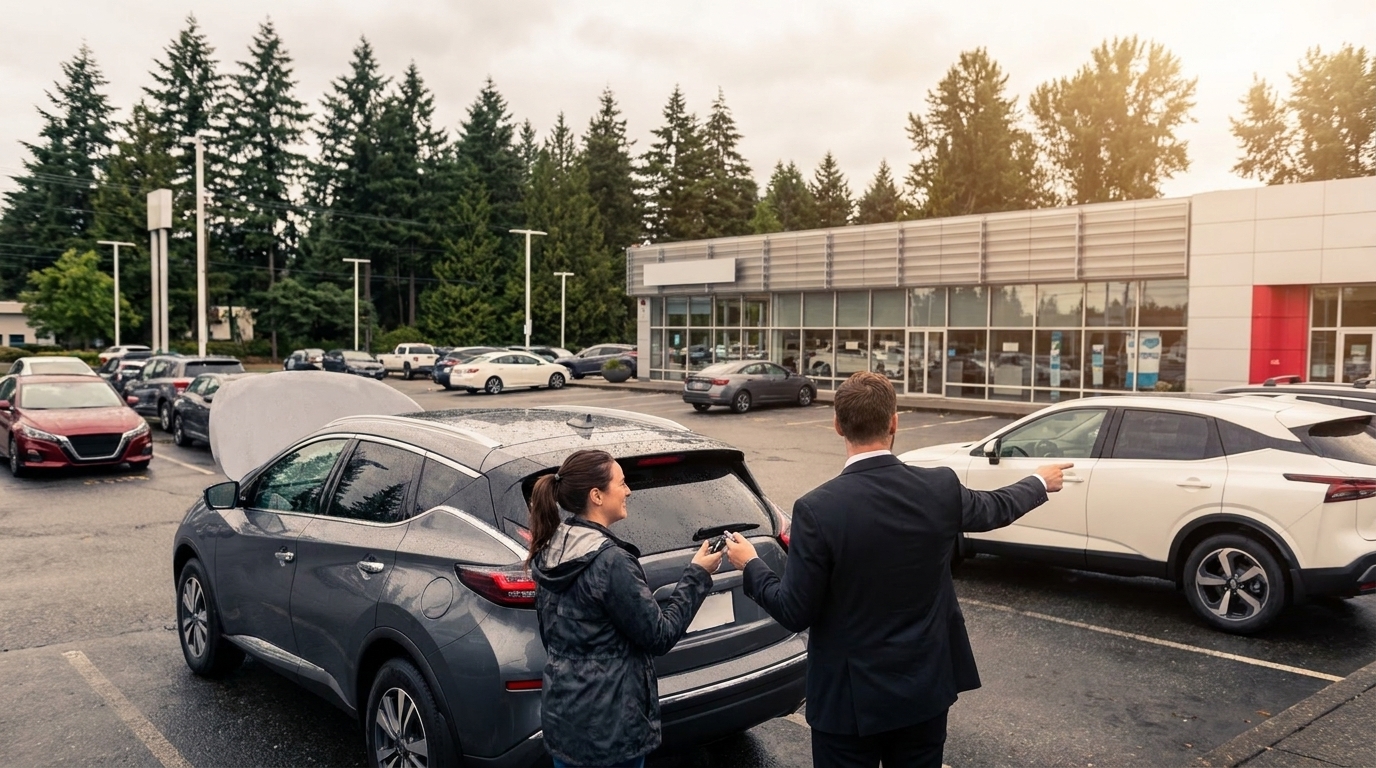
The cost of waiting is concrete. A lessee who starts too late loses the ability to shop a buyout loan against competing lenders, loses time to repair curb-rashed wheels or a chipped windshield before the inspector sees them, and often loses access to the specific replacement vehicle they wanted because inventory in the area turns quickly. Nissan of Everett works with lessees on all three paths — returning, buying out, or rolling into a new Nissan — and the earlier that conversation happens, the more leverage the lessee keeps.
What charges should Everett lessees expect at turn-in?
Expect two categories of potential charges at return: excess mileage and excess wear and tear. According to CarSaver, standard leases cap mileage at 10,000–12,000 miles per year, and overage charges typically run $0.20–$0.30 per mile. The specific cap and per-mile rate on a Nissan lease are set by the contract with Nissan Motor Acceptance Company (NMAC), not by a universal rule.
Mileage charges add up faster than most lessees expect. CarSaver estimates that a few thousand miles over the cap can produce a $1,500–$2,400 bill at turn-in. For a commuter running a long daily round trip, that overage can accrue quietly across a three-year lease.
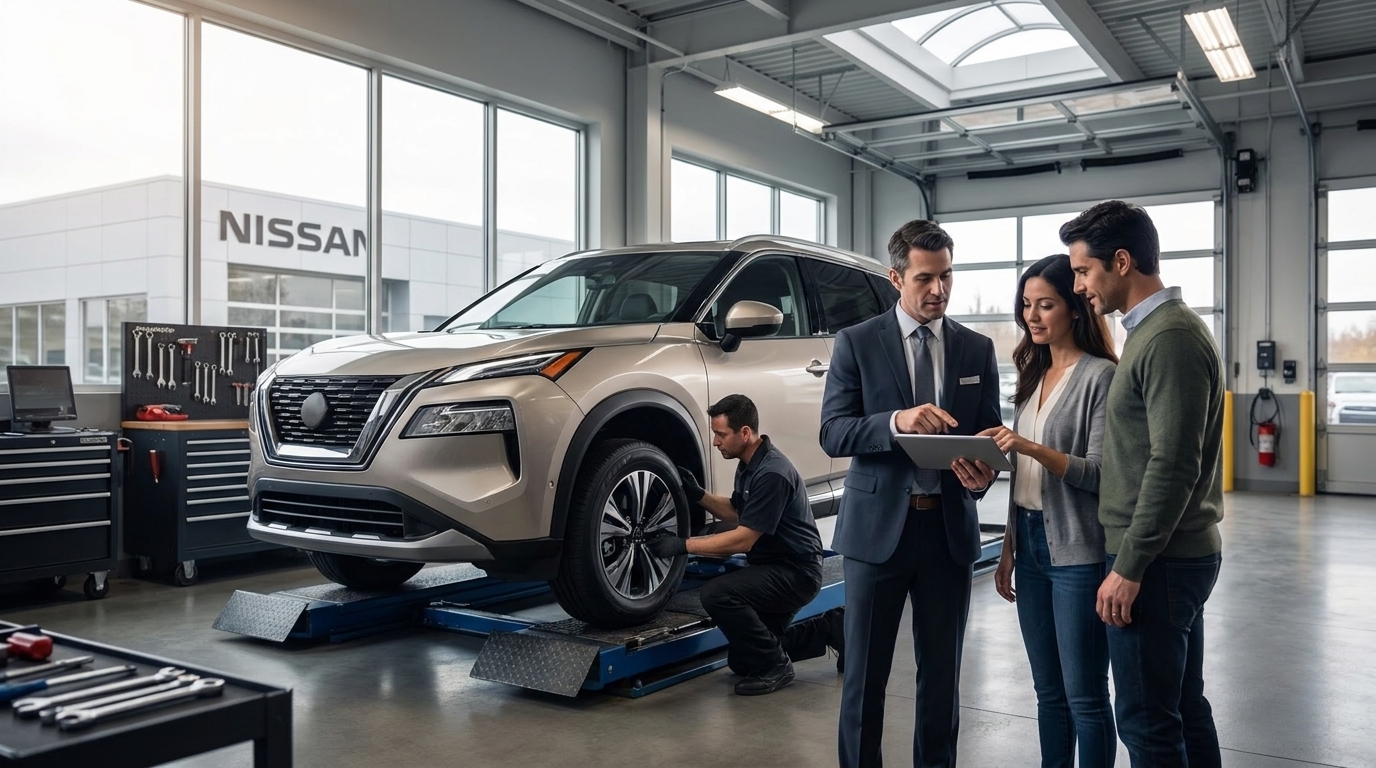
Excess wear and tear is the second category. CarSaver flags dents, curb-rashed wheels, tire tread below the limit, windshield chips, and interior damage beyond normal use as the items that trigger charges. Rock chips from highway gravel and winter curb rash from parking on hilly streets are common Puget Sound culprits — and all of them are cheaper to fix independently before the pre-return inspection than to pay the leasing company's assessment.
How does the buyout math actually work?
The buyout is simple arithmetic with a timing problem. Compare the residual value in the contract to the vehicle's current market value. If market value exceeds residual, there is equity — the lessee can buy the car at the residual price and either keep it or resell to capture the difference. If market value falls below residual, buying out means overpaying, and returning the car is the better choice.
The variable that moves most is used-car market value; the residual was locked in years ago and does not adjust.
| Scenario | Market value vs. residual | Typical best path |
|---|---|---|
| Car worth more than residual | Above | Buy out, or sell/trade to capture equity |
| Car worth less than residual | Below | Return the vehicle |
| Need more time to decide | N/A | Request a short lease extension |
| Over on miles, car in good shape | Depends | Run mileage charge vs. buyout math before returning |
What does rolling into a new Nissan look like?
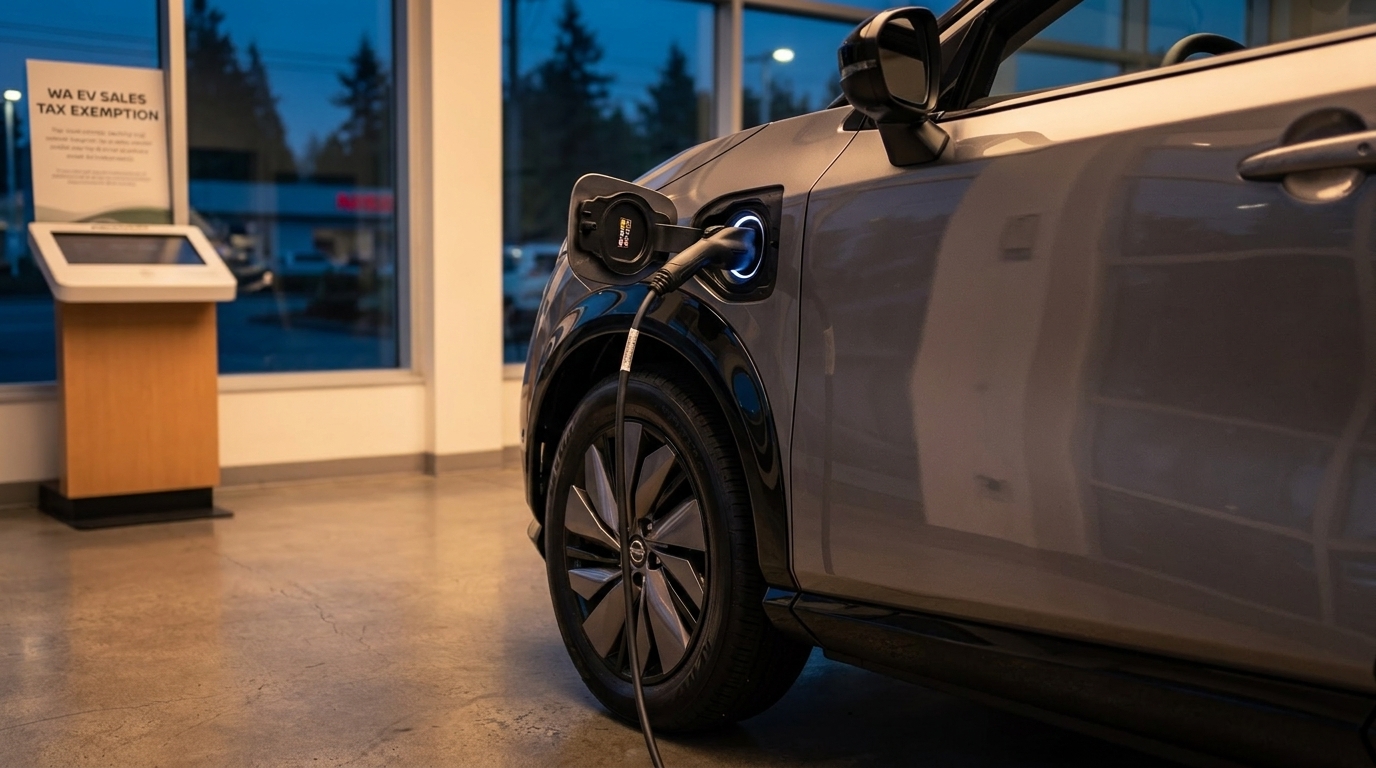
Lessees who like the Nissan brand often use lease-end as the natural moment to step into a newer vehicle. The current Nissan lineup available through the Everett dealership spans sedans, SUVs, trucks, and EVs: the 2026 Nissan Sentra, starting at $22,990 (as of October 2026), the 2026 Nissan Altima, starting at $27,580 (as of October 2026), the 2027 Nissan Kicks, starting at $22,790 (as of October 2026), the 2026 Nissan Rogue, starting at $29,690 (as of October 2026), the 2026 Nissan LEAF, starting at $29,990 (as of October 2026), the 2026 Nissan Frontier, starting at $32,490 (as of October 2026), the 2026 Nissan Pathfinder, starting at $39,990 (as of October 2026), the 2026 Nissan Murano, starting at $43,990 (as of October 2026), the 2026 Nissan Rogue Plug-in Hybrid, starting at $45,990 (as of October 2026), the 2026 Nissan Z, starting at $44,480 (as of October 2026), and the 2027 Nissan Armada, starting at $64,290 (as of October 2026). MSRPs exclude destination charges, which are set per model.
If the returning lease has equity, that equity can function as a down payment on the next vehicle. Nissan of Everett offers financing with no down payment in most cases and can roll taxes, registration, and fees into the financing deal, with most loan terms falling between 48 and 72 months. For lessees considering a used vehicle instead, the dealership sells new Nissan vehicles, Certified Pre-Owned Nissan vehicles, and used cars, trucks, and SUVs.
Probably the easiest most stress-free buying process I've ever had. Tegan and Jay answered all my questions about the vehicle and the buying process. Financing was a breeze- and thank you to the finance guy, wish I could remember your name. I am very happy with my new Frontier King Cab. I look forward to many miles with this truck.
When is waiting actually the right call?
Waiting makes sense in a narrow set of cases. If the lessee needs a short bridge to find the right replacement vehicle, Kelley Blue Book notes that extending the lease for a few months may be an option — worth asking NMAC about rather than defaulting to a rushed decision. If the vehicle is clearly underwater against its residual and well under its mileage cap, there is little urgency to act before the leasing company's standard contact window.
Outside those cases, delay compounds. Inspection surprises get expensive, replacement inventory thins, and the lessee loses the ability to compare buyout financing against the dealership's new-vehicle terms. The decision rule: pull the contract, find the residual and mileage cap, check current market value against residual, and open the conversation with the dealership before the 90-day window closes.
Frequently Asked Questions
How much are excess mileage charges on a typical lease?
Per CarSaver, standard leases cap mileage at 10,000–12,000 miles per year, and overage charges typically run $0.20–$0.30 per mile. A few thousand miles over the cap can produce a $1,500–$2,400 bill at turn-in. The specific rate on any Nissan lease is set by the NMAC contract — read the mileage and overage lines before scheduling the return.
Can I buy my leased Nissan at the end of the term?
Yes. The residual value in the lease contract is the price at which the lessee is contractually allowed to buy the vehicle at lease end. The buyout makes financial sense when the car's current market value is higher than that residual figure, because the lessee is paying a locked-in price for an asset that is now worth more.
What counts as excess wear and tear?
CarSaver identifies dents, curb-rashed wheels, tire tread below the limit, windshield chips, and interior damage beyond normal use as the items that typically trigger wear-and-tear charges at return. Items caused by routine use — minor scuffs, light interior wear — generally do not. Repairing qualifying damage independently before the pre-return inspection is almost always cheaper than paying the leasing company's assessment.
When should I schedule the pre-return inspection?
Pre-return inspections are typically scheduled about one month before lease end, per GM Financial's lease-end framework. That timing gives the lessee a window to address flagged items — a chipped windshield, worn tires, a dented panel — before the vehicle is formally handed back. NMAC will send specific inspection instructions for Nissan leases as the end date approaches.
What happens if I'm over my mileage allowance?
The lessee owes the per-mile overage rate written into the contract for every mile beyond the cap. In some cases, buying the vehicle out at the residual and then selling it independently nets a better outcome than paying mileage penalties on a return — but only if the market value supports it. Run both numbers before deciding.
Can I extend my Nissan lease if I need more time?
Extending the lease for a few months may be an option when the lessee needs more time to find another vehicle, per Kelley Blue Book. Whether NMAC will approve an extension — and on what terms — depends on the contract and the lessee's standing. Ask well before the scheduled end date, not in the final week.
The bottom line for Everett lessees
Lease-end is a timing problem disguised as a paperwork problem. The lessee who opens the contract four months out, checks the residual against current market value, addresses wear items before the inspector sees them, and has the next-vehicle conversation on their own schedule keeps every option open. The lessee who waits loses them one by one. Readers in Everett, WA who want this handled professionally can reach Nissan of Everett at (425) 347-5763 or https://www.nissanofeverett.com to review their lease, run the buyout math, and look at what's next.