Car Buying Safety Checklist: How to Avoid Dealership Scams
Learn essential car buying safety tips to avoid dealership scams in Everett in 2026. Protect yourself from auto fraud with this practical, expert-backed checklist.

Car Buying Safety Checklist: How to Avoid Dealership Scams
Buying a car is one of the most significant financial decisions most people make, yet it remains one of the transactions most vulnerable to deception. Consumer protection agencies across the country continue to log thousands of auto fraud complaints annually, ranging from inflated financing terms to undisclosed vehicle damage. In Everett, where the used and new car market remains active in 2026, buyers who walk into a dealership without preparation are the most likely targets. This checklist is designed to change that.
Dealership scam prevention is not about assuming every salesperson is dishonest — most are not. It is about understanding the specific pressure points in the car buying process where misleading practices are most likely to occur, and knowing exactly what to look for before signing anything.
The Most Common Dealership Scams in 2026
Before reviewing a safety checklist, buyers should understand the landscape of auto fraud they may encounter. The most frequently reported dealership deceptions fall into several recurring categories.
Financing Manipulation
One of the most widespread forms of auto fraud involves financing terms. Some dealerships quote a monthly payment without clearly disclosing the total loan cost, interest rate, or loan term length. A buyer focused on a manageable monthly figure may not realize they are agreeing to a 72- or 84-month loan at a significantly elevated interest rate. Buyers should always ask for the annual percentage rate (APR) and total cost of the vehicle — not just the monthly installment.
Spot Delivery and the "Yo-Yo" Scam
In a spot delivery arrangement, a buyer drives home in a new vehicle before financing is formally approved. Days later, the dealership calls to report that the financing fell through and a higher interest rate is required. This tactic, sometimes called the yo-yo scam, is designed to create emotional attachment to the vehicle so the buyer agrees to less favorable terms. Safe car purchasing means never taking possession of a vehicle until all financing has been officially confirmed in writing.
Add-On Fee Inflation
Extended warranties, paint protection packages, tire and wheel coverage, and GAP insurance are legitimate products — but the pricing on these add-ons varies enormously, and some dealerships bundle them into contracts without clearly explaining what the buyer is purchasing. Buyers should request an itemized breakdown of every fee on the final contract and ask explicitly which items are optional.
Title Washing and Undisclosed Damage
Title washing occurs when a salvage or flood-damaged vehicle is re-registered in a different state to obscure its history. In 2026, this remains a documented risk, particularly with used vehicles purchased through less transparent channels. Running an independent vehicle history report — not just one provided by the dealership — is a non-negotiable step in auto fraud protection.
The Car Buying Safety Checklist
The following steps represent the core of a sound safe car purchasing strategy. Each item addresses a specific vulnerability in the dealership transaction process.
Before You Visit the Dealership
- Research fair market value. Use multiple independent pricing tools to understand what a vehicle is realistically worth in the current 2026 market. Walking in with a number prevents anchoring to an inflated sticker price.
- Check your credit independently. Know your credit score before visiting a finance office. Dealerships that run financing in-house sometimes quote rates as if a buyer's credit is weaker than it is.
- Get pre-approved financing from a bank or credit union. Having a competing offer gives buyers negotiating leverage and a benchmark for evaluating dealer financing.
- Research the dealership's reputation. Review verified customer ratings on Google and third-party platforms. A consistent pattern of complaints about pricing or pressure tactics is a meaningful warning sign.
During the Dealership Visit
- Negotiate the total price, not the monthly payment. Separating the purchase price from the financing conversation is essential for dealership scam prevention.
- Request a vehicle history report independently. Services like Carfax and AutoCheck are widely available. Do not rely solely on documentation provided by the selling party.
- Arrange a pre-purchase inspection. For used vehicles especially, having an independent mechanic inspect the car before purchase is one of the most effective forms of auto fraud protection available to buyers.
- Review every document before signing. Take the time needed to read each page. A dealership that creates pressure to sign quickly without reviewing paperwork is displaying a significant red flag.
- Ask about every line item on the contract. If an add-on product was not discussed during the negotiation, ask whether it is required or optional. Optional items can often be declined or renegotiated.
During the Finance Office Appointment
- Confirm the APR and total loan cost in writing. Both figures should appear clearly on the final contract.
- Do not accept verbal assurances. If a dealer representative says something is included or that a fee will be waived, it must appear on the written documentation to be enforceable.
- Confirm financing approval before taking the vehicle. This directly prevents spot delivery and yo-yo financing scenarios.
- Understand any arbitration clauses. Some contracts include clauses limiting a buyer's right to pursue disputes in court. Buyers should read these sections carefully and understand what they are agreeing to.
How to Identify a Transparent Dealership
Not all dealerships operate the same way, and buyers in Everett have a meaningful choice in where they purchase. Transparency in the car buying process is visible before a contract is ever signed — it shows up in how a dealership communicates, whether it welcomes questions, and how clearly it presents pricing.
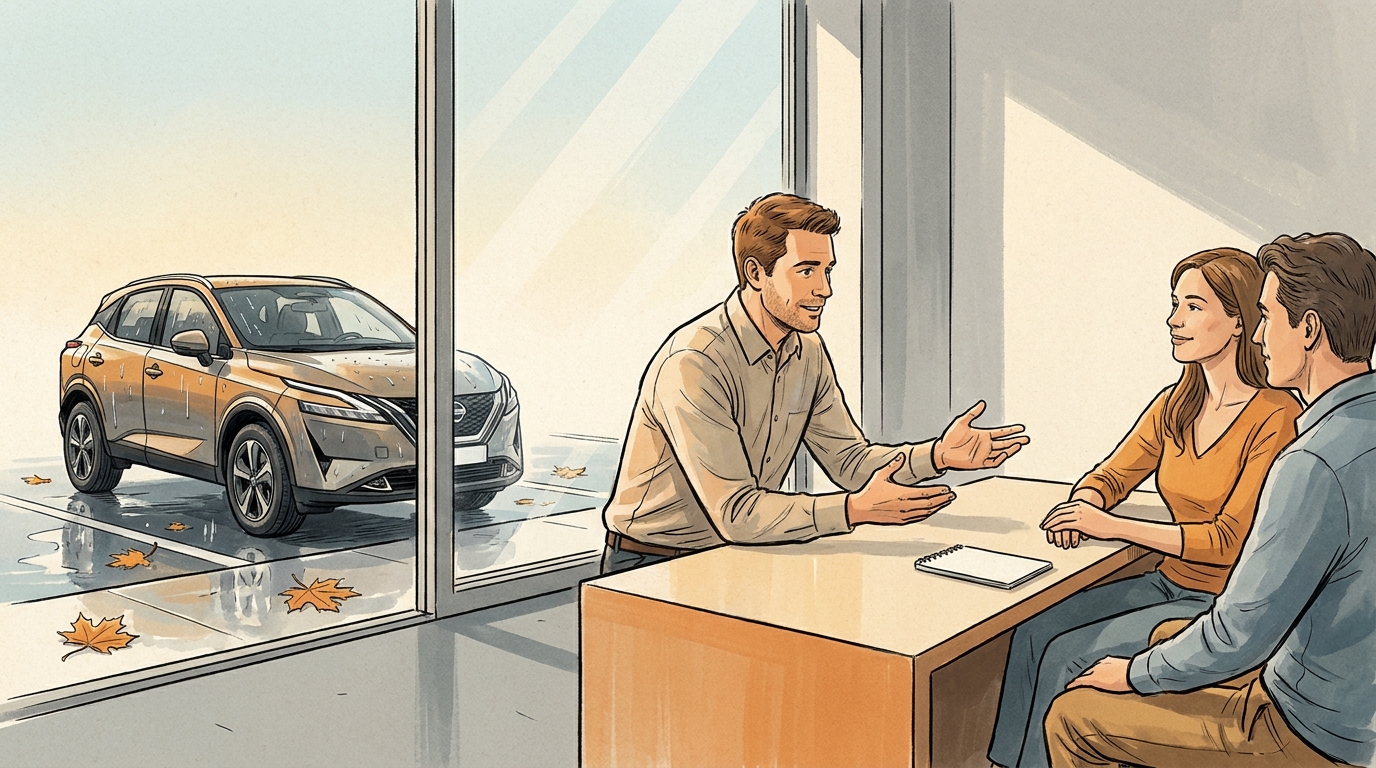
Reputable dealerships make it straightforward to review vehicle history documentation, itemize fees without prompting, and give buyers the time needed to make an informed decision. Customers at Nissan of Everett have described sales interactions where staff members prioritized listening over selling — one customer wrote that their salesperson "listened to what we had to say, understood our goals, and met us in the middle with options that fit our needs." That approach reflects a process built around the buyer rather than the transaction.
Nissan of Everett's 4.4-star rating across more than 1,071 Google reviews reflects a consistent record of customer satisfaction, with reviewers regularly highlighting respectful, pressure-free interactions. For buyers in Everett who are evaluating where to shop, that kind of verifiable, sustained feedback is a meaningful signal.
Frequently Asked Questions: Car Buying Safety
What is the most common car dealership scam to watch for?
Financing manipulation — particularly obscuring the total cost of a loan by focusing negotiations on monthly payments — is among the most common and costly deceptions buyers encounter. Always request the APR and total loan amount before agreeing to any financing terms.
Is it safe to buy a car at a dealership without pre-approved financing?
It is possible, but arriving without pre-approved financing reduces a buyer's leverage and makes it harder to evaluate whether dealer-arranged financing is competitive. Obtaining a pre-approval from a bank or credit union before visiting a dealership is a straightforward and effective protective step.
How can buyers verify a vehicle's history before purchasing?
Independent vehicle history reports from services like Carfax or AutoCheck provide documented records of prior accidents, title status, ownership history, and odometer readings. Buyers should obtain these reports independently, even when a dealership offers to provide one, as a secondary verification measure.
Are extended warranties at dealerships worth purchasing?
Extended warranties vary significantly in coverage terms, exclusions, and cost. They are not inherently problematic, but buyers should review the specific terms of any warranty offered, compare pricing against third-party providers, and confirm exactly what is and is not covered before agreeing to the purchase.
What should a buyer do if they suspect they have been defrauded by a dealership?
Buyers who believe they have been subjected to auto fraud should document all communications and contracts, contact the Washington State Attorney General's Consumer Protection Division, and consider consulting a consumer protection attorney. Complaints filed with the Better Business Bureau also create a public record that may help other buyers.
What is the safest way to handle a trade-in to avoid being shortchanged?
Negotiate the trade-in value and the purchase price of the new vehicle as two completely separate transactions. Dealers sometimes bundle them together to obscure whether you are receiving fair value for your trade. Research your vehicle's current market value using independent tools beforehand, and be prepared to sell privately if the dealer's offer falls significantly short.
Can digital or online car purchases carry the same scam risks as in-person dealership visits?
Yes. Online purchases carry many of the same risks — undisclosed vehicle damage, financing manipulation, and hidden fees — and add the challenge of not being able to inspect the vehicle in person. Buyers should still obtain independent vehicle history reports, arrange third-party inspections when possible, and review all digital contracts with the same scrutiny applied to paper documents.
Conclusion: Informed Buyers Are Protected Buyers
Auto fraud protection is not complicated — it is primarily a matter of preparation. Buyers who research market values, secure independent financing, read contracts carefully, and choose dealerships with verifiable transparency records are well-positioned to avoid the most common dealership scams. The car buying process should be straightforward, and in most cases, it is — when buyers know what to look for.
For residents in Everett who want to experience a car buying process built on clear communication and transparent pricing, Nissan of Everett is a practical starting point. Their inventory, customer reviews, and contact information are available at www.nissanofeverett.com.