Buying a Used Nissan in Everett, WA: What to Look For
Model-specific checks for used Nissan buyers in Everett, WA — CVT concerns, Altima engine issues, Washington disclosure rules, and dealer questions to ask.
Buying a used Nissan in Everett, WA comes down to three things: verifying the specific model's known weak points (CVT health on Rogue and Sentra, oil consumption and timing chain wear on Altima), confirming the dealer has met Washington's mandatory title-brand and odometer disclosure rules under RCW 46.70.180, and understanding exactly what an 'as-is' clause does and doesn't waive under RCW 62A.2-316. Get those right and the rest of the checklist is routine.
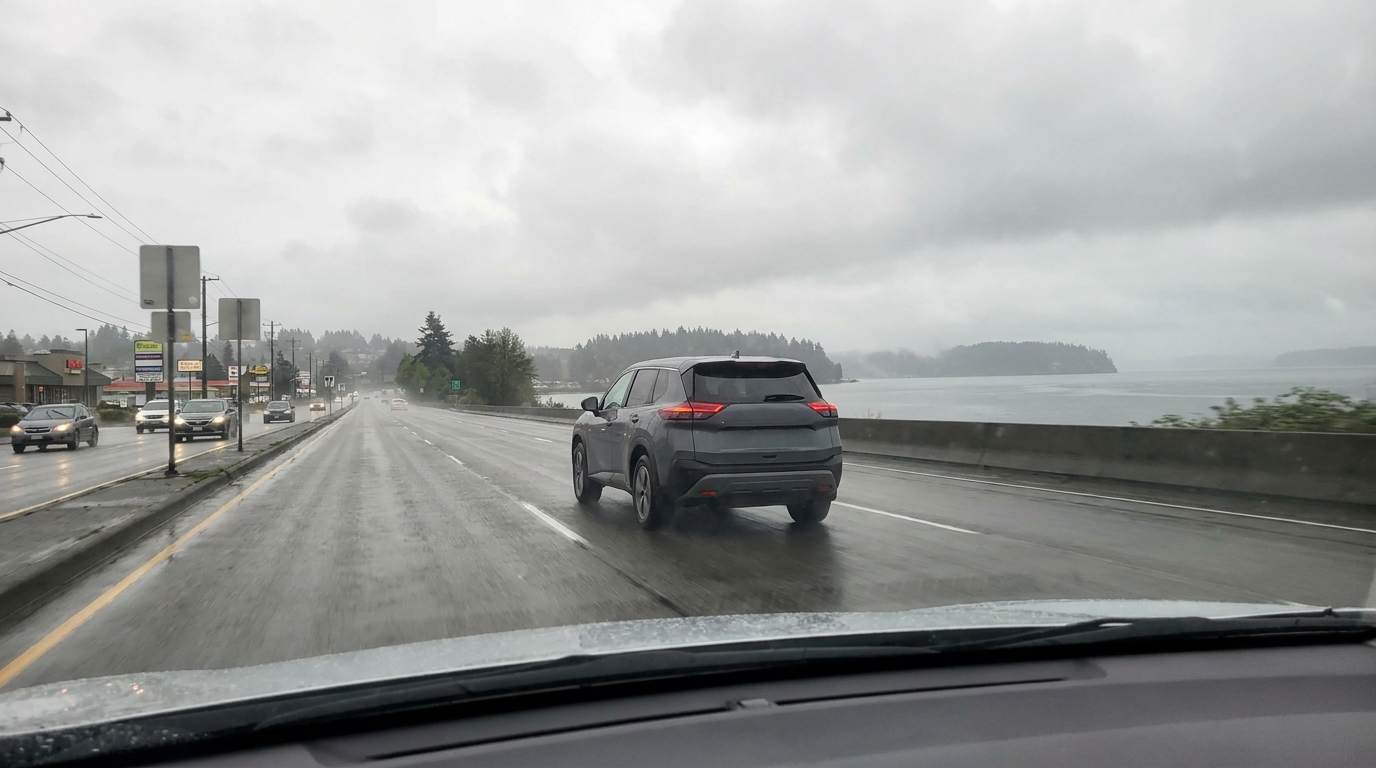
Snohomish County's damp, salt-adjacent climate — the Puget Sound sits a few miles west of downtown Everett — accelerates undercarriage corrosion and stresses cooling systems on vehicles that spent winters here. That makes a Nissan-specific inspection more useful than a generic used-car walkaround, and it makes the paper trail from the dealer just as important as the mechanical one.
What Nissan-specific problems should Everett buyers check for by model?
The most consequential issues on used Nissans in the Everett market are CVT (continuously variable transmission) failures on the Rogue, Sentra, and Pathfinder; excessive oil consumption and timing chain rattle on 2.5L Altima engines; and premature brake and suspension wear on vehicles driven regularly on I-5 and US-2. Model-specific inspection matters more than generic checks.
Rogue, Sentra, and Pathfinder CVT health
Nissan's Jatco CVT is the single most common failure point across the lineup. On a test drive, a healthy CVT should accelerate smoothly without shuddering at 25-45 mph, without a delayed 'catch' when pulling from a stop, and without a rising whine that grows louder as RPMs climb. Ask whether the CVT fluid has been serviced — Nissan calls for inspection at severe-service intervals — and whether the vehicle is still within any extended powertrain coverage Nissan issued for certain model years.
Altima 2.5L engine wear
Altimas with the QR25DE 2.5L four-cylinder are known for oil consumption between changes and, on higher-mileage examples, timing chain guide wear that produces a distinctive rattle on cold start. Check the dipstick before the test drive, listen for chain noise in the first 10 seconds after ignition, and pull the oil fill cap to look for sludge. A recent oil-change sticker is not a substitute for service records.
Frontier, Titan, and Xterra rust and cooling
Older Frontier and Xterra models had a known radiator issue where coolant could mix with transmission fluid, destroying the transmission. On any Nissan truck or older SUV in the Everett area, the undercarriage inspection matters — frame rails, brake lines, and exhaust hangers see more moisture here than in eastern Washington.
What does Washington law require the dealer to disclose?
Under RCW 46.70.180(4), licensed Washington dealers must disclose branded titles (salvage, rebuilt, flood, total-loss), prior substantial physical damage or latent defects that occurred before the dealer took possession, and any odometer discrepancies. Under RCW 46.70.180(6), they must provide the name and address of any prior business or government owner. Title-brand disclosures must appear on the face of the purchase order per WAC 308-66.
That last point matters more than most buyers realize. If a used Nissan was previously a rental, fleet vehicle, or government vehicle, the dealer has to tell the buyer who owned it — which lets the buyer contact the fleet operator directly for maintenance history. For a CVT-equipped Rogue, knowing whether a rental company kept up with fluid service can be the difference between a sound purchase and a costly transmission repair.
Under RCW 46.70.125, dealers must also disclose the asking price in writing on request. And under WAC 308-56A, the dealer must complete a signed odometer disclosure statement as transferor at the time of sale.
What does an 'as-is' sale actually mean in Washington?
An 'as-is' clause under RCW 62A.2-316(3)(b) disclaims implied warranties of merchantability and fitness for a particular purpose — but only if the disclaimer is conspicuous and uses statutorily recognized language. It does NOT shield a Washington dealer from liability for concealed defects, odometer fraud, undisclosed branded titles, or any other violation of RCW 46.70.180. Buyers keep those protections regardless of what the purchase order says.
Under RCW 46.70.310, any violation of Chapter 46.70 RCW is a per se violation of the Washington Consumer Protection Act (RCW 19.86), which means a buyer harmed by an undisclosed salvage title or a rolled-back odometer can pursue actual damages, treble damages up to the statutory cap, and attorney's fees. The 'as-is' box does not close that door.
What 'as-is' does mean, practically: if a used Nissan's CVT fails three months after purchase and the dealer disclosed everything honestly, the buyer generally owns that repair. That is why the pre-purchase inspection is not optional on a Nissan CVT vehicle.
Should Everett buyers prioritize certified pre-owned Nissan inventory?
Certified pre-owned (CPN) Nissans carry a manufacturer-backed inspection, an extended limited powertrain warranty from the original in-service date, and roadside assistance — protections that materially reduce risk on the exact components (CVT, engine) most likely to fail on high-mileage used Nissans. For CVT-equipped models especially, CPO pricing premium typically pays for itself against the cost of one out-of-warranty transmission replacement.
Non-CPO used Nissans can still be sound purchases, but the buyer takes on more of the diagnostic burden. Nissan of Everett stocks both categories, and the choice usually comes down to model year, mileage, and how much of the powertrain risk the buyer wants transferred back to the manufacturer.
How should the used Nissan checklist be structured?
A useful Everett-specific checklist covers four layers: paperwork verification against Washington disclosure law, Nissan model-specific mechanical checks, a road test targeting CVT and engine behavior, and an independent pre-purchase inspection. Skipping any layer is where buyers lose money.
| Checklist Layer | What to Verify | Washington/Nissan Specific |
|---|---|---|
| Paperwork | Title brand on purchase order; odometer disclosure statement; prior business/government owner name | Required under RCW 46.70.180, WAC 308-66, WAC 308-56A |
| Model-specific mechanical | CVT fluid condition and service history; oil level and cold-start noise; coolant condition | Rogue/Sentra CVT; Altima 2.5L oil consumption; older Frontier radiator |
| Road test | Smooth CVT acceleration 25-45 mph; no shudder from stop; no engine rattle first 10 seconds | Test on both surface streets and a freeway on-ramp to load the CVT |
| Independent inspection | Undercarriage corrosion, brake lines, suspension bushings | Puget Sound moisture accelerates rust on frame components |
What questions should Everett buyers ask the dealer?
Direct, specific questions produce disclosures that generic ones don't. The following list is calibrated to Washington law and to the Nissan models most commonly transacted in the Everett market.
- Has this vehicle ever carried a branded title (salvage, rebuilt, flood, total-loss)?
- Was the prior registered owner a business, rental company, or government entity? If so, what is their name and address?
- What is the documented CVT service history, and is there any remaining Nissan powertrain coverage?
- May I take the vehicle to an independent shop for a pre-purchase inspection?
- Is this vehicle being sold as-is, or with a dealer or CPO warranty? What exactly does that warranty cover?
- Can I see the odometer disclosure statement and the completed purchase order before signing?
These questions are designed to surface transparent explanations of vehicle options and history at any dealer.
Frequently asked questions
Are used Nissan Rogues reliable enough to buy used in Everett?
Used Rogues can be reliable purchases if the CVT has documented service history and the vehicle passes a targeted transmission road test. The Jatco CVT is the model's main risk factor, so buyers should prioritize examples with maintenance records, still-active powertrain coverage, or certified pre-owned status. A pre-purchase inspection focused on CVT behavior is essential before committing.
Does Washington's Lemon Law protect used car buyers?
Washington's Lemon Law (RCW 19.118) is primarily aimed at new vehicles and does not broadly cover ordinary used-car purchases. Limited rights for subsequent transferees may exist under RCW 19.118.041 depending on the original manufacturer warranty and defect history. Most used-car buyer protections in Washington come from RCW 46.70.180 disclosure rules and RCW 19.86 Consumer Protection Act claims rather than the Lemon Law.
Can a dealer sell a used Nissan with a salvage title in Washington?
Yes, but the salvage or other branded title status must be disclosed on the face of the purchase order per RCW 46.70.101 and WAC 308-66. Failure to disclose a branded title is a violation of RCW 46.70.180 and a per se Consumer Protection Act violation under RCW 46.70.310, exposing the dealer to actual damages, treble damages up to the statutory cap, and attorney's fees.
What mileage is too high for a used Nissan Altima?
There is no fixed cutoff, but Altimas with the 2.5L QR25DE engine warrant heightened scrutiny above roughly 100,000 miles because of oil consumption and timing chain wear patterns common to that engine. Buyers should check oil level cold, listen for chain rattle in the first seconds after startup, and prioritize vehicles with consistent oil-change records over lower-mileage examples with unknown service history.
Do I have a cooling-off period after buying a used car in Washington?
Washington does not provide a general cooling-off period or right to cancel a used vehicle purchase from a dealer. Once the purchase order is signed and the sale completed, the buyer generally owns the vehicle. Rescission may be available if the dealer violated disclosure requirements under RCW 46.70.180, committed fraud, or breached warranties that were not effectively disclaimed under RCW 62A.2-316.
Should I get a used Nissan inspected before buying in Everett?
Yes. An independent pre-purchase inspection by a shop familiar with Nissan CVT and 2.5L engine issues is the single highest-value step a used Nissan buyer can take in the Everett market. The inspection typically covers CVT fluid condition, engine oil consumption indicators, undercarriage corrosion from Puget Sound moisture, and brake and suspension wear — all items that an 'as-is' clause could otherwise leave the buyer responsible for.
Closing guidance for Everett Nissan buyers
The used Nissan market in Snohomish County rewards buyers who verify the paperwork against Washington disclosure law, target their mechanical inspection at the specific model's known weak points, and treat the 'as-is' box as a prompt to inspect harder rather than a reason to walk away. Buyers in Everett, WA who want this handled with a documented inventory and clear disclosures can reach Nissan of Everett at https://www.nissanofeverett.com to review current used and certified pre-owned Nissan options.