Truck Trade-In for SUV in Everett, WA: How It Works
How Washington's trade-in tax exclusion works when swapping a truck for a new SUV near Everett — equity math, like-kind rules, and what to expect.
In Washington State, trading a truck toward a new SUV reduces the sales tax base of the new vehicle by the value the dealer accepts for the trade — not by issuing a separate refund. Because both are motor vehicles, the swap qualifies as like-kind property, and the trade-in value is excluded from the taxable selling price of the SUV when it is separately stated on the sales agreement.
That single rule is what makes a truck-to-SUV move financially different from simply selling your truck privately and buying an SUV with cash. The rest of this guide walks through the math, the equity question, and the Everett-specific details that shape the final out-the-door number.
How does Washington's trade-in sales tax credit actually work in 2026?
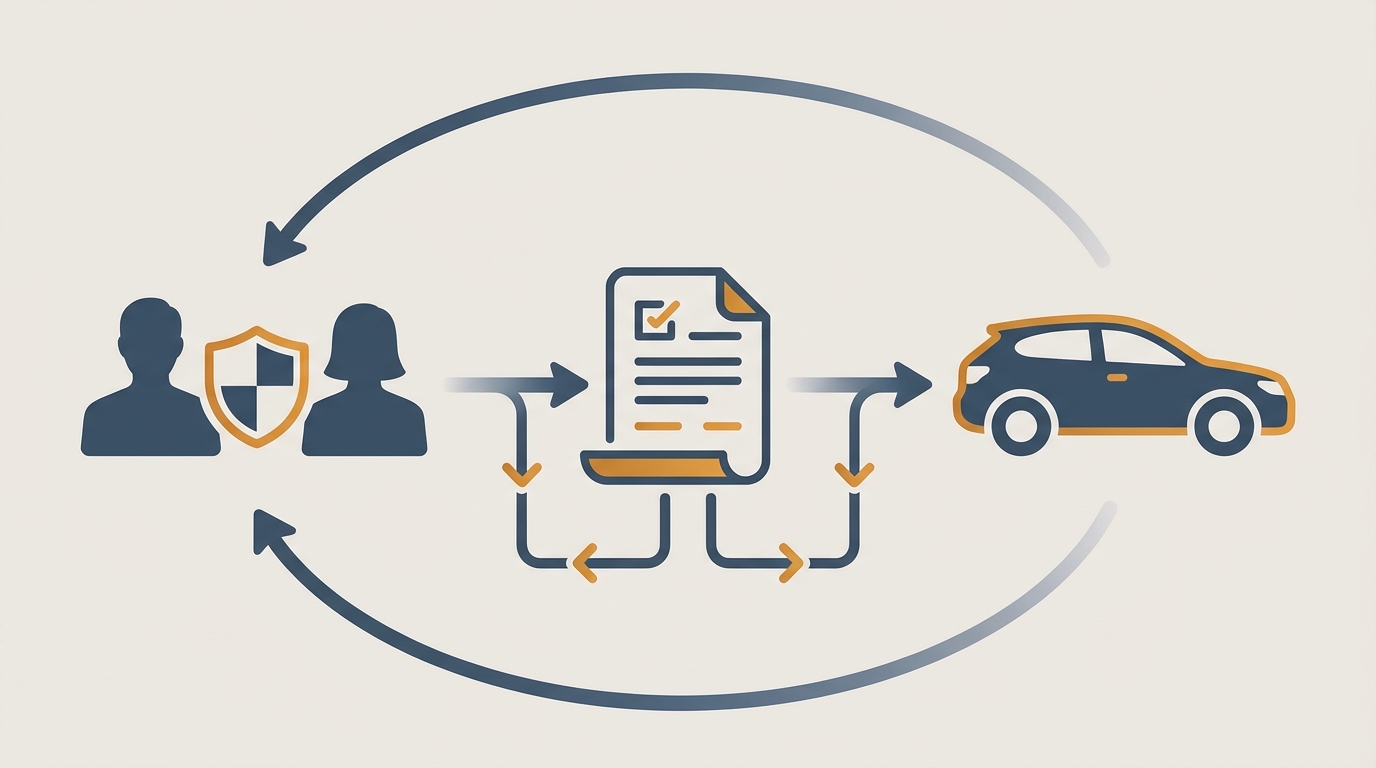
Washington excludes the accepted value of a qualifying trade-in from the "selling price" used to calculate retail sales tax on the new vehicle (RCW 82.08.010). The buyer must deliver the trade-in to the seller as consideration for the purchase, the property must be of like kind, and the trade-in value must be separately stated in the transaction documents. The exclusion reduces the taxable base — it is not a rebate.
For a truck-to-SUV purchase that qualification is straightforward: motor vehicle for motor vehicle counts as like kind under WAC 458-20-247. The dealer writes the SUV's price, lists the trade-in allowance on a separate line, and sales tax applies only to the difference. If the SUV is priced at $40,000 and the dealer accepts your truck at $18,000, Washington retail sales tax is calculated on $22,000, not $40,000.
One local note that matters: the combined state and local retail sales tax rate can vary by taxing district, so the dollar value of that exclusion is meaningful. On a $18,000 trade credit at roughly 10%, the exclusion is worth about $1,800 in avoided tax — real money that disappears if the trade is handled as a separate side sale instead of a true trade-in.
What counts as a qualifying trade-in — and what doesn't?
A qualifying trade-in must be like-kind property delivered to the dealer as consideration for the new vehicle purchase, with the trade-in value separately stated on the sales agreement or invoice. For a truck-to-SUV purchase in Everett, that threshold is cleared automatically — both are motor vehicles under the Washington Department of Revenue's definition.
Several nuances are worth knowing. Sales tax does not need to have been paid on the truck being traded in for the exclusion to apply. More than one trade-in is allowed, so a household trading two vehicles toward a single SUV can combine the values and apply the full amount against the taxable base. And the trade-in allowance that matters for the tax calculation is the value the dealer accepts for the vehicle — not the remaining loan balance on it.
What does not qualify is a separate sale. If a shopper sells their truck to a dealer (or to a third party) in one transaction and then buys the SUV in another, the exclusion is lost even if the same dealer is on both sides. The transactions have to be structured as a single trade-in purchase, with the trade documented inside the sales contract for the new SUV. Nissan of Everett, located at 10500 Highway 99, structures its purchase paperwork so the trade is captured on the same buyer's order as the new vehicle, which is what the exclusion requires.
How do I calculate the real trade equity on my truck?
Trade equity is the dealer's accepted value for your truck minus your current loan payoff. Positive equity reduces the amount financed on the new SUV; negative equity (owing more than the truck is worth) gets added to the new loan unless paid down out of pocket. The Washington sales tax exclusion is based on the full accepted trade value, not the equity figure.
Here is the practical sequence: get a written payoff quote from your lender good for at least 10 days, get a firm written trade appraisal from the dealer, and compare them. If the appraisal is higher than the payoff, the difference is applied as a down payment toward the SUV. If the payoff is higher, the gap rolls into the new finance contract — which is where buyers often get surprised at signing. Nissan of Everett notes on its financing page that it can roll taxes, registration, and fees into the financing deal and offers financing with no down payment in most cases, which gives shoppers with modest negative equity more flexibility to make the swap work.
A worked example for a truck-to-SUV swap
| Line item | Private sale route | Washington trade-in route |
|---|---|---|
| New SUV price | $40,000 | $40,000 |
| Trade allowance (truck) | $0 (sold separately) | $18,000 |
| Taxable base | $40,000 | $22,000 |
| Sales tax (approx. 10% Snohomish County) | ~$4,000 | ~$2,200 |
| Tax savings from the exclusion | — | ~$1,800 |
Numbers are illustrative; the local rate depends on the exact taxing district inside Everett and is confirmed on the buyer's order. A private sale may still net more gross for the truck in some cases — the tax savings is the counterweight shoppers need to price in before deciding.
Which Nissan SUVs line up with common truck trade scenarios near Everett?
Truck owners moving to an SUV usually want to keep towing capability, ground clearance, or three-row seating — and most of the Nissan SUV lineup is priced below the Washington luxury-vehicle tax threshold, which keeps the trade-in exclusion fully in play. The four most common landing spots for a truck-to-SUV swap are the Rogue, the Pathfinder, the Murano, and the full-size Armada.
- the 2026 Nissan Rogue, starting at $29,690 (as of October 2026) — the volume compact SUV; typical landing spot for buyers downsizing from a mid-size truck used mostly for commuting.
- the 2026 Nissan Pathfinder, starting at $39,990 (as of October 2026) — three-row SUV with meaningful tow rating for buyers who still need utility.
- the 2026 Nissan Murano, starting at $43,990 (as of October 2026) — two-row mid-size SUV for buyers prioritizing comfort over towing.
- the 2026 Nissan Armada, starting at $58,840 (as of October 2026) — body-on-frame full-size SUV, closest substitute for a full-size truck in capability.
- the 2026 Nissan Rogue Plug-in Hybrid, starting at $45,990 (as of October 2026) — for buyers trading a gas truck specifically to cut fuel costs on the I-5 commute.
Every one of these sits well under the $100,000 threshold that triggers Washington's separate 8% luxury vehicle tax, effective January 1, 2026, under E2SHB 2711. For buyers eyeing something above that threshold, note that trade-in value may not be deducted when calculating the luxury tax — but the ordinary retail sales tax exclusion still applies to that portion of the tax base. The $100,000 deduction amount is set to increase by 2% at the start of each fiscal year.
A quick anchor on real customer experience with the paperwork side of the transaction, since documentation is what makes or breaks the tax exclusion:
"Sold my car here and it was an awesome experience! Very smooth and easy. They take care of everything. All I have to do is sign. They also gave me a good price on my vehicle!" — 5★ · Vera, Jul 2026
What should buyers watch for in the paperwork?
Three things on the buyer's order determine whether the trade-in exclusion holds up: the trade vehicle is identified by VIN, the accepted trade value is written on its own line, and the sales tax is calculated on the net figure (SUV price minus trade allowance). If any of those is missing or the trade is handled as a separate bill of sale, the Department of Revenue has grounds to disallow the exclusion on audit.
Buyers should also confirm their lender payoff is routed through the dealer at closing — that keeps the entire transaction inside a single contract and avoids any argument about whether the truck was really "delivered as consideration." The exclusion applies to retail sales and use tax only; there is no equivalent reduction for the dealer's Business and Occupation (B&O) tax, which is a dealer-side cost that doesn't appear on the buyer's out-the-door number.
Frequently Asked Questions
Do I pay Washington sales tax on the full price of the new SUV or just the difference after my truck trade?
You pay Washington retail sales tax on the difference — the SUV's price minus the accepted trade-in value, as long as the trade is like-kind property delivered as consideration and separately stated on the sales contract. For a motor-vehicle-for-motor-vehicle swap, that qualification is automatic. The exclusion is applied as a reduction of the taxable base, not as a separate refund.
Does it matter whether I still owe money on my truck?
No, the loan balance does not affect eligibility for the Washington trade-in exclusion. The tax calculation uses the full value the dealer accepts for the truck, not the equity after payoff. If your loan payoff exceeds the trade value, that negative equity is typically rolled into the new SUV financing — it reduces your cash position but does not shrink the sales tax exclusion.
Can I trade in two vehicles toward one new SUV?
Yes. Washington's trade-in rules allow more than one trade-in vehicle, and the buyer receives a reduction in the sales tax measure based on the combined accepted value of all qualifying trade-ins, provided each is like-kind property. For an SUV purchase, that means multiple motor vehicles traded together all count toward reducing the taxable base.
What if I sell my truck privately and then buy the SUV — do I still get the tax break?
No. A separate sale, even to the same dealer in a different transaction, does not qualify for the trade-in exclusion. The trade must be delivered to the seller as consideration within the same purchase transaction and documented on the SUV's buyer's order. A private party sale followed by a cash purchase means retail sales tax is calculated on the full SUV price.
Does the trade-in exclusion apply to Washington's new luxury vehicle tax?
No. Washington's separate 8% luxury vehicle tax on noncommercial motor vehicles priced above $100,000, effective January 1, 2026, does not allow trade-in value to be deducted when calculating that tax. The ordinary retail sales tax exclusion still applies, but the luxury tax component is calculated without the trade credit. Most mainstream SUVs stay well below the threshold.
Where should Everett shoppers go to run the numbers on a specific trade?
Local Nissan dealers can appraise the truck, quote the SUV out-the-door with the trade-in exclusion applied, and show the full tax calculation on the buyer's order before anyone signs. Nissan of Everett at 10500 Highway 99 handles trade appraisals and new SUV sales in a single transaction, which is the structure Washington requires for the exclusion to apply.
Putting it together
For an Everett shopper swapping a truck for a new SUV, the Washington trade-in exclusion is the single biggest reason to run the deal through a dealer rather than selling privately and buying with cash — at Snohomish County tax rates, the exclusion commonly saves well over a thousand dollars on a typical trade, assuming the paperwork is structured correctly. The key is a single transaction, a separately stated trade value, and like-kind property, which a truck-for-SUV purchase satisfies by definition.
Readers in Everett who want a trade appraisal and an out-the-door SUV quote with the tax exclusion applied can reach Nissan of Everett at (425) 347-5763 or https://www.nissanofeverett.com to get the numbers on paper before deciding.