Nissan Lease vs Buy Calculator: What's Best for Shoreline Drivers
A practical 2026 guide for Shoreline, WA drivers weighing leasing vs. buying a Nissan, including Washington tax rules, disclosure requirements, and decision math.
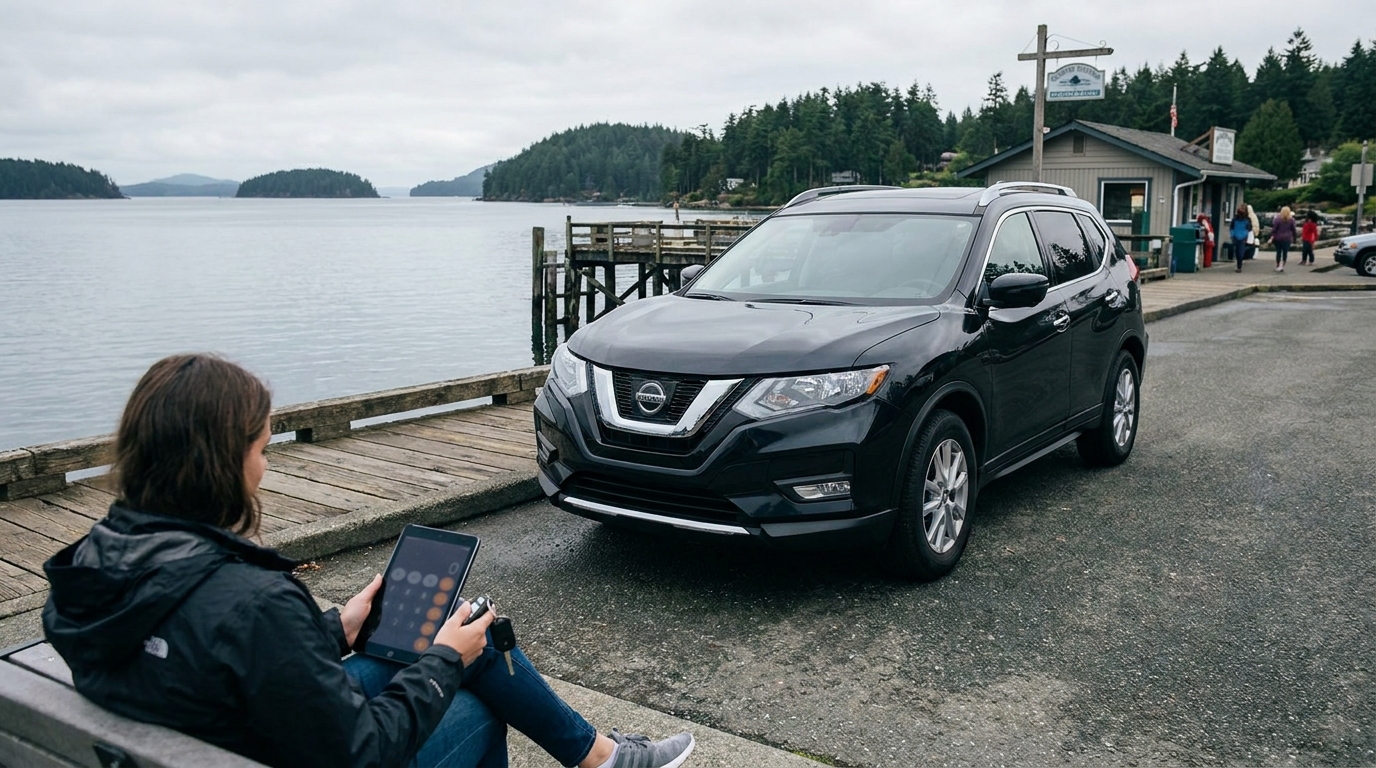
For drivers in Shoreline, WA, the decision between leasing and buying a Nissan rarely comes down to a single number on a payment quote. It involves Washington-specific tax treatment, federal lease disclosure rules, how long the vehicle will stay in the driveway, and whether a commute down I-5 toward Seattle or up to Everett favors predictable payments or long-term ownership. A lease-versus-buy calculator is a useful starting point, but the inputs only work if they reflect the actual rules that apply in Washington in 2026.
This guide walks Shoreline drivers through the financial mechanics, the regulatory environment, and the situational factors that determine which path makes more sense — and where the math gets more nuanced than a generic online calculator suggests.
How a Nissan Lease vs. Buy Calculator Actually Works
At its core, a lease-versus-buy calculator compares the total cost of leasing a vehicle for a defined term against the total cost of financing the same vehicle and either keeping it long-term or selling it at the end of the loan. The variables that matter most are the capitalized cost (the negotiated price), the residual value at lease end, the money factor (the lease equivalent of an interest rate), the loan APR, the term length, and the projected resale value if buying.
What most calculators miss are the jurisdiction-specific inputs. In Washington State, sales tax applies differently to leases than to purchases, and the luxury vehicle tax in effect for 2026 changes the math significantly for higher-end Nissan models like the Armada Platinum Reserve or a well-equipped Z.
Washington Sales Tax on Leases vs. Purchases
Under RCW 82.32.730 and WAC 458-20-145, Washington retail sales tax applies to each periodic lease payment, sourced to the vehicle's primary property location — the garage jurisdiction. For Shoreline drivers, that means the combined state and local sales tax is spread across the lease term rather than paid in a lump sum at signing. Dealers and leasing companies are required to use the Department of Revenue's quarterly local rate tables and correct location codes, including special codes that apply for the first 36 months of a lease.
When purchasing, sales tax is calculated on the full taxable sale price at the time of the transaction and either paid out of pocket or rolled into the loan, which then accrues interest. For buyers financing a Nissan over 60 or 72 months, that front-loaded tax is one of the largest hidden costs a calculator needs to account for.
Drivers relocating into Shoreline from out of state should also note that Washington imposes use tax on vehicles brought into the state when no Washington sales tax was previously paid, based on the vehicle's fair market value.
The 2026 Luxury Vehicle Tax and What It Means Locally
Effective January 1, 2026, a luxury motor vehicle tax applies to vehicles with a fair market value exceeding $100,000, including leased vehicles. For leases, the taxable amount is the fair market value at lease inception minus $100,000 — the first $100,000 of value is exempt. Lessors must report under the 'Sales/Lease of Luxury Vehicles' classification on the combined excise tax return and take the 'Exempt Portion of Selling Price' deduction for that first $100,000.
For most Nissan shoppers in Shoreline, this won't apply: a Rogue, Sentra, Altima, Pathfinder, Frontier, or even a standard Armada falls well below the threshold. But for buyers cross-shopping a fully-loaded Armada or considering a high-trim Z, the luxury tax on the amount over $100,000 is a real line item the calculator needs to include.
Federal Lease Disclosures Shoreline Drivers Should Demand
Federal consumer leasing law requires lessors to provide written disclosures before lease consummation for qualifying consumer vehicle leases, covering items such as the payment schedule, residual value, early termination conditions, excess wear and mileage charges, and security deposit requirements.
Washington State adds its own layer under WAC 308-66-110: consumer lease advertisements that mention a monthly payment or capitalized cost reduction must also disclose that the transaction is a lease, the total amount due at delivery, the number and amount of scheduled payments, whether a security deposit is required, and the lessee's liability at the end of an open-end lease.
For a Shoreline driver running calculator scenarios, two of these matter most: the early termination formula (because life happens, and getting out of a lease early in Washington can be expensive) and the excess wear and mileage charges (because a 12,000-mile annual allowance disappears quickly for commuters running down to South Lake Union or up to Paine Field).
Titling Rules That Affect Lease Returns and Buyouts
Under WAC 308-56A, Washington requires odometer disclosure at lease establishment, at lease termination, and at buyout. At establishment, the lessor acts as transferor and the lessee as transferee. At termination or buyout, the roles reverse — the lessee acts as transferor and the lessor as transferee. Lessors must also notify lessees in writing before lease termination that the lessee must provide an odometer disclosure statement. For a lease buyout titling specifically, only the former lessee submits the completed odometer disclosure statement as transferee; no transferor signature is required on the title application.
Practically, this means Shoreline drivers planning to buy out their lease at the end of the term — a common strategy when residual values are below current market value — will need to complete odometer disclosure paperwork through the Department of Licensing and clear the lessor's interest from the title. A good calculator should factor buyout fees and titling costs into the end-of-lease scenario.
Drivers should also be aware that documentary service fees on leases are capped at $250 per transaction through December 31, 2036, under RCW 46.70. These fees must be listed separately from the capitalized cost, disclosed in writing as negotiable, and identified as not required by the state.
When Leasing Tends to Make Sense for Shoreline Drivers
Leasing generally favors drivers who:
- Want a new Nissan every two to four years and value predictable monthly costs over equity
- Drive within a defined annual mileage budget — typically those whose commute stays within the North King and South Snohomish County corridor rather than long daily trips to Tacoma or Bellingham
- Prioritize having the vehicle under factory warranty for the entire ownership period
- Want to spread Washington sales tax across monthly payments rather than financing it upfront
- Are leasing a model with a strong residual value, which lowers the monthly payment
When Buying Tends to Make Sense
Buying generally favors drivers who:
- Plan to keep the vehicle five years or longer, allowing the front-loaded sales tax and depreciation to be amortized over more time
- Drive significantly more than 12,000–15,000 miles per year, which would trigger excess mileage charges under a lease
- Want the flexibility to modify the vehicle, including aftermarket roof racks, tow setups, or wheels for trips over Stevens Pass
- Value the eventual zero-payment period after the loan is paid off
- Are purchasing a Nissan model known for strong long-term reliability and slow depreciation
The Shoreline-Specific Picture
Shoreline's location along the I-5 corridor between Seattle and Everett produces a wide range of driver profiles. Aurora Avenue commuters and Shoreline Community College families may put modest miles on a vehicle, making leasing attractive. Households running between Shoreline, Northgate, and employers further north or south often exceed standard lease mileage allowances and lean toward buying. Pacific Northwest weather — wet winters, occasional snow events, and year-round road grit — also tends to be hard on tires, brakes, and underbody components, which can produce excess-wear charges at lease return if the vehicle isn't reconditioned beforehand.
Frequently Asked Questions
Does Washington tax the full lease price or just the monthly payment?
Washington applies retail sales tax under RCW 82.32.730 and WAC 458-20-145 to each periodic lease payment, sourced to the vehicle's garage jurisdiction, not to the full vehicle value upfront. Local rates vary by taxing district, and dealers must use the Department of Revenue's current quarterly rate tables and correct location codes.
Does the 2026 luxury vehicle tax apply to most Nissans?
No. The luxury motor vehicle tax effective January 1, 2026 applies only to the portion of fair market value exceeding $100,000. For leases, the taxable amount is the fair market value at lease inception minus $100,000. Most Nissan models fall well below that threshold.
Are leased vehicles covered by Washington's Lemon Law?
Yes. Washington State provides Lemon Law protections that may extend to lessees of new vehicles with substantial defects; drivers should consult the Attorney General's office for current guidance.
What disclosures must a Nissan dealer provide before a lease is signed?
Under federal Regulation M, lessors must provide written pre-consummation disclosures including payment schedule, total lease cost, residual value, early termination formula, purchase option terms, and excess wear and mileage charges. Washington's WAC 308-66-110 adds requirements for lease advertisements that mention payment terms, including total amount due at delivery and security deposit status.
What is the documentary service fee cap for vehicle leases in Washington?
Under RCW 46.70, documentary service fees on vehicle leases are capped at $250 per transaction through December 31, 2036, dropping to $225 on January 1, 2037. The fee must be listed separately from the capitalized cost, disclosed in writing before the transaction, and explicitly identified as negotiable and not required by the state.
Does Washington's luxury vehicle tax apply differently to leases than to purchases?
Yes, with an important distinction. For leased vehicles, the taxable base for the luxury motor vehicle tax is the vehicle's fair market value at lease inception minus $100,000 — it is computed at the start of the lease rather than spread across payments. Lessors report it under the 'Sales/Lease of Luxury Vehicles' classification on the combined excise tax return and claim the 'Exempt Portion of Selling Price' deduction for the first $100,000 of value.
Putting the Calculator to Work
The honest answer to lease-versus-buy isn't universal — it depends on the specific Nissan, the driver's annual mileage, how long they expect to keep the vehicle, and how Washington's tax structure interacts with the deal. A calculator that doesn't account for monthly-payment sales tax sourced to the garage jurisdiction, the 2026 luxury vehicle tax threshold, WAC 308-66-110 lease advertising disclosures, and the $250 documentary fee cap will produce results that don't match what a Shoreline buyer actually pays.
Nissan of Everett serves drivers in the Shoreline area and can provide side-by-side quotes on the specific model and term they are considering. Drivers in Shoreline, WA who want to run the numbers with current Nissan incentives, accurate Washington tax treatment, and a clear breakdown of lease versus finance scenarios can reach Nissan of Everett at https://www.nissanofeverett.com for side-by-side quotes on the specific model and term they're considering.