Nissan Lease Residual Value in Everett, WA Explained
Residual value is the hidden lever that sets your Nissan lease payment. Here's how it works in Everett, WA — and how to use it before signing.

A Nissan lease payment is driven more by residual value — the car's predicted worth at lease-end — than by any other single number on the contract. In Everett, WA, two shoppers can lease the same Nissan with the same money down and the same term, and the one leasing a model with a higher residual percentage will pay noticeably less per month. Understanding that one variable is the difference between a smart lease and an expensive one.
What is residual value on a Nissan lease?
Residual value is the dollar amount Nissan Motor Acceptance Corporation (NMAC) projects a specific Nissan model will be worth at the end of the lease term, expressed as a percentage of MSRP.
That projection is set by the lender before you ever walk into a showroom. Dealers in Everett, WA cannot change it, negotiate it, or match a competing bank's number — the residual is fixed by NMAC for each model, trim, term length, and annual mileage allowance.
How does residual value actually affect your monthly payment?
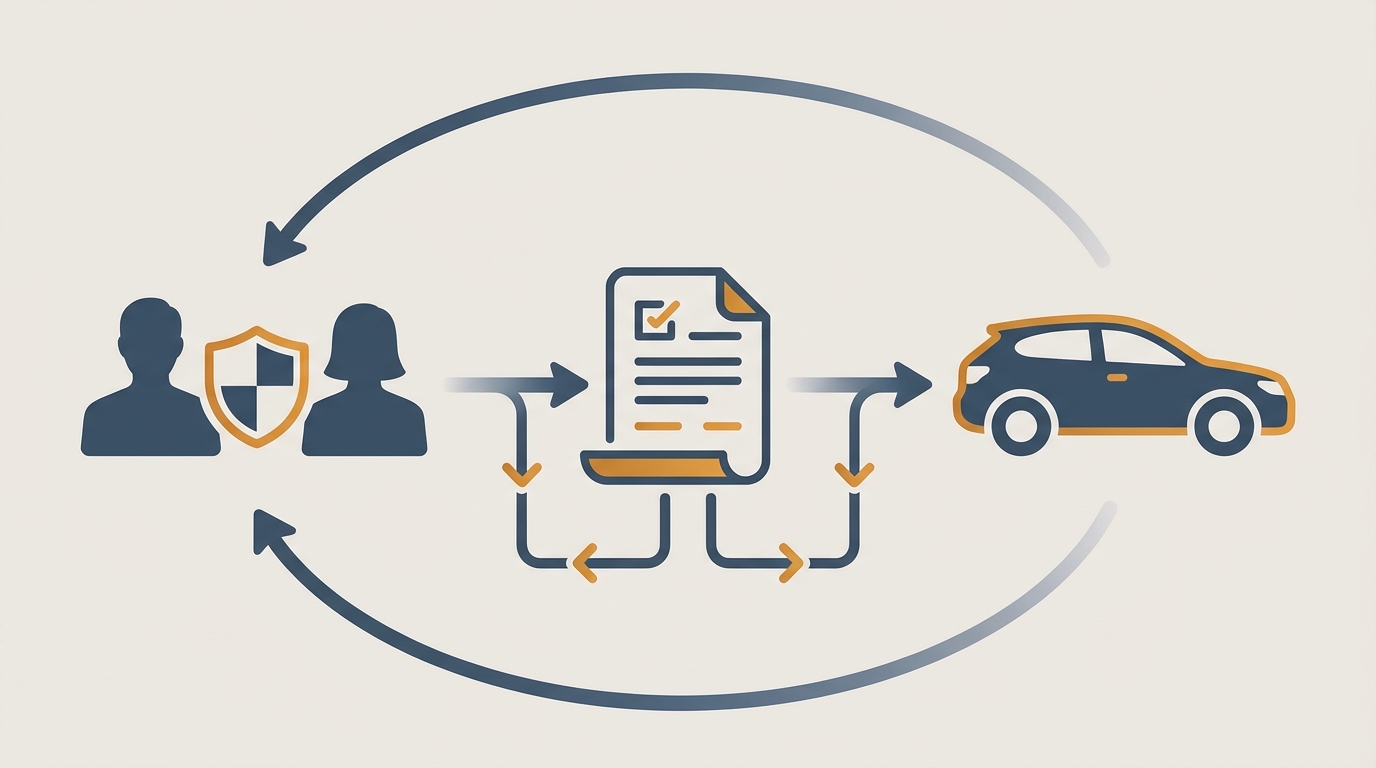
Your Nissan lease payment is built from three components: depreciation (capitalized cost minus residual value, divided by months), rent charge (the lease equivalent of interest), and taxes. Residual value directly determines the depreciation portion — the single largest piece of most payments — so a higher residual shrinks what you finance and lowers the monthly figure.
Raise the residual to 62% and only $11,400 depreciates ($317/month). Same car, same term, same money down — a $58 monthly swing created entirely by the residual percentage. Shoppers at Nissan of Everett who ask about residuals before negotiating price often find that chasing the model with the stronger residual saves more than haggling the cap cost ever will.
Which 2026 Nissans tend to lease best in Everett, WA?
Models with strong resale histories — compact SUVs and efficient commuter cars — typically carry the highest residuals and lease most favorably. A lease is priced around the portion of the vehicle's value you are expected to use up over the term, so a higher residual means less depreciation to finance and a lower monthly payment.
Pricing anchors matter here. the 2026 Nissan Rogue, starting at $29,690 (as of October 2026) and the 2027 Nissan Kicks, starting at $22,790 (as of October 2026) sit in the sweet spot where strong residuals and lower MSRPs combine for lower payments. the 2026 Nissan Pathfinder, starting at $39,990 (as of October 2026) and the 2026 Nissan Sentra, starting at $22,990 (as of October 2026) are also common lease targets. By contrast, the 2026 Nissan Z, starting at $44,480 (as of October 2026) and the 2026 Nissan Armada, starting at $58,840 (as of October 2026) carry higher MSRPs and historically softer residual percentages, which is why they often make more sense to finance or buy outright than to lease.
| Model | Starting MSRP | Typical lease fit |
|---|---|---|
| 2027 Nissan Kicks | $22,790 | Strong — low MSRP, steady resale |
| 2026 Nissan Sentra | $22,990 | Strong — commuter demand holds value |
| 2026 Nissan Rogue | $29,690 | Strong — compact SUV residuals lead the segment |
| 2026 Nissan LEAF | $29,990 | Variable — EV residuals shift with incentive policy |
| 2026 Nissan Pathfinder | $39,990 | Moderate — three-row demand supports value |
| 2026 Nissan Armada | $58,840 | Weaker — large SUVs depreciate faster |
Starting MSRPs above are from Nissan as of October 2026 and exclude destination fees, which range from $1,275 to $2,275 depending on model.
Why do Nissan EV residuals behave differently?
Electric vehicle residuals are the most volatile line on any lease worksheet, because federal and state EV policy, battery technology, and used-EV demand all move faster than three-year lease projections can anticipate. NMAC often prices the LEAF and Rogue Plug-in Hybrid with residuals that already bake in federal lease-pass-through incentives, which is why EV leases can look surprisingly aggressive one quarter and ordinary the next.
For Everett, WA shoppers weighing the 2026 Nissan LEAF, starting at $29,990 (as of October 2026) or the 2026 Nissan Rogue Plug-in Hybrid, starting at $45,990 (as of October 2026), the practical takeaway is that EV lease math should be re-run every quarter rather than assumed from a prior deal. Washington's sales-tax exemption on qualifying EVs under a state-set price cap can also change the effective monthly cost materially — a factor the residual itself doesn't capture. Current Nissan EV lease programs are posted on the Nissan of Everett specials page; direct comparison beats memory on EV deals.
When does leasing beat buying a Nissan?
Buying wins when the shopper keeps vehicles long past the loan payoff, drives high annual mileage, or values ownership of a model whose residual is weak (making the lease math unattractive anyway).
Nissan of Everett offers financing with no down payment in most cases, and can roll taxes, registration, and fees into the financing deal, with most loan terms falling between 48 and 72 months — a structure that often makes more sense for high-mileage drivers than stretching a lease past its mileage cap.
How can Everett, WA shoppers use residual value before signing?
Ask three questions before agreeing to any Nissan lease: What is the residual percentage for this exact trim, term, and mileage allowance? What is the money factor (the rent charge, expressed as a decimal)? And what is the agreed-upon selling price (cap cost)? With those three numbers and the MSRP, any shopper can verify the payment math independently.
A higher mileage allowance lowers the residual (because more miles equals more wear), so matching the allowance to realistic Snohomish County driving — not understating it to chase a lower payment — prevents a surprise bill at turn-in. Washington also assesses sales tax on the monthly lease payment rather than the full vehicle price, which is friendlier to lessees than the lump-sum method used in some other states; confirm the local rate with the dealer at signing.
We worked with James, he was truly exceptional. He went above and beyond for us and was extremely patient. The dealership was great, they made sure to be very friendly and professional. James was awesome to work with: he answered all questions, went above and beyond for us and never pressured us which is major. We ended up finding the perfect family car and I couldn’t be happier. Nissan of Everett is great, I highly recommend you come here and ask for James. We thought our approval chances were slim to none and they made it happen which I really appreciate. Thank you again James!
Frequently asked questions about Nissan lease residuals
Can I negotiate the residual value on a Nissan lease?
No. Residual values are set by Nissan Motor Acceptance Corporation for each model, trim, term, and mileage allowance, and dealers cannot adjust them. What is negotiable is the capitalized cost (the selling price the lease is built from) and sometimes the money factor. Focus negotiation energy on those two levers, since the residual is fixed before you arrive.
Does a higher residual always mean a lower payment?
Usually, yes — a higher residual shrinks the depreciation portion of the payment, which is typically the largest component. However, a high residual paired with an inflated money factor or an un-negotiated selling price can still produce a mediocre payment. Always evaluate residual, money factor, and cap cost together rather than any one in isolation.
Why do shorter lease terms sometimes have higher residuals?
That doesn't automatically mean a lower payment, because the depreciation is spread over fewer months. Run the math for each term before committing.
What happens if the car is worth more than the residual at lease-end?
If the market value of your leased Nissan exceeds the residual at turn-in, you have equity. You can purchase the vehicle for the residual price and resell it, trade it in and apply the equity to your next vehicle, or simply return it and walk away. The option to buy at the pre-set residual is written into every standard Nissan lease.
How do mileage allowances affect residual value?
Higher mileage allowances lower the residual, because more projected miles mean more projected wear and lower end-of-term value. A 15,000-mile-per-year lease will show a lower residual percentage than a 10,000-mile-per-year lease on the same vehicle. Choose the allowance that matches your actual driving — paying overage fees at turn-in is more expensive than buying the miles upfront.
Where can I see current Nissan lease programs in Everett, WA?
Current Nissan lease programs change monthly and are posted on Nissan of Everett's website; the sales team can also pull the exact residual, money factor, and program details for any trim in stock. Nissan of Everett's sales department is open Monday through Friday 7:30 AM to 6:00 PM and Saturday 7:30 AM to 4:00 PM, and closed Sunday.
The bottom line
Residual value is the lever most Everett, WA shoppers overlook and the one that most heavily shapes what they pay each month. Checking the residual percentage before negotiating price — and matching the model, term, and mileage allowance to the way the vehicle will actually be used — is the single most effective way to lower a Nissan lease payment without changing anything else.
Shoppers who want help running the numbers on a specific 2026 Nissan can reach Nissan of Everett at (425) 347-5763 or https://www.nissanofeverett.com, or visit the showroom at 10500 Highway 99, Everett, WA 98204.