Leasing vs Financing a Car in Washington State
How Washington State's sales tax rules, the 2026 luxury vehicle tax, and doc fees change the math on leasing vs financing a car in Everett.
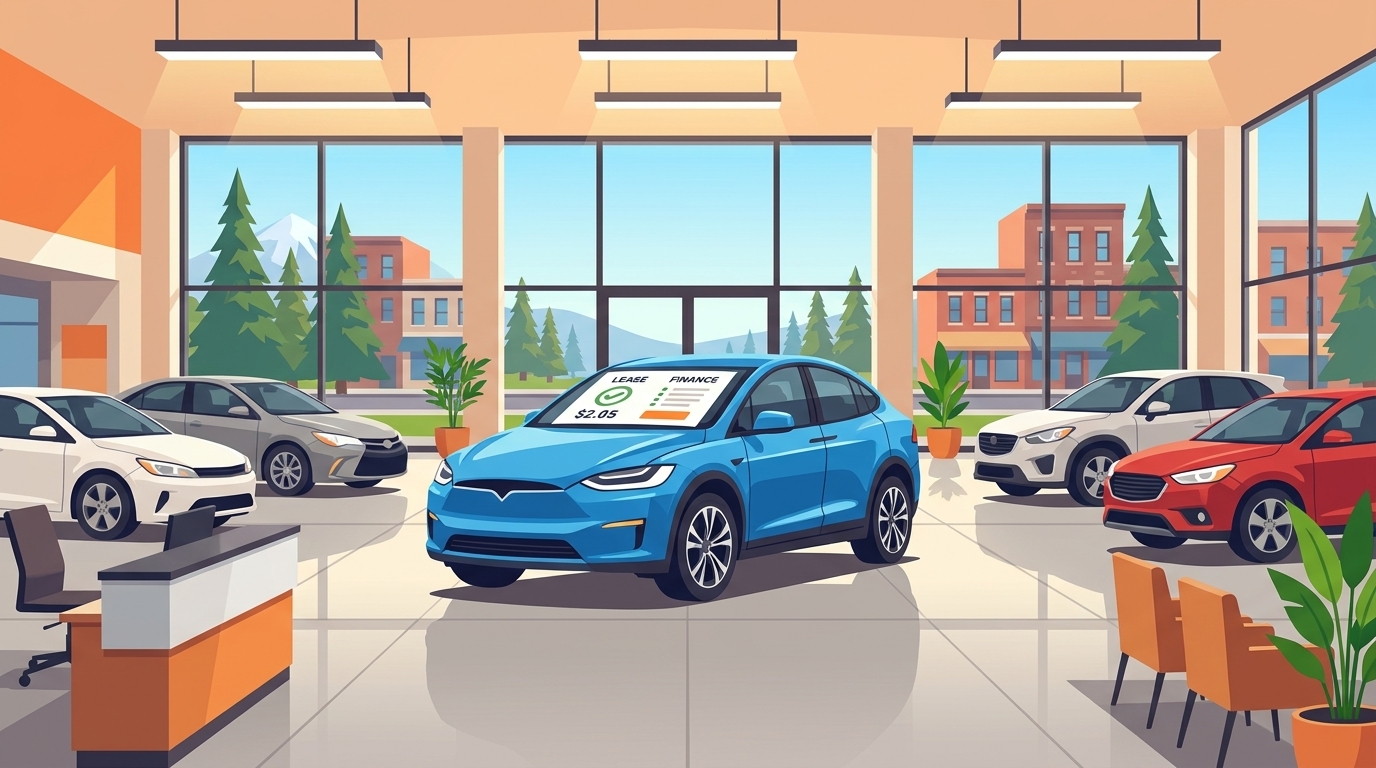
For Washington State drivers, the choice between leasing and financing is not just a monthly-payment question — it is a sales tax question. Washington taxes financed purchases up-front on the full selling price, while lease payments are taxed incrementally as each payment comes due under RCW 82.08.020. That single structural difference, combined with a new 8% luxury motor vehicle tax that takes effect January 1, 2026, often decides which path costs less over the life of the vehicle.
How does Washington State tax a car lease versus a financed purchase?
Washington applies the same 6.5% state retail sales tax to both leases and financed purchases under RCW 82.08.020, but the timing is different. On a financed purchase, tax is collected up-front on the full selling price. On a lease, tax is collected on each periodic payment as it becomes due, which means the buyer pays tax only on the portion of the vehicle they actually use.
Local sales and use tax stacks on top of the 6.5% state rate. For leases of vehicles that are not transportation equipment, each periodic payment is sourced to the vehicle's primary property location under WAC 458-20-145 and RCW 82.32.730 — so a lessee garaging the car in Everett pays Everett-area local rates on every payment, regardless of intermittent use elsewhere. Motor vehicle sales and the first 36 months of motor vehicle leases are also exempt from a particular local optional sales tax component, which can narrow the local-tax gap between the two structures.
What changes on January 1, 2026 with the new luxury motor vehicle tax?
Starting January 1, 2026, RCW 82.08.817 imposes an additional 8% luxury motor vehicle tax on higher-priced vehicles. For a financed purchase, the surtax applies to the portion of selling price plus like-kind trade-in value exceeding $100,000. For a lease, it applies to the portion of the vehicle's fair market value at lease inception exceeding $100,000. The $100,000 threshold increases 2% each July 1.
The trade-in mechanics matter here. Trade-in value is deductible from the taxable base for regular retail sales tax on a purchase, but it is NOT deductible for the luxury surtax threshold calculation. A buyer trading a $40,000 vehicle toward a $120,000 new vehicle escapes regular sales tax on the trade-in portion, but the luxury surtax still tests against the full selling price plus like-kind trade-in — so both structures are exposed to the 8% add-on once the threshold is crossed. Commercial motor vehicles as defined in RCW 46.25.010 are excluded, along with additional categories specified in RCW 82.08.817(3).
Which is cheaper in Everett, WA — a lease payment or a comparable loan payment?
For a typical Nissan buyer in Everett, a lease usually produces a lower monthly outlay than a comparable 60- or 72-month loan on the same vehicle, because the lessee finances only the depreciation portion — not the residual value — and pays sales tax incrementally rather than up-front. A financed purchase costs more per month but builds equity and ends with a paid-off asset.
The cash-flow gap widens when the up-front tax bill on a purchase is factored in. A $45,000 financed Nissan in Snohomish County pays local plus state sales tax on the full $45,000 at delivery, while the same vehicle leased pays local and state sales tax only on each monthly payment as it accrues. Dealers including Nissan of Everett structure both options on the same vehicles, so the comparison the shopper should run is total cost of ownership — payments, taxes, fees, expected resale or lease-end position — over the same 36 to 60 month window.
What fees apply either way, and what should Everett buyers watch for?
Washington dealers may charge a documentary service fee capped at $250 per vehicle sale or lease through December 31, 2036, dropping to $225 on January 1, 2037, under RCW 46.70. The fee must be disclosed in writing before the transaction, listed separately from the selling price or capitalized cost, and explicitly disclosed as negotiable and not state-required. The first $25 of each doc fee is allocated 35% to the Electric Vehicle Account and 65% to the Multimodal Transportation Account.
Short-term rentals of 30 consecutive days or fewer sit in a different tax regime entirely — an 11.9% rental car tax in 2026, dropping to 9.9% in 2027, plus a county-level tax of up to 1.0% under RCW 82.14.049. That regime does not apply to standard consumer leases, which are governed by the regular retail sales tax framework described above.
Leasing vs financing at a glance
| Factor | Financed Purchase | Lease |
|---|---|---|
| State sales tax (6.5%) | Up-front on full selling price | On each payment as due |
| Local sales/use tax | At delivery, buyer's location | Each payment, sourced to primary property location |
| Luxury surtax (8%, from 1/1/2026) | On selling price + like-kind trade-in over $100,000 | On fair market value at inception over $100,000 |
| Trade-in credit against regular sales tax | Yes | Generally structured differently at signing |
| Doc fee cap | $250 (through 12/31/2036) | $250 (through 12/31/2036) |
| End-of-term outcome | Owner keeps vehicle; equity accrues | Return, buy out at residual, or re-lease |
Who should lease, and who should finance?
Leasing tends to favor drivers who replace vehicles every 24 to 48 months, stay within predictable annual mileage, prefer lower monthly outlays, and want to spread sales tax across the term instead of paying it at delivery. Financing tends to favor drivers who intend to keep the vehicle well past the typical loan term, drive high annual mileage, want the freedom to modify the vehicle, and are comfortable absorbing the full up-front sales tax bill in exchange for building equity.
The Everett-specific factors are worth weighing. Snohomish County commuting, salt-air exposure closer to Puget Sound, and the wet Pacific Northwest winters that stretch from October through spring all put real wear on a vehicle — which can push high-mileage commuters toward leases (where wear-and-tear boundaries are contractual) or toward financed purchases with a longer expected keep window and disciplined maintenance. Nissan of Everett's 4.4-star rating across more than 1,000 Google reviews reflects a customer base that includes both profiles, and the sales team routinely models both structures side-by-side for the same vehicle.
Frequently asked questions
Do I pay sales tax on the full price of a leased car in Washington State?
No. Under RCW 82.08.020, Washington collects the 6.5% state retail sales tax on each periodic lease payment as it becomes due, not on the full vehicle price at lease signing. Local sales and use tax is layered on the same per-payment basis and is sourced to the vehicle's primary property location under WAC 458-20-145. A financed purchase, by contrast, is taxed up-front on the full selling price.
Does the trade-in credit apply the same way to leases and purchases?
Trade-in value of like-kind property is deductible from the taxable base for regular retail sales tax on a purchase under Washington law. For the new 8% luxury motor vehicle tax under RCW 82.08.817, however, like-kind trade-in value is NOT deductible from the $100,000 threshold calculation. Lease transactions handle trade equity differently at signing, typically as a capitalized cost reduction, so the tax mechanics should be reviewed on the specific deal sheet.
How does Washington's 2026 luxury motor vehicle tax work?
Effective January 1, 2026, RCW 82.08.817 adds an 8% surtax on the portion of a purchase's selling price plus like-kind trade-in exceeding $100,000, or on the portion of a lease's fair market value at inception exceeding $100,000. The $100,000 threshold increases 2% each July 1. Commercial motor vehicles defined in RCW 46.25.010 and additional categories in RCW 82.08.817(3) are excluded.
What is the maximum documentary service fee a Washington dealer can charge?
Washington dealers may charge a documentary service fee of up to $250 per vehicle sale or lease through December 31, 2036, dropping to $225 beginning January 1, 2037, under RCW 46.70. The fee must be disclosed in writing before the transaction, itemized separately from the selling price or capitalized cost, and disclosed as negotiable and not a state-required fee. Misrepresenting the fee as state-mandated can trigger dealer licensing penalties.
Is a short-term car rental taxed the same as a lease in Washington?
No. Passenger car rentals of 30 consecutive days or fewer are subject to a separate rental car tax — 11.9% in 2026, dropping to 9.9% in 2027 — plus a county-level tax of up to 1.0% under RCW 82.14.049. Longer-term consumer leases fall under the regular retail sales tax framework in RCW 82.08.020, with tax collected on each periodic payment.
If sales tax was not collected at lease signing, do I still owe tax in Washington?
Yes. Under RCW 82.12, use tax is due when retail sales tax was not collected at the time of purchase or lease. For leased vehicles, the lessee's use tax liability is limited to the rental or lease payments paid or due, mirroring the incremental structure of the retail sales tax on leases. The Department of Revenue enforces this through audits, desk reviews, and penalties under chapter 82.32 RCW.
The bottom line for Everett drivers
The right answer depends on how long the vehicle will be kept, how many miles it will see, and whether the buyer prefers to pay Washington sales tax incrementally or in a single delivery-day check. For most Everett shoppers under the $100,000 luxury threshold, leasing offers lower monthly outlays and deferred tax exposure, while financing offers ownership equity and freedom from mileage and wear terms. Readers in Everett, WA who want both structures modeled side-by-side on a specific vehicle can reach Nissan of Everett at https://www.nissanofeverett.com to compare the numbers directly.