Kirkland Car Dealership Marketing Strategies That Drive Local Customer Engagement
How Kirkland car dealerships build local customer engagement through hyperlocal marketing, retention programs, and trust-driven outreach in 2026.
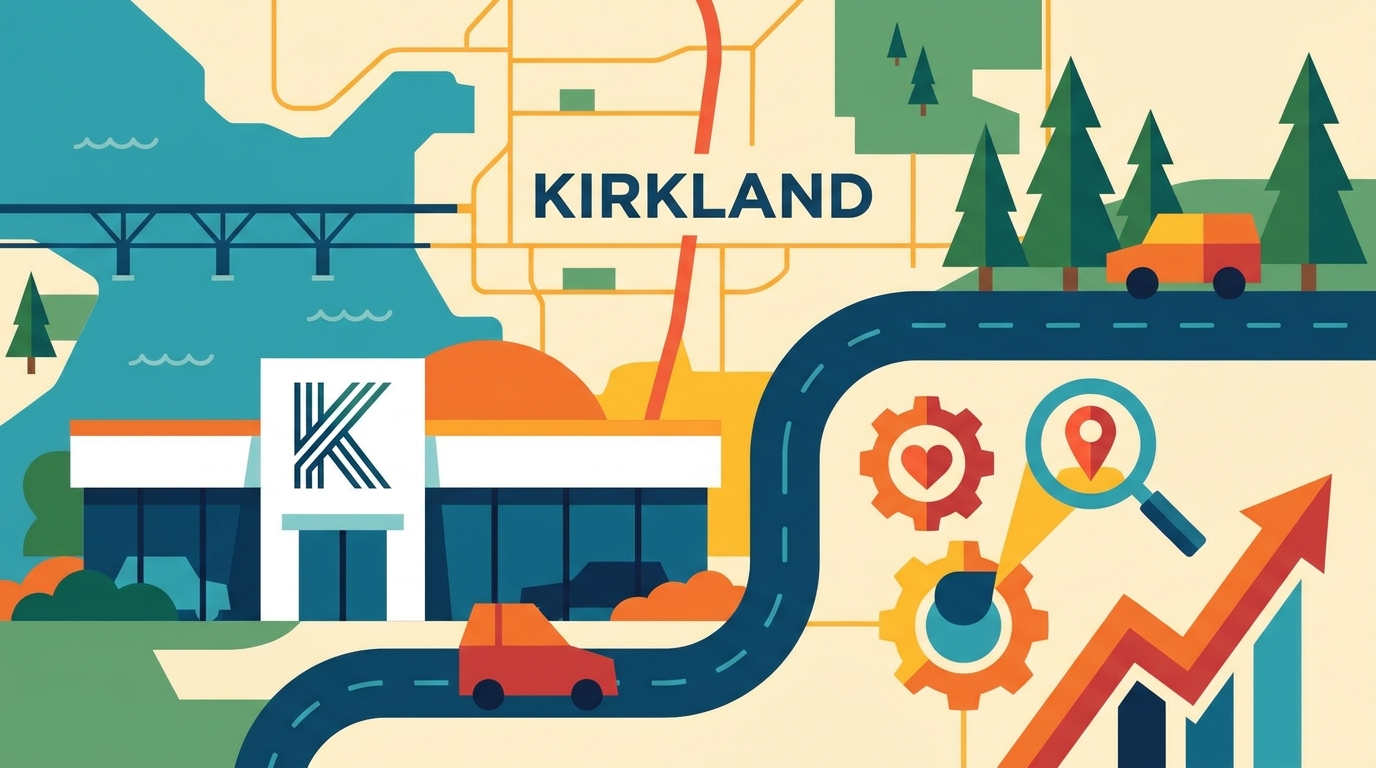
Car shoppers in Kirkland behave differently than buyers in most Puget Sound submarkets. With median household incomes well above the state average, a tech-heavy commuter base flowing toward Bellevue and Seattle via the 520 corridor, and a growing appetite for hybrid and electric vehicles driven by Washington's clean-vehicle incentives, the local audience is informed, deliberate, and difficult to win on price alone. That reality is reshaping how dealerships market to this community — and which strategies actually move inventory.
The dealerships gaining traction in 2026 are not the ones running the loudest broadcast campaigns. They are the ones building structured local engagement systems: hyperlocal digital targeting, transparent online merchandising, and retention programs that turn a single sale into a decade-long relationship. This case study examines what is working in the Kirkland market and why.
Why Kirkland Demands a Different Marketing Playbook
Kirkland's car-buying audience clusters around distinct neighborhoods — Juanita, Totem Lake, Rose Hill, Bridle Trails, and the downtown Kirkland waterfront — each with different commute patterns and vehicle preferences. Buyers near the Totem Lake business district often prioritize family SUVs and three-row crossovers, while downtown condo owners trend toward compact EVs and hybrids that fit limited parking. A marketing message that treats Kirkland as one homogenous ZIP code misses the segmentation entirely.
Weather and geography also shape demand cycles. The shoulder months between the Pacific Northwest's wet winter and dry summer — particularly March through May — see a measurable lift in test drives as buyers prepare for road-trip season and look to replace aging winter vehicles. Dealerships that align inventory promotion, service campaigns, and trade-in outreach to this seasonal rhythm consistently outperform competitors running flat year-round campaigns.
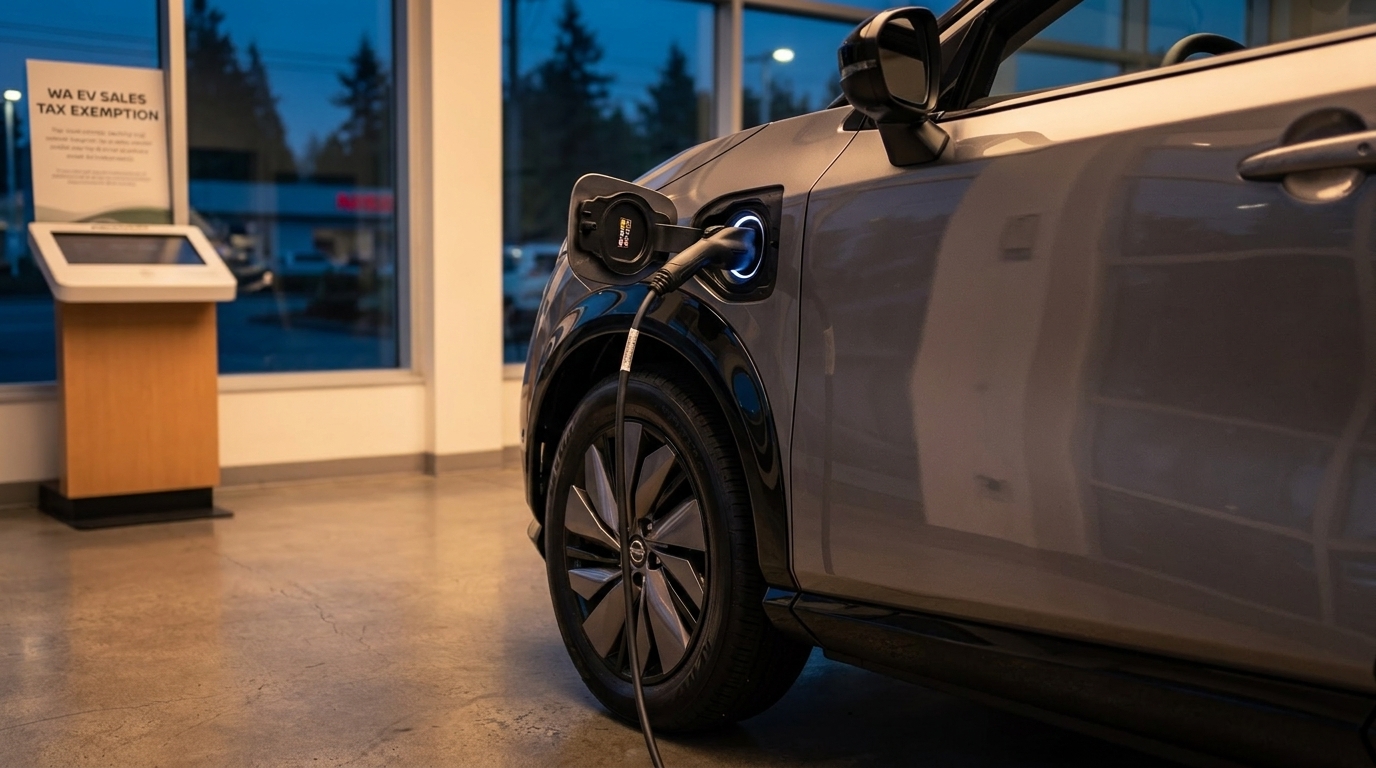
Washington's vehicle sales tax structure adds another wrinkle. The state applies sales tax to the difference between the new vehicle price and the trade-in value, which makes trade-in messaging genuinely valuable to buyers — not just a marketing hook. A dealership that quantifies this benefit clearly in its digital ads and showroom conversations earns trust that generic "best price" messaging never does.
The Five Local Marketing Levers That Actually Work
1. Hyperlocal Search and Geo-Targeted Digital Ads
Generic "car dealership near me" campaigns burn budget. The dealerships winning in Kirkland are layering ZIP-code-level bidding (98033, 98034, 98083) with neighborhood-specific landing pages — separate pages for Juanita family buyers, Totem Lake commuters, and Rose Hill EV shoppers. Each landing page surfaces inventory and offers relevant to that segment, which dramatically improves conversion from click to lead.
Google Business Profile optimization is equally underrated. Dealerships that post weekly inventory updates, respond to every review within 24 hours, and use the Q&A feature to publish honest answers about financing, trade-ins, and service appointments routinely outrank competitors with more inventory but weaker profile signals.
2. Transparent Online Merchandising
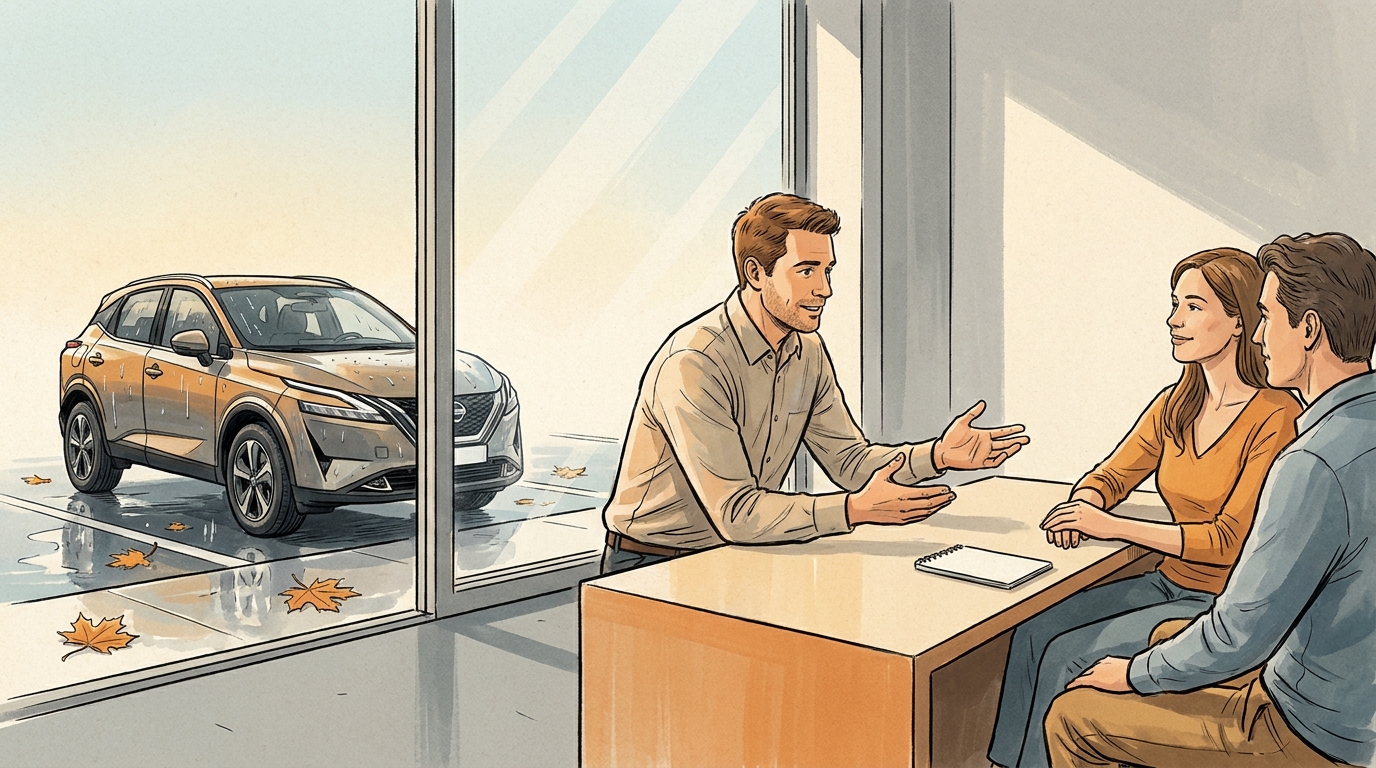
Kirkland shoppers research extensively before visiting a showroom. Vehicle detail pages without clear out-the-door pricing, real photos (not stock images), recent service history on used inventory, and visible trade-in tools lose these buyers before they ever fill out a lead form. The shift toward transparency is not optional — it is the table stakes for engaging this market.
Nissan of Everett has built its digital storefront around this principle, presenting full pricing breakdowns, financing scenarios, and inventory availability without forcing shoppers to call for a quote. That approach mirrors what Kirkland buyers say they want: a frictionless research experience before any sales conversation begins.
3. Reputation as a Distribution Channel
Reviews are not a vanity metric in this market — they are a primary lead source. Kirkland buyers routinely cross-reference Google reviews against dealership websites before scheduling test drives, and a single thread of unanswered complaints can divert weeks of paid traffic.
The dealerships that perform best treat reviews as content. Nissan of Everett's 4.4-star rating across more than 1,000 Google reviews — as of April 2026 — illustrates the compounding effect of consistent service. One customer wrote that the experience was "the best car shopping and buying experience I could ask for," while another described receiving "nothing but pure professionalism to the highest degree." That kind of language, surfacing repeatedly across years of reviews, becomes its own marketing engine — one no paid campaign can replicate.
4. Service-Driven Customer Retention
The most overlooked marketing channel in the industry is the service drive. A buyer who returns for scheduled maintenance is statistically far more likely to buy their next vehicle from the same dealership — yet many stores treat service as a cost center rather than a retention engine.
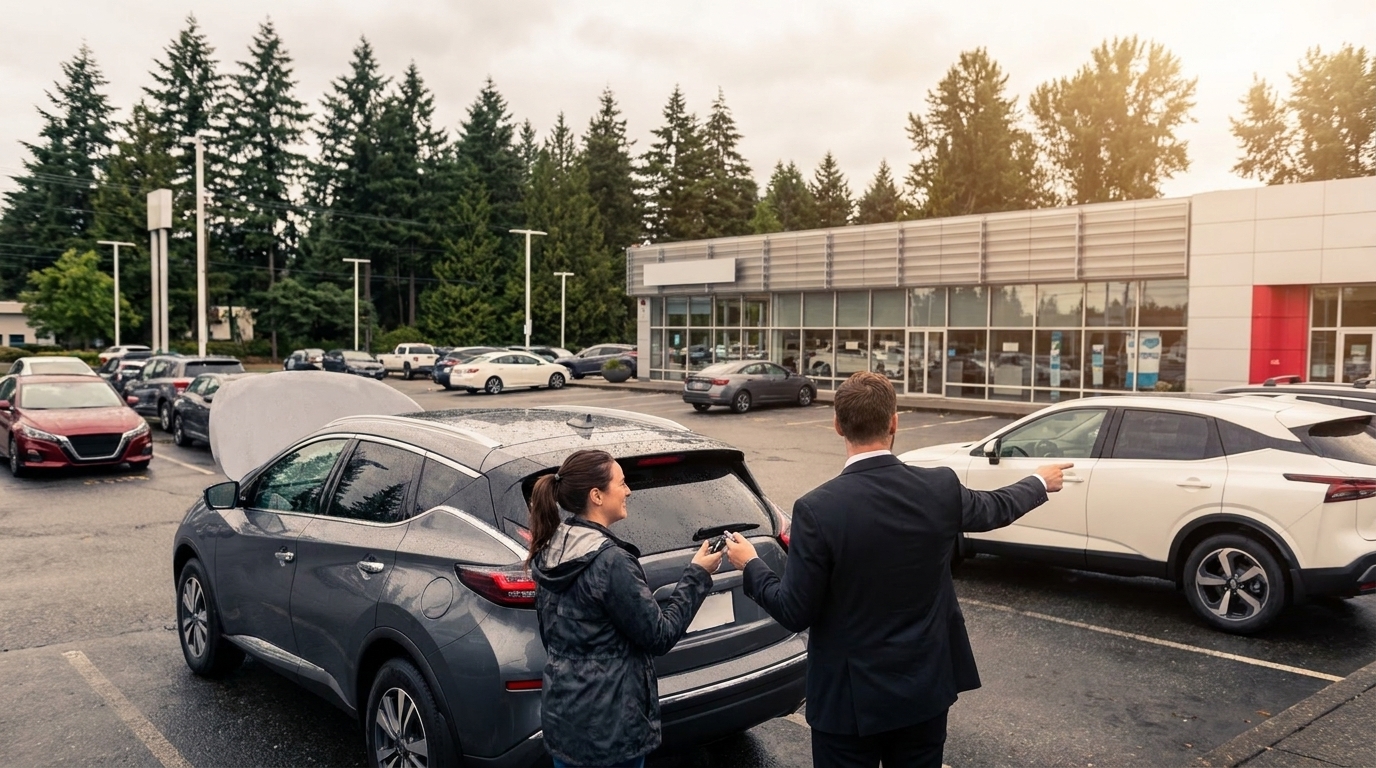
Effective customer retention programs in Kirkland share three traits: complimentary first-service appointments tied to new-vehicle purchase, proactive multi-channel reminders (text, email, app) timed to manufacturer maintenance intervals, and loyalty pricing on tires, brakes, and batteries that competes with independent shops. One reviewer noted returning for a complimentary first oil change and being impressed with both the speed and the in-person service experience — a small touchpoint that quietly seeds the next purchase three to five years out. Nissan of Everett reinforces this model further through its Nissan Service @ Home program, which offers contactless pick-up and drop-off so customers never have to sit in a waiting room.
5. Community Presence Over Broadcast Advertising
Kirkland's strong neighborhood identity — anchored by events at Marina Park, the Kirkland Farmers Market, and youth sports leagues across Juanita and Rose Hill — rewards dealerships that show up locally rather than blanketing the region with radio spots. Sponsorships, EV ride-and-drive events at community centers, and partnerships with local nonprofits generate the kind of word-of-mouth that converts at significantly higher rates than cold digital impressions. Nissan of Everett's community work, organized under the Mead Automotive Group's "Community Driven" mission, demonstrates this approach in practice — partnering with nonprofits ranging from the Puget Sound Honor Flight program to local foster-care initiatives.
Building Customer Retention That Compounds
Acquisition gets the headlines, but retention drives dealership profitability. The math is straightforward: a retained customer who buys, services, and refers over a 10-year window is worth multiples of a one-time purchaser acquired through paid media. Yet the discipline of retention marketing — structured follow-up at 30, 90, and 365 days, equity-position alerts when a customer's vehicle is worth more than they owe, anniversary check-ins — remains inconsistently practiced across the industry.
The dealerships building durable books of business in Kirkland are the ones investing in CRM hygiene, sales-to-service handoff protocols, and genuine post-sale communication. When a buyer feels remembered rather than re-marketed to, they return. When they feel re-marketed to, they shop elsewhere.
Frequently Asked Questions
What marketing channels deliver the best ROI for Kirkland car dealerships?
Hyperlocal paid search, Google Business Profile optimization, and structured reputation management consistently outperform broadcast channels in this market. Buyers here research digitally before visiting, so investments in inventory merchandising and review responsiveness compound faster than traditional advertising spend.
How important are online reviews for a new car dealer in Kirkland?
Reviews function as both a ranking signal and a primary trust filter. Kirkland buyers routinely read 10 or more reviews before scheduling a test drive, and dealerships that respond professionally to both positive and critical feedback see measurably higher lead-to-appointment conversion.
What is the single most underused customer retention tactic?
Proactive equity outreach. When a customer's vehicle equity exceeds their loan balance — common during periods of strong used-car values — a well-timed message offering an upgrade with little or no payment increase converts at rates traditional sales prospecting cannot match.
How should dealerships handle trade-in messaging in Washington?
Because Washington applies sales tax to the difference between the new vehicle price and the trade-in value, the tax savings are a real and quantifiable benefit. Marketing that explains this clearly — rather than burying it in fine print — builds trust with informed Kirkland buyers.
How does a dealership's service department support its local marketing efforts in Kirkland?
The service department is one of the most direct retention channels available. Buyers who return for maintenance are far more likely to purchase their next vehicle from the same store. Convenience features — such as Nissan of Everett's contactless Service @ Home pick-up and drop-off — reduce friction and keep customers engaged between purchases, turning the service drive into a quiet but powerful marketing asset.
What role does community involvement play in dealership marketing for the Kirkland area?
Community involvement builds the kind of ambient trust that paid advertising cannot buy. Kirkland buyers respond to dealerships that demonstrate local commitment through sustained nonprofit partnerships and neighborhood sponsorships. A dealership known for genuine community investment earns word-of-mouth referrals that convert at higher rates than cold digital impressions, making community presence a measurable — not just feel-good — marketing channel.
The Takeaway for Kirkland Dealerships
Winning in Kirkland is less about outspending competitors and more about out-engaging them. The dealerships gaining ground in 2026 are the ones treating local marketing as a system — neighborhood-level targeting, transparent digital merchandising, disciplined reputation management, and retention programs that turn buyers into long-term customers. The fundamentals have not changed, but the execution standard has risen sharply.
Kirkland car shoppers who want to see what a transparent, service-oriented dealership experience looks like in practice can contact Nissan of Everett to browse inventory, explore trade-in options, or schedule a test drive. Nissan of Everett is located at 10500 Highway 99, Everett, WA 98204, and can be reached at (425) 347-5763. For dealership operators studying the local market, the lesson is simpler still: the brands earning trust here are the ones doing the unglamorous work of showing up consistently, communicating clearly, and remembering customers long after the sale closes.
"