Nissan Winter Driving Safety Features: Essential Guide for Kenmore Drivers
Discover how Nissan's 2026 winter safety features—AWD, traction control, and driver-assist tech—handle Kenmore's wet, icy roads and Pacific Northwest weather.
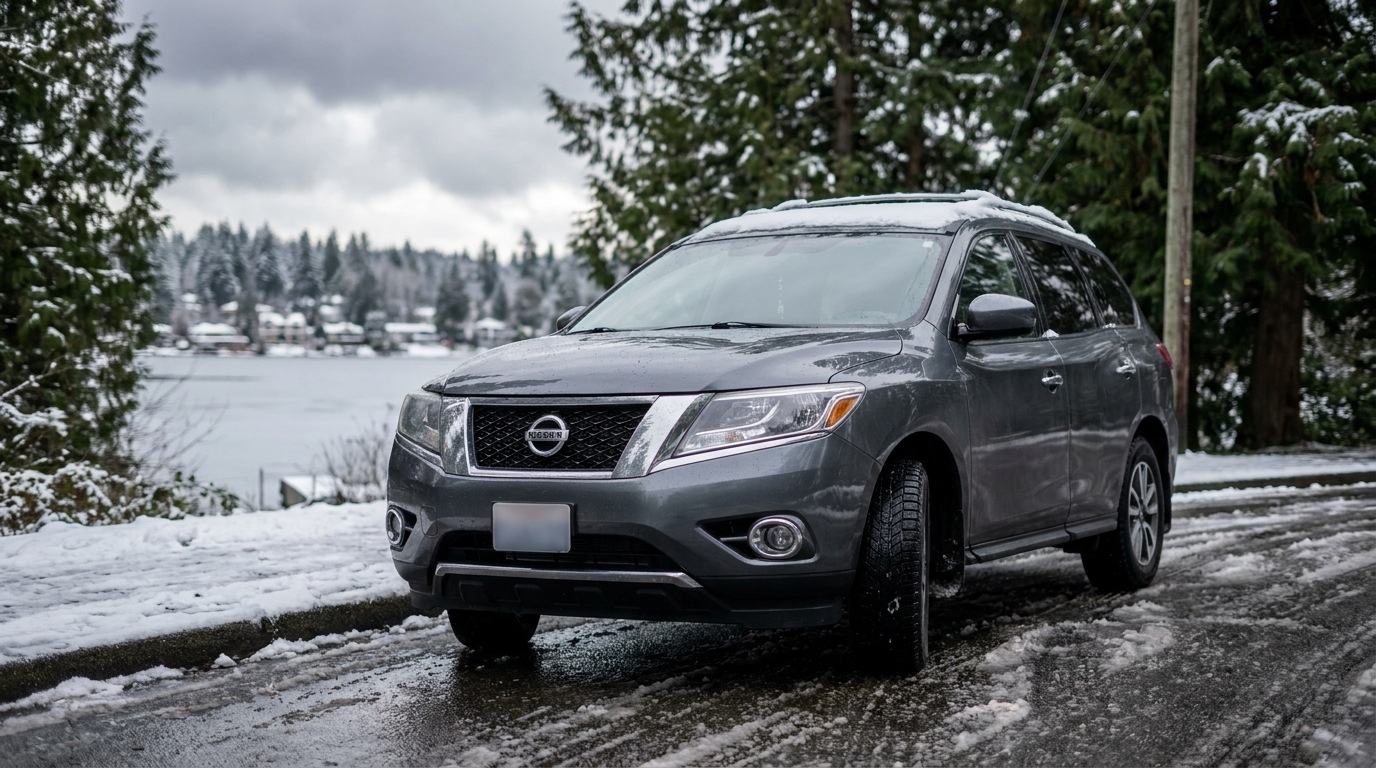
Drivers in Kenmore, WA face a winter season that's less about deep snowdrifts and more about the persistent challenges of cold rain, black ice on shaded backroads, and the occasional snowstorm that catches the region off guard. The stretch from November through March routinely turns routes along Bothell Way NE, the Burke-Gilman Trail crossings, and the climb up Juanita Drive into genuinely hazardous drives. Understanding which vehicle safety features actually matter under these conditions—and how Nissan engineers its lineup to handle them—is a practical exercise for anyone navigating the north end of Lake Washington in winter.
Why Kenmore Winter Driving Demands Specific Safety Features
Kenmore's microclimate sits at the intersection of marine air off Puget Sound and cold air spilling down from the Cascade foothills. The result is a winter pattern dominated by freezing rain events, lingering morning frost on roads like 68th Avenue NE, and unpredictable snowfall that the region's limited plow fleet often struggles to keep ahead of. Elevation changes around Inglewood-Finn Hill and the climb toward Kingsgate compound the issue—roads that are merely wet at lake level can be glazed in ice a few hundred feet up.
Washington's chain requirements can also activate on mountain pass routes that many Kenmore residents travel for weekend trips, but the more common winter risk is local: hydroplaning on standing water along SR-522 and reduced traction on leaf-covered residential streets through Moorlands and Arrowhead. Safety features that perform well in these conditions—particularly all-wheel drive, advanced traction management, and visibility-enhancing technology—are not luxuries here. They are the baseline for confident year-round driving.
Nissan AWD Systems: Intelligent All-Wheel Drive Explained
Nissan's Intelligent All-Wheel Drive system is available across much of the lineup, spanning a range of cars, SUVs, and electric vehicles. Unlike older mechanical AWD designs, the Intelligent AWD system uses electronic sensors to monitor wheel slip, throttle input, and steering angle dozens of times per second, then routes torque between the front and rear axles in real time. In normal dry conditions, the system runs primarily in front-wheel drive to preserve fuel economy. When sensors detect slip—say, on a frost-covered onramp to I-405—a significant portion of available torque can shift rearward almost instantaneously.
For Kenmore drivers, this proactive behavior matters more than raw mechanical AWD capability. Most winter incidents in the area don't involve deep snow; they involve a sudden traction loss on wet leaves, painted lane markings, or a patch of black ice on a bridge deck. A system that responds before the driver even perceives the slip provides a meaningful safety margin.
Vehicle Dynamic Control and Traction Management
Every new Nissan sold in the U.S. includes Vehicle Dynamic Control (VDC) and traction control as standard equipment. VDC works alongside the anti-lock braking system to detect understeer or oversteer and selectively brake individual wheels, helping correct skids before they develop into a loss of control. On a road like Simonds Road NE, where a tight curve can hide a sheet of ice in winter shade, this kind of intervention can be the difference between an uneventful drive and a guardrail call.
Nissan Safety Shield 360 and ProPILOT Assist
Nissan Safety Shield 360 is standard across much of the current Nissan lineup. The suite bundles six driver-assist technologies that are particularly relevant in low-visibility Pacific Northwest winter conditions:
- Automatic Emergency Braking with Pedestrian Detection — useful in foggy mornings along Lake Washington's shoreline where pedestrians and cyclists frequently appear.
- Rear Automatic Braking — helpful in icy driveways and parking lots where wheel-spin can compromise reverse maneuvers.
- Blind Spot Warning — meaningful on SR-522, where heavy commuter traffic and rain-spattered windows reduce mirror visibility.
- Rear Cross Traffic Alert — valuable in tight retail lots around the Kenmore Village shopping district.
- Lane Departure Warning — relevant when lane markings disappear under standing water or slush.
- High Beam Assist — practical on the dark, unlit stretches of Juanita Drive NE during long December nights.
ProPILOT Assist, available on select Nissan models, combines adaptive cruise control with lane-centering steering assistance. On a long, wet commute down I-405 toward Bellevue, the system reduces fatigue by maintaining following distance and lane position—particularly helpful when rain reduces driver reaction time and visibility.
Tire Selection: The Often-Overlooked Winter Safety Decision
No AWD system compensates for inadequate tires. Even the most sophisticated traction management still relies on the rubber contact patch to transfer force to the road. For Kenmore drivers, all-season tires are generally adequate for the lake-level commute, but anyone who regularly drives toward Snoqualmie Pass, climbs the Finn Hill area in icy conditions, or simply wants maximum grip during the December–February window should consider dedicated winter tires.
Winter compounds remain pliable at low temperatures where all-season rubber begins to harden and lose grip. The performance gap is most pronounced in exactly the conditions Kenmore sees most often: cold, wet pavement just above or below freezing. Nissan of Everett's parts center carries both factory OEM and aftermarket parts, including eligible OEM and OEA Bridgestone, Firestone, and Goodyear tires through Nissan Maintenance Advantage, making it a straightforward stop for winter tire needs.
Practical Winter Preparation for Nissan Owners
Beyond the engineered safety systems, a few maintenance items make a measurable difference heading into the wet season:
- Wiper blade replacement — the constant misting rain of a Kenmore winter is brutal on rubber wiper inserts.
- Coolant and washer fluid inspection — confirm freeze protection ratings appropriate for sub-freezing nights.
- Brake system check — wet weather accelerates rotor and pad wear.
Nissan of Everett's service department services all makes of vehicles and can perform a comprehensive winter inspection covering all of these items in a single visit. For added convenience, Nissan of Everett offers a Service @ Home program with contactless pick-up and drop-off—no waiting rooms required. One customer wrote of a recent service visit: "David was really nice and have a very good customer service! Only need to wait for an hour and it's done." Contact Nissan of Everett to schedule a pre-season inspection or arrange pick-up through the Service @ Home program.
Frequently Asked Questions
Which Nissan models offer all-wheel drive for Kenmore winters?
Intelligent All-Wheel Drive is available across a broad range of Nissan models, spanning SUVs, trucks, and the electric Ariya.
Is AWD necessary for driving in Kenmore?
It depends on the routes driven. For drivers who stay near lake level and primarily use SR-522 and surface streets, a front-wheel-drive Nissan with quality all-season or winter tires performs adequately. For drivers who regularly tackle steeper neighborhoods like Inglewood-Finn Hill, travel toward the Cascades, or simply want additional confidence on icy mornings, AWD provides meaningful added security.
How does ProPILOT Assist help in winter conditions?
ProPILOT Assist maintains following distance and centers the vehicle in its lane using radar and camera input. In winter rain, it reduces driver workload on long commutes, though Nissan emphasizes that drivers must remain attentive and that the system can be limited by heavy snow, ice obscuring sensors, or faded lane markings.
When should winter tires be installed in the Kenmore area?
A common regional guideline is to switch to winter tires once temperatures consistently drop toward freezing, which tends to happen in late autumn in western Washington. Removing them once consistently warmer pavement temperatures return in spring aligns with best practice.
Does Nissan Safety Shield 360 work effectively in heavy Pacific Northwest rain?
Yes, though with some limitations. The radar-based components—such as Automatic Emergency Braking and Blind Spot Warning—generally perform well in rain. Camera-dependent features like Lane Departure Warning can be affected by heavy downpours or mud obscuring lenses. Keeping sensors and camera lenses clean is an easy maintenance step that helps maintain system performance through Kenmore's wet winter months.
Can Nissan of Everett service my vehicle if I drive a different brand?
Yes. Nissan of Everett's service department services all makes of vehicles, not just Nissan. Whether you drive a Nissan or another brand entirely, you can bring your vehicle in for a pre-season winter inspection, tire service, or routine maintenance. Contact Nissan of Everett at https://www.nissanofeverett.com or call (425) 347-5763 to schedule an appointment.
Choosing the Right Nissan for Pacific Northwest Conditions
The right Nissan for a Kenmore driver depends on routine routes, household needs, and tolerance for winter risk. The Rogue remains a popular choice for its balance of efficiency and AWD capability. The Pathfinder offers more interior space and towing capacity for families heading to Cascade trailheads. The all-electric Ariya brings AWD and instant torque control to drivers prioritizing low operating costs.
Nissan of Everett carries the current lineup and is familiar with the conditions north-end drivers actually face. The dealership holds a 4.4★ rating across more than a thousand Google reviews as of April 2026, with customers frequently citing professional treatment and knowledgeable staff. One customer described the experience: "Made me feel like a king from the first encounter — absolutely nothing but pure professionalism to the highest degree." Drivers in Kenmore, WA who want to evaluate Nissan's winter-capable models or schedule a pre-season service inspection can reach Nissan of Everett at https://www.nissanofeverett.com or by calling (425) 347-5763.