Nissan EV Lease vs Financing in Everett, WA
Compare the true cost of leasing versus financing a Nissan EV in Everett, WA in 2026 — after the state sales tax exemption sunset and lease credit rules.

For most Everett shoppers in 2026, financing a Nissan EV makes sense if you plan to keep the vehicle beyond five years and want to capture long-term equity, while leasing wins for buyers who prioritize lower monthly payments, want the federal Clean Vehicle Credit passed through as a capitalized-cost reduction, and expect to swap vehicles inside three years. The decisive variable in Washington right now is not the sticker price — it is that, which reshapes the math on both paths.
What changed for Washington EV buyers in 2026?
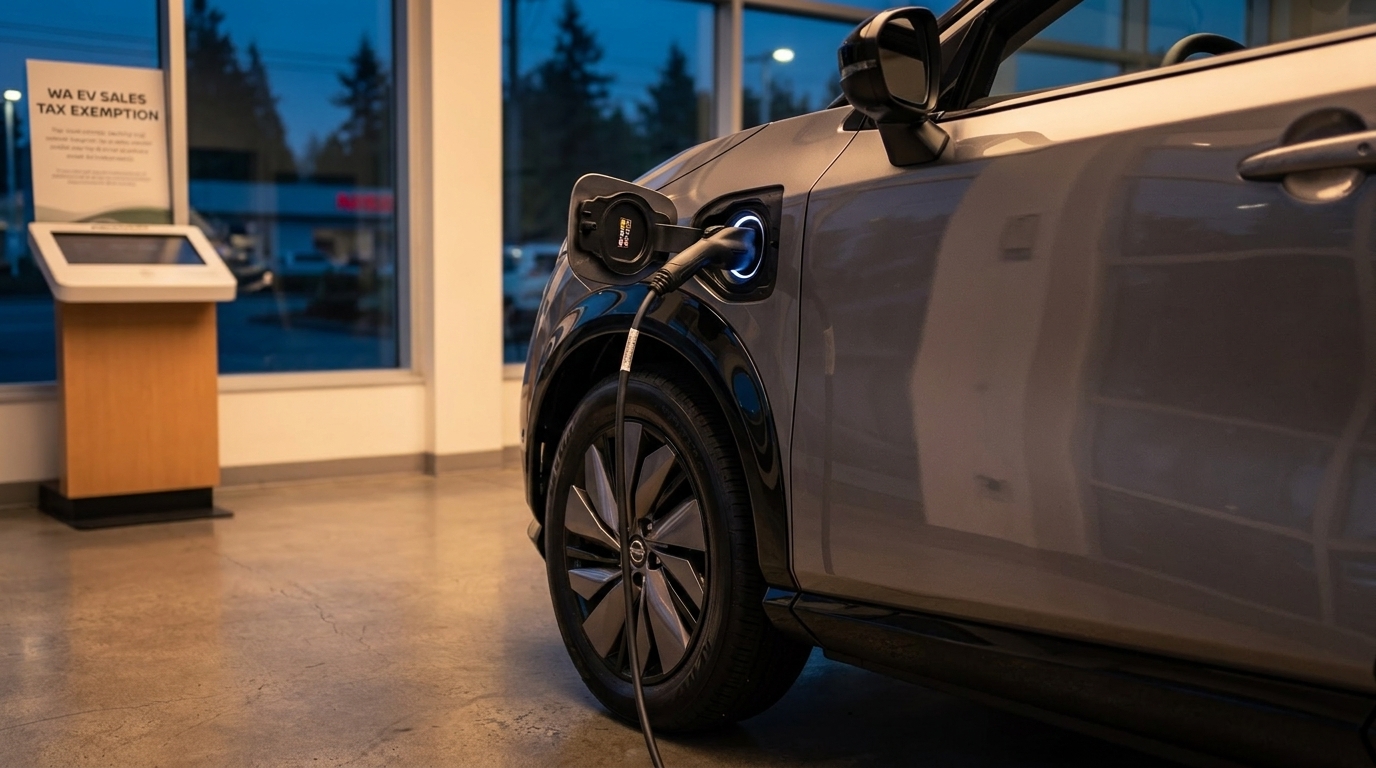
As of mid-2026, vehicles delivered after that end date no longer qualify, though fuel-cell and clean alternative fuel vehicles retain exemption eligibility through August 1, 2028.
This matters in Everett because Snohomish County's combined sales tax rate is among the higher brackets in the state. A new Nissan Ariya or LEAF purchased today is fully taxable, which affects a financed transaction's total out-the-door number differently than it affects a lease, where tax is generally assessed on monthly payments rather than the full capitalized cost.
How does leasing a Nissan EV work after the exemption sunset?
Leasing a Nissan EV in Everett means paying sales tax on each monthly payment rather than on the full vehicle price, and the federal Clean Vehicle Credit typically flows to the lessor — Nissan Motor Acceptance Corporation — which may pass it through as a capitalized-cost reduction. Any pass-through is contractual, not mandated by Washington law, so buyers should confirm it appears on the lease worksheet at Nissan of Everett before signing.
One nuance often missed:. Leases signed on or after the qualification period end date do not qualify. If a shopper is transferring or assuming an older qualifying lease, that grandfathered treatment can be a meaningful hidden benefit.
How does financing a Nissan EV compare?
Financing a Nissan EV in Everett means paying Washington sales tax on the full selling price at delivery, taking title immediately, and building equity with each payment. The federal Clean Vehicle Credit under IRC §30D accrues to the vehicle owner — the buyer — subject to federal income and vehicle eligibility rules that are governed by IRS guidance, not Washington law.
The financing path rewards patience. Once the loan is retired, the vehicle continues to deliver value with no monthly obligation, and Nissan's EV battery warranty coverage extends well past a typical 36-month lease term. For Everett commuters running I-5 to Seattle or SR-526 to the Boeing corridor, that longer ownership horizon spreads acquisition cost across far more miles.
Which path costs less overall in Everett?
Over a 36-month horizon, leasing typically produces a lower total cash outlay in Everett — often by a meaningful margin — because the lessor's federal credit pass-through and lower monthly tax base offset the loss of equity. Over a 72-month horizon, financing almost always wins on total cost of ownership, because the buyer eventually stops paying and retains a vehicle with residual value.
The break-even point depends on three inputs specific to each deal: the money factor versus the APR, the residual value Nissan assigns to that model and trim, and whether the federal credit is passed through in full. A written side-by-side from the finance office is the only reliable way to settle it.
| Dimension | Lease | Finance |
|---|---|---|
| WA sales tax base (post-July 31, 2026) | Assessed on monthly payments | Assessed on full selling price at delivery |
| Federal Clean Vehicle Credit (IRC §30D) | Claimed by lessor; pass-through is contractual | Claimed by buyer, subject to IRS eligibility |
| Typical term | 24-36 months | 60-72 months |
| Mileage limits | Yes — overage fees apply | None |
| End-of-term equity | None unless buyout exercised | Full ownership |
| Best fit for | Short-hold drivers, tech-cycle upgraders | Long-hold owners, high-mileage commuters |
What Everett-specific factors should shape the decision?
Three local factors change the calculus for Everett drivers beyond the tax rules. First, the Pacific Northwest climate is genuinely friendly to EV battery longevity — mild summers and moderate winters mean less thermal stress than in Phoenix or Minneapolis, which strengthens the case for financing and holding the vehicle past the loan term.
Second, Everett's charging infrastructure has expanded around the downtown core, Silver Lake area, and along the Evergreen Way corridor, reducing range anxiety enough that higher-mileage financed ownership is practical. Third, Snohomish County's combined sales tax makes the difference between taxing monthly payments versus the full purchase price non-trivial — often several hundred dollars over a lease term.
How should Everett shoppers evaluate a dealer's numbers?
Washington regulates dealer financing and lease advertising under WAC 308-66, which requires specific payment disclosures whenever dealers advertise financing terms, lease payments, or related offers. Required disclosures include the amount or range of the down payment, the number, amount, and frequency of payments, and the APR or a clear statement of whether the offer is a lease or purchase. A dealer's plan to have financing handled by a third-party lender does not relieve the dealer of this obligation.
Reputable dealerships such as Nissan of Everett will present both a lease worksheet and a retail installment worksheet side by side, with sales tax broken out and the federal credit treatment clearly identified. Reputable dealerships will present both a lease worksheet and a retail installment worksheet side by side, with sales tax broken out and the federal credit treatment clearly identified, which is the kind of walkthrough that makes lease-versus-finance decisions clearer.
Frequently asked questions
Does the Washington EV sales tax exemption still apply in 2026?
Qualifying fuel-cell and clean alternative fuel vehicles retain exemption eligibility through August 1, 2028. Leases signed before the end date may continue to receive the exemption on remaining lease payments, but no later than July 31, 2028.
Who claims the federal EV tax credit on a leased Nissan EV?
On a lease, the lessor — typically Nissan Motor Acceptance Corporation — claims the federal Clean Vehicle Credit under IRC §30D, not the lessee. Any pass-through to the customer as a capitalized-cost reduction is contractual, not mandated by Washington law. Buyers should request that any credit pass-through appear as a specific line item on the lease worksheet before signing.
Is leasing always cheaper monthly than financing a Nissan EV?
Leases usually produce lower monthly payments than a comparable 60- or 72-month loan because the buyer is only paying for the vehicle's projected depreciation during the term, plus a rent charge. However, mileage overage fees, wear-and-tear charges, and the absence of end-of-term equity mean the true cost comparison depends on how long the buyer plans to keep the vehicle.
What sales tax rules apply to an EV lease in Everett?
For a Nissan EV lease signed in 2026, Washington retail sales tax under Chapter 82.08 RCW is generally assessed on each monthly lease payment rather than on the full capitalized cost of the vehicle. The applicable combined state and local rate is set by the delivery address in Snohomish County. Buyers should confirm the exact rate with the dealer's finance office before signing.
What must a Washington dealer disclose when advertising lease or finance offers?
Under WAC 308-66, when a dealer advertises specific payment amounts, financing terms, APR, or lease offers, disclosures must include the amount or range of the down payment, the number, amount, and frequency of payments, and the APR or a clear statement of whether the offer is a lease or purchase. This applies even when financing is arranged through a third-party lender.
Is a Nissan EV lease or finance better for high-mileage Everett commuters?
Financing generally suits high-mileage Everett commuters better than leasing. Standard Nissan leases include annual mileage caps with per-mile overage charges assessed at lease-end. Drivers regularly running I-5 to Seattle or SR-99 through Snohomish County often exceed those caps, making a financed purchase with unlimited mileage the more predictable long-term cost path.
The bottom line for Everett shoppers
The lease-versus-finance decision in Everett now hinges on holding period and how the federal Clean Vehicle Credit is structured into the deal, because. Short-hold drivers who value lower payments and credit pass-through usually come out ahead leasing; long-hold owners and high-mileage commuters usually come out ahead financing.
Readers in Everett, WA who want both paths modeled on the specific Nissan EV they're considering can reach Nissan of Everett at https://www.nissanofeverett.com for a side-by-side lease and finance worksheet that reflects current Washington tax treatment and any available federal credit pass-through.