2027 Nissan Rogue Hybrid Prototype: What the First Drive Reveals
2027 Nissan Rogue Hybrid prototype drives are in: 225 hp, AWD standard, 40 mpg city (est.). What Everett, WA buyers need to know before the fall 2026 launch.
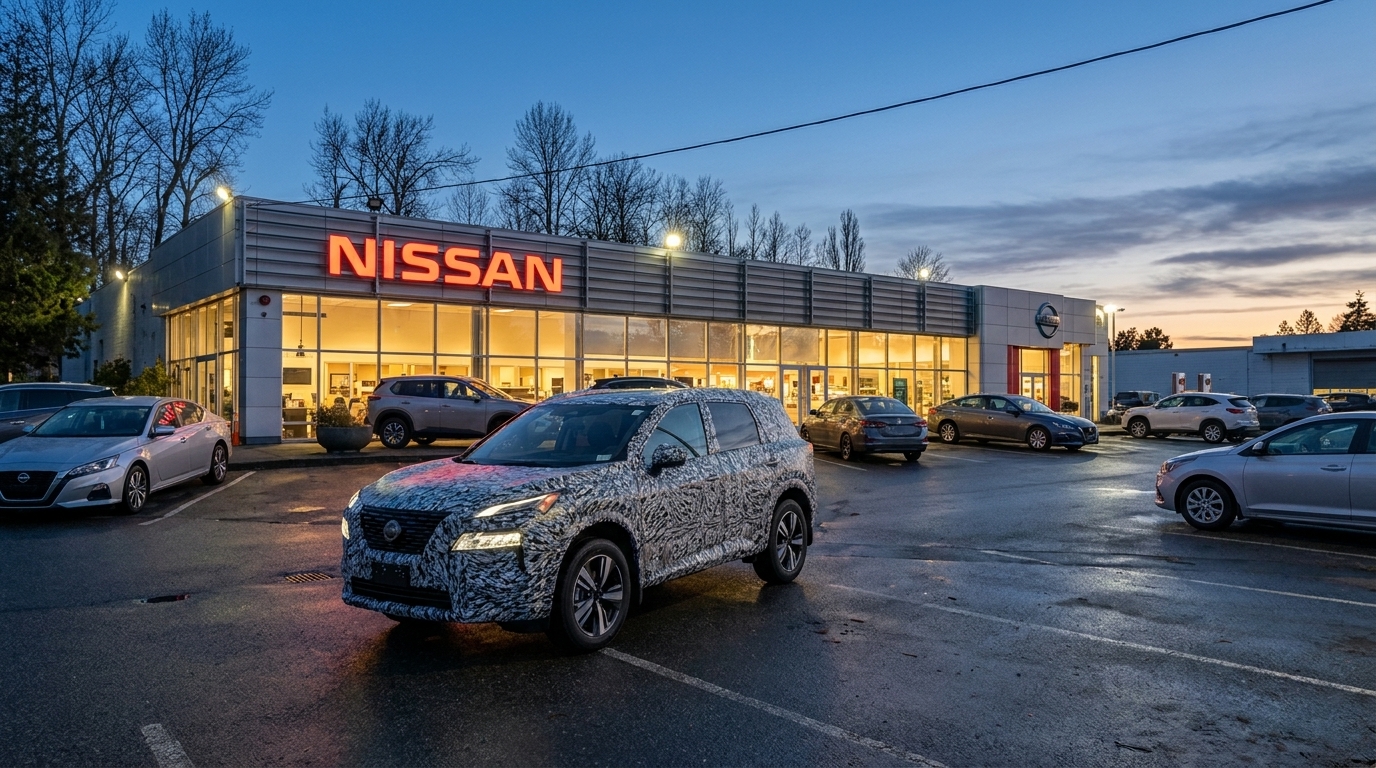
Shoppers cross-shopping compact SUVs in the Puget Sound region have been asking the same question for two years: when will Nissan answer the RAV4 Hybrid and CR-V Hybrid with a real, high-volume electrified Rogue? Based on prototype drives of the 2027 Nissan Rogue Hybrid published through early October 2026, the answer is taking shape — and it does not look like a conventional hybrid at all.
Nissan officially revealed the 2027 Rogue Hybrid for U.S. and Canadian markets on September 21, 2026, presenting the brand's third-generation e-POWER series-hybrid system and targeting a fall 2026 on-sale date. Final EPA ratings, instrumented performance figures, pricing, and full trim structure are still pending. For research-phase buyers in Everett, that timing matters: the Rogue Hybrid is expected to arrive at local dealerships ahead of the Pacific Northwest's wet winter driving season, exactly when an electrified AWD compact crossover is most useful here.
What Makes the 2027 Rogue Hybrid Different: e-POWER Explained
The headline of the 2027 Nissan Rogue Hybrid prototype first drive is the powertrain architecture. Unlike the Toyota or Honda hybrid systems most buyers know, Nissan's e-POWER is a series hybrid: the gasoline engine never directly turns the wheels. Instead, a 1.5-liter turbocharged three-cylinder acts purely as a generator, feeding electricity to electric motors that handle all propulsion.
That distinction is more than academic. Because the wheels are always driven by electric motors, the Rogue Hybrid behaves like an EV from the driver's seat — instant torque off the line, linear acceleration without CVT drone, and one-pedal driving capability. Journalists who sampled the prototype describe it as noticeably quieter and more refined than the current gas-only Rogue, with the engine spinning up unobtrusively to maintain battery charge rather than revving in lockstep with throttle inputs.
Powertrain Details from the Prototype
According to Nissan's official announcement, the 2027 Rogue Hybrid uses a dual-motor all-wheel-drive layout — standard on all trims — producing a combined system output of 225 horsepower. Nissan's internal estimates project 40 mpg city / 36 mpg highway / 38 mpg combined. Those figures are not yet final EPA ratings, but if confirmed they would put the Rogue squarely in the conversation with class-leading hybrid compact SUVs.
A few caveats are worth flagging. The fuel-economy projections are Nissan internal estimates, not final EPA ratings. No official 0–60 mph time has been published by Nissan or measured by reviewers. Prototype media drives ranged from approximately 10 to 30 minutes, so extended real-world evaluations are still to come. Buyers should treat the numbers as directional until Nissan publishes final specs closer to launch.
Driving Impressions: What the Prototype Drives Like
The recurring theme across prototype drive impressions — from Edmunds, Kelley Blue Book, Consumer Reports, and Road & Ethos — is refinement. With electric motors handling propulsion, throttle response is immediate and linear — no torque-converter slip, no CVT flare under hard acceleration. Lifting off the accelerator triggers regenerative braking strong enough to enable true one-pedal driving in most conditions via Nissan's e-Pedal system, similar to what Leaf and Ariya drivers already know.
Cabin noise is another standout. Because the gas engine operates as a generator on its own duty cycle rather than tracking the driver's right foot, the engine's acoustic signature is decoupled from acceleration demand. The prototype reportedly runs in pure EV mode at low speeds and around town, with the three-cylinder generator kicking in transparently when battery state-of-charge or power demand requires it. Journalists also noted comfort-oriented steering and a quiet, composed cabin during the Utah prototype drives in the Park City area.
Final interior trim, materials, and feature content for U.S.-spec cars have not been published.
How the 2027 Rogue Hybrid Fits the Everett, WA Market
The Pacific Northwest is a near-ideal proving ground for a series hybrid like e-POWER. Stop-and-go traffic on I-5 between Everett and Seattle, the climbs over Stevens Pass for weekend trips, and the wet, low-traction surfaces that define eight months of the year all favor electric-motor propulsion. Instant low-end torque helps with on-ramp merges, and dual-motor AWD with independent electric axles can shuffle torque front-to-rear faster than a mechanical AWD system reacting to wheel slip.
The 40 mpg city projection (per Nissan internal estimates, as of the most recent reporting) is also significant in a market where short, congested commutes — Everett to Boeing's Paine Field campus, downtown Everett to Marysville, the Mukilteo ferry queue — punish conventional gas SUVs. Washington's gasoline prices have run persistently above the national average, and a Rogue that returns hybrid economy in exactly the conditions where most local miles accumulate is a meaningful operating-cost story.
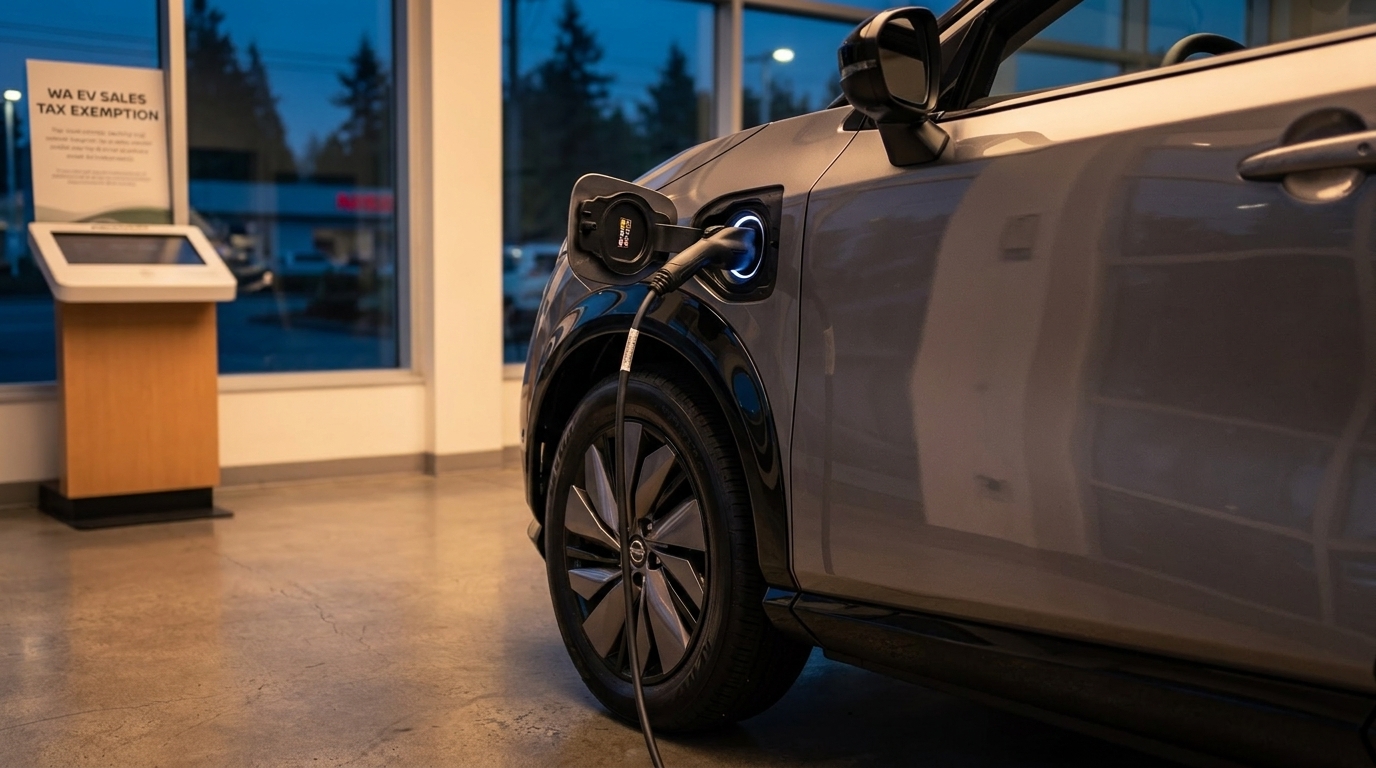
One Washington-specific consideration: the 2027 Rogue Hybrid is a non-plug-in series hybrid. It does not qualify for Washington's plug-in electric vehicle sales tax exemption, which applies to qualifying new and used battery-electric and plug-in hybrid vehicles. Shoppers comparing the Rogue Hybrid to a plug-in hybrid or EV on total cost of ownership should factor that in alongside the fuel-economy advantage.
Don't Confuse the 2027 Hybrid with the 2026 Plug-In Hybrid
One point that has caused confusion in upcoming Nissan hybrid SUV coverage: the 2027 Rogue Hybrid (e-POWER, non-plug-in) is a different vehicle from the 2026 Rogue Plug-In Hybrid.
The 2027 e-POWER Rogue replaces that approach with Nissan's own series-hybrid technology and is positioned as a core, high-volume powertrain rather than a niche variant. For buyers, that means broader trim availability, more conventional fueling behavior (no plug required), and a powertrain Nissan plans to support and scale across its lineup. According to Consumer Reports, the SR AWD with Technology Package is expected to arrive in fall 2026, with additional trims following in early 2027.
What Buyers Should Do Between Now and Launch
For Everett-area shoppers researching the 2027 Nissan Rogue Hybrid review cycle as it unfolds, a few practical steps make sense:
- Drive the current gas-only Rogue, which starts at $29,690 MSRP as of October 2026 per Nissan, to establish a baseline for cabin space, ride quality, and ergonomics — most of those carry over.
- If a current-gen Nissan EV is available locally, drive an Ariya or Leaf to experience one-pedal driving and electric-motor response, which will preview the e-POWER experience.
- Hold off on assumptions about pricing and trim walks until Nissan publishes official U.S. specifications closer to the fall 2026 launch.
- Compare projected total cost of ownership against the RAV4 Hybrid and CR-V Hybrid using the EPA's final ratings once published, not prototype estimates.
Frequently Asked Questions
When will the 2027 Nissan Rogue Hybrid go on sale?
Nissan announced a fall 2026 U.S. on-sale target when it officially revealed the vehicle on September 21, 2026. The SR AWD with Technology Package is expected first, with additional trims arriving in early 2027. Final retail delivery confirmation had not appeared in sources as of early October 2026. Contact Nissan of Everett for the latest availability updates.
Is the 2027 Rogue Hybrid a plug-in?
No. It uses Nissan's third-generation e-POWER series-hybrid system, which never requires plugging in. Gasoline fuels a 1.5-liter turbocharged three-cylinder generator that produces electricity for the drive motors.
What fuel economy should buyers expect?
Nissan's internal estimates project 40 mpg city / 36 mpg highway / 38 mpg combined, as of the most recent reporting. Final EPA ratings have not been published. Buyers should use the official EPA figure once available for real-world planning.
Will the Rogue Hybrid offer all-wheel drive?
Yes — dual-motor AWD is standard on the 2027 Rogue Hybrid, according to Nissan's official announcement. Combined system output is 225 horsepower. Final EPA-certified specifications are still pending.
How is e-POWER different from a Toyota or Honda hybrid?
Toyota and Honda hybrids can drive the wheels with the gas engine, the electric motor, or both. In Nissan's e-POWER, the wheels are always driven by electric motors — the gas engine only generates electricity. The result feels closer to an EV than a conventional hybrid, based on prototype drive impressions from multiple automotive outlets.
How does the 2027 Rogue Hybrid compare to the RAV4 Hybrid?
Journalists at Road & Ethos conducted a brief back-to-back prototype comparison with the Toyota RAV4 Hybrid, noting the Rogue Hybrid's e-POWER system delivers a more EV-like driving character. The RAV4 Hybrid's gas engine can mechanically drive the wheels; the Rogue Hybrid's cannot. Final instrumented comparisons with full EPA data are not yet published. Contact Nissan of Everett to discuss how the two models stack up for your commute.
Is there a risk the fall 2026 launch date slips?
The fall 2026 on-sale date is Nissan's stated target, not a confirmed retail delivery date. As of early October 2026, prototype drives have been published but retail availability had not been confirmed in cited sources. Shoppers should treat the timing as directional and contact Nissan of Everett directly to get on a notification list as the launch date is finalized.
The Bottom Line for Everett Shoppers
If the production 2027 Rogue Hybrid delivers on the prototype's promise — EV-like refinement, dual-motor AWD standard, 225 combined horsepower, and Nissan's internal estimate of 40 mpg city — it will reshape where the Rogue sits in the compact SUV conversation. Series-hybrid architecture is genuinely different from what Toyota and Honda offer, and that difference is most apparent in the kinds of driving Everett-area owners do every day.
Nissan of Everett has been part of the Everett community for 20 years and serves customers across the region, including Marysville, Shoreline, Kirkland, Snohomish, Monroe, Bellevue, and beyond. The dealership's product team is following the 2027 launch closely and can walk research-phase buyers through what is known, what is still pending, and how the e-POWER Rogue is likely to fit a given commute and budget. Reach Nissan of Everett at (425) 347-5763 or visit https://www.nissanofeverett.com. The sales department is open Monday through Friday 7:30 AM–6:00 PM and Saturday 7:30 AM–4:00 PM at 10500 Highway 99, Everett, WA 98204.