WA EV Sales Tax Exemption & Nissan Ariya in Everett, WA
What Everett EV shoppers need to know in 2026: Washington's EV sales tax exemption expired July 31, 2026, and what that means for Nissan buyers today.
The vehicle still qualifies for whatever federal and utility-level incentives it earns on its own merits, but the state-level discount at the dealer's desk is gone.
What was the Washington State EV sales tax exemption, exactly?
The Washington State EV sales and use tax exemption was a point-of-sale discount that waived retail sales tax (and the equivalent use tax) on qualifying new, used, and leased clean alternative fuel vehicles and certain plug-in hybrids.
It was administered at the point of sale, which meant qualifying buyers never paid the exempted portion in the first place — there was no rebate form to file after the fact.
How did the price caps work under the exemption?
Under the Washington exemption, new vehicle transactions could not exceed $45,000 in purchase price or lease payments, and used vehicle transactions could not exceed $30,000 in fair market value or lease payments, according to the Washington Department of Licensing. A trade-in could not be used to drop the gross transaction price below those thresholds — the sticker, not the net, controlled eligibility.
That cap mattered because it drew a sharp line through the EV market. Compact and mid-size EVs that stickered under the new-vehicle ceiling qualified; larger or higher-trim EVs that crossed it did not, no matter how close they came. For a shopper cross-shopping a longer-range Nissan model against a lower-priced one, the cap often ended up being the deciding factor on which model carried the state tax break and which did not.
Does the Nissan Ariya qualify for a Washington EV tax exemption in 2026?
No. As of 2026, there is no Washington State sales and use tax exemption available for a new Nissan Ariya, or for any new BEV or PHEV, because the program expired on July 31, 2026. The Ariya is still a battery-electric vehicle and still competes on its own driving range, charging capability, and total cost of ownership — but the state-level sales tax discount at purchase no longer applies.
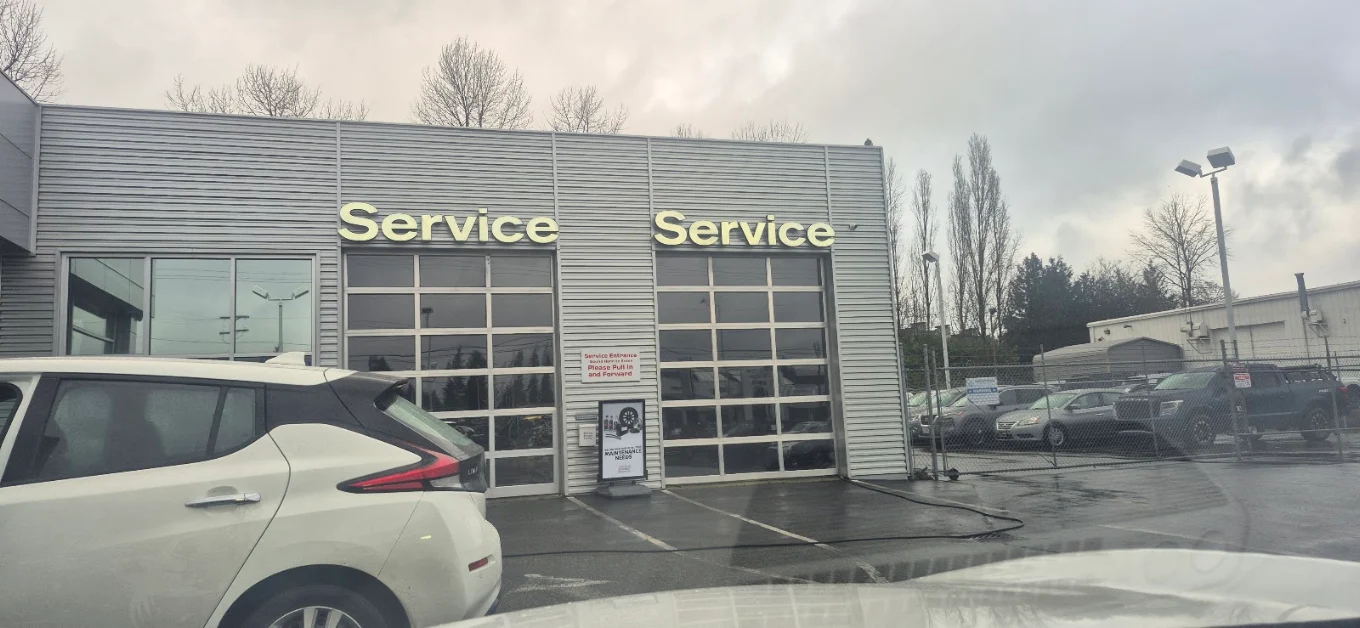
Shoppers in Everett who want help modeling what an Ariya actually costs out the door in the current tax environment can get a line-by-line quote from Nissan of Everett, which sells new Nissan vehicles alongside Certified Pre-Owned Nissans and used cars, trucks, and SUVs.
What about the Nissan LEAF and the Rogue Plug-in Hybrid?
The same expiration applies. Both the 2026 Nissan LEAF, starting at $29,990 (as of October 2026) and the 2026 Nissan Rogue Plug-in Hybrid, starting at $45,990 (as of October 2026) are the kinds of vehicles that, under the pre-August-2025 rules, a buyer would have evaluated against the $45,000 new-vehicle cap. Today there is no state exemption to evaluate against — the vehicles are taxed like any other new car sold in Washington.
That shifts the buying math. The LEAF, as a lower-priced EV, had historically been one of the vehicles most likely to clear the cap cleanly. The Rogue Plug-in Hybrid, as a PHEV priced near the old cap, was always a trim-by-trim calculation. Today, both decisions come down to range, charging access, fuel savings, and financing terms rather than a tax exemption.
How did the old exemption compare to today's rules?
| Rule | August 1, 2026 – July 31, 2026 | August 1, 2026 onward |
|---|---|---|
| New EV/PHEV sales tax exemption | Available up to $45,000 transaction cap | Not available |
| Used EV sales tax exemption | Available up to $30,000 transaction cap | Not available |
| Trade-in used to meet cap | Not allowed; gross price controls | N/A — no program |
| Governing statute | RCW 82.08.809 / RCW 82.12.809 | Statutes remain, program expired |
Buyers with lingering questions about the program should contact the Washington Department of Revenue directly.
Why did Washington let the exemption expire?
Washington did not let the exemption expire because EV adoption stalled — the opposite is true. Zero-emission vehicles now make up a growing share of new vehicle sales in Washington State, and the state has adopted motor vehicle emission standards aimed at significantly increasing zero-emission vehicle adoption in the years ahead. Transportation remains Washington's single largest source of greenhouse gas emissions.
In other words, the exemption was designed as an early-adopter nudge. With EVs now a meaningful share of new sales in the region, the legislature allowed the point-of-sale discount to sunset on its original expiration date rather than extend it. Secondary sources suggest a narrower exemption for hydrogen fuel-cell vehicles may continue, but that is not confirmed in the official DOL guidance and should be verified with the Department of Revenue before anyone relies on it.
What does this change for Everett EV shoppers in 2026?
For buyers along the I-5 corridor in this part of Washington, the practical effect is that EV purchase pricing now behaves like gas-vehicle pricing from a tax standpoint. Washington's statewide sales tax plus applicable local rates apply to the full transaction price, and no state-level EV carve-out reduces that figure. Federal credits, utility rebates, and manufacturer incentives are independent of the expired state exemption and should be evaluated on their own.
Financing structure matters more as a result. Nissan of Everett offers financing with no down payment in most cases and can roll taxes, registration, and fees into the deal — a useful lever when the sales tax line is no longer being waived at the point of sale. Current offers and rates change regularly; the Nissan of Everett team can walk through what applies to a specific vehicle and buyer profile.
"Great, straightforward experience with no hidden fees. The entire process was upfront, transparent, and easy from start to finish." — 5★ · Mark, May 2026
Frequently asked questions
Is the Washington State EV sales tax exemption still available in 2026?
No. The Washington State sales and use tax exemption for clean alternative fuel vehicles and qualifying plug-in hybrids expired on July 31, 2026. Buyers should confirm current status with the Washington Department of Revenue before any purchase.
What was the price cap on new EVs under the Washington exemption?
According to the Washington Department of Licensing, new vehicle transactions could not exceed $45,000 in purchase price or lease payments to qualify. A trade-in could not be used to lower the gross transaction price below that cap — the sticker price, not the net after trade, controlled whether the vehicle was eligible.
Did the Nissan Ariya qualify for the Washington EV sales tax exemption?
Eligibility depended on the specific trim and transaction price measured against the $45,000 new-vehicle cap that was in force through July 31, 2026. As of 2026, the question is moot because the exemption has expired and no new Nissan Ariya purchase in Washington qualifies for a state sales tax exemption under this program.
What used EV price cap applied under the exemption?
According to the Washington Department of Licensing, used vehicle transactions could not exceed $30,000 in fair market value or lease payments to qualify. The same trade-in rule applied: the gross transaction price controlled eligibility, and a trade-in could not be applied to pull a vehicle under the cap.
Which Washington statutes governed the EV sales tax exemption?
The exemption was governed by RCW 82.08.809 for retail sales tax and RCW 82.12.809 for use tax, both established under E2SHB 2042.
Where can I get a real out-the-door price on a Nissan EV in Everett?
Nissan of Everett at 10500 Highway 99 can produce a line-by-line quote that shows the full transaction price, applicable Washington state and local sales tax, title and registration fees, and financing terms for a specific Nissan EV or plug-in hybrid. That is the only reliable way to see what a vehicle actually costs in the current tax environment.
The bottom line for Everett buyers
The Washington State EV sales tax exemption was a meaningful discount while it lasted, but it is no longer part of the 2026 buying equation. Shoppers evaluating a Nissan Ariya, LEAF, or Rogue Plug-in Hybrid should focus on vehicle fit, charging access, and financing structure rather than a state tax break that no longer exists. Readers in Everett, WA who want this handled professionally can reach Nissan of Everett at (425) 347-5763 or https://www.nissanofeverett.com to get a current, Washington-specific quote.